
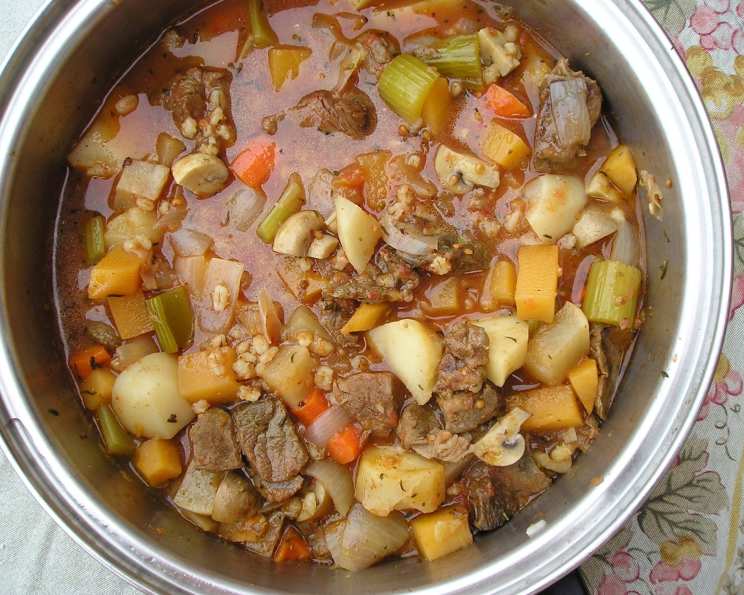
Diabetic Beef Stew: A Hearty and Healthy Classic
The aroma of beef stew always takes me back to my grandmother’s kitchen. She had a knack for creating comforting meals that filled the house with warmth and delicious smells, especially on chilly autumn evenings. Her beef stew was legendary, a symphony of tender meat, hearty vegetables, and rich broth. While her original recipe wasn’t exactly health-conscious, it inspired me to create a version that everyone could enjoy, regardless of dietary restrictions. This Diabetic Beef Stew captures the essence of that nostalgic dish while prioritizing balanced nutrition and low-glycemic ingredients.
Recipe Overview
- Prep Time: 30 minutes
- Cook Time: 1 hour
- Total Time: 1 hour 30 minutes
- Servings: 4-6
- Dietary Type: Diabetic-Friendly
Ingredients
- 2 medium onions, coarsely chopped
- 4 stalks celery or 1 small celery root, peeled and chopped
- 1 tablespoon olive oil
- 1 lb lean stewing beef or 1 lb lean stewing lamb
- 2 cloves garlic (optional), minced
- 3 cups water or 3 cups fat-free broth
- 1/4 cup barley
- 2-3 bay leaves
- 2 cups peeled diced rutabagas (yellow turnip)
- 1 cup peeled diced turnip (optional)
- 1 medium carrot, peeled and diced
- 1 medium potato, peeled and diced
- 1 cup cleaned button mushrooms
- 1 (19 ounce) can stewed tomatoes
- Salt to taste
- 1 teaspoon savory
- 1 teaspoon paprika
- 1/2 teaspoon oregano
- 1/2 teaspoon cracked black pepper
- 1 teaspoon Worcestershire sauce
Equipment Needed
- Large frying pan
- Large stew pot or Dutch oven
- Cutting board
- Knife
- Measuring cups and spoons
Instructions
-
Begin by preparing the vegetables. Peel and coarsely chop the onions. Similarly, chop the celery coarsely. If using garlic, peel and mince it finely.
-
In a large frying pan, heat the olive oil over medium heat. Sauté the onions and celery until they soften, about 5-7 minutes. Once softened, remove them from the pan and transfer them to a large stew pot or Dutch oven.
-
Add the beef or lamb to the same frying pan. Cook the meat until it’s browned on all sides. This step is crucial for developing rich flavor. If using garlic, stir it in during the last minute of browning. Once the meat is browned, add it to the stew pot along with the onions and celery.
-
Pour the water or fat-free broth into the stew pot. Add the barley and bay leaves. Bring the mixture to a simmer.
-
While the mixture simmers, prepare the remaining vegetables. Peel and chop the rutabagas, turnip (if using), carrot, and potato into bite-sized pieces. The size should be uniform to ensure even cooking.
-
Add the chopped vegetables to the stew pot in the following order: rutabagas, turnip (if using), carrot, and finally, the potato. This order ensures that the root vegetables, which take longer to cook, are properly tenderized.
-
Add the cleaned button mushrooms and the can of stewed tomatoes to the pot. Season with salt to taste, savory, paprika, oregano, cracked black pepper, and Worcestershire sauce.
-
Reduce the heat to low, cover the stew pot, and simmer the stew gently until the meat is very tender and the vegetables and barley are cooked through. This will typically take about an hour, but check the meat and vegetables for doneness periodically. The meat should be easily pierced with a fork.
-
During the simmering process, check the liquid level periodically. If the stew becomes too thick or the liquid evaporates too quickly, add a little more water or broth as needed to maintain a desirable consistency.
-
Before serving, remove the bay leaves.
Expert Tips & Tricks
- Browning the meat is key to developing a rich, deep flavor in the stew. Don’t skip this step! Make sure the pan is hot enough before adding the meat, and don’t overcrowd the pan, as this will cause the meat to steam instead of brown. Brown the meat in batches if necessary.
- For an even richer flavor, consider using beef broth instead of water. Just be sure to use a low-sodium variety to control the sodium content.
- If you want to thicken the stew without adding extra carbohydrates, you can mix a tablespoon of cornstarch with two tablespoons of cold water to create a slurry. Stir the slurry into the stew during the last 15 minutes of cooking time.
- Don’t overcook the vegetables, as they will become mushy. Check for doneness periodically and adjust the cooking time accordingly.
Serving & Storage Suggestions
Serve the Diabetic Beef Stew hot, garnished with a sprinkle of fresh parsley or thyme, if desired. It’s delicious on its own or served with a side of whole-grain bread or a small serving of brown rice.
To store leftovers, allow the stew to cool completely before transferring it to an airtight container. Store in the refrigerator for up to 3-4 days. For longer storage, freeze the stew in freezer-safe containers for up to 2-3 months.
To reheat, thaw the stew in the refrigerator overnight if frozen. Reheat gently on the stovetop over medium heat, stirring occasionally, until heated through. You can also reheat it in the microwave.
Nutritional Information
| Nutrient | Amount per Serving | % Daily Value* |
|---|---|---|
| Calories | 435.8 kcal | N/A |
| Calories from Fat | 157 g | 36% |
| Total Fat | 17.5 g | 26% |
| Saturated Fat | 5.8 g | 29% |
| Cholesterol | 82.9 mg | 27% |
| Sodium | 468.9 mg | 19% |
| Total Carbohydrate | 41.9 g | 13% |
| Dietary Fiber | 9 g | 36% |
| Sugars | 13.9 g | N/A |
| Protein | 29.9 g | 59% |
*Daily values are based on a 2,000 calorie diet. Individual needs may vary.
Variations & Substitutions
- For a vegetarian version, substitute the beef or lamb with firm tofu or lentils. Increase the amount of mushrooms and add other vegetables like zucchini, bell peppers, or green beans.
- If you prefer a thicker stew, add a small amount of tomato paste along with the stewed tomatoes.
- For a richer, creamier flavor, stir in a dollop of plain Greek yogurt or a tablespoon of unsweetened applesauce at the end of cooking (be mindful of carb counts if diabetic).
- Experiment with different herbs and spices. Try adding a pinch of smoked paprika for a smoky flavor or a dash of red pepper flakes for a little heat.
FAQs (Frequently Asked Questions)
Q: Can I use different vegetables in this stew?
A: Absolutely! Feel free to experiment with other low-glycemic vegetables like broccoli, cauliflower, or spinach. Just keep in mind that the cooking time may vary depending on the type of vegetable you use.
Q: Is barley a good choice for a diabetic-friendly stew?
A: Yes, barley is a whole grain that is high in fiber and has a relatively low glycemic index compared to other grains. This means it is digested more slowly and doesn’t cause a rapid spike in blood sugar levels.
Q: Can I make this stew in a slow cooker?
A: Yes, you can adapt this recipe for a slow cooker. Brown the meat and sauté the onions and celery as directed in the recipe, then transfer everything to the slow cooker. Cook on low for 6-8 hours or on high for 3-4 hours.
Q: How can I reduce the sodium content of this stew?
A: Use low-sodium broth or water and be mindful of the amount of salt you add. You can also use herbs and spices to enhance the flavor without adding extra sodium.
Q: Can I freeze this stew?
A: Yes, this stew freezes well. Allow it to cool completely before transferring it to freezer-safe containers.
Final Thoughts
This Diabetic Beef Stew is more than just a recipe; it’s an invitation to create a comforting and nourishing meal that aligns with your health goals. It’s a testament to the fact that healthy eating can be both delicious and satisfying. I encourage you to try this recipe, make it your own with personalized tweaks, and share it with the people you love. Perhaps enjoy a glass of dry red wine with your stew, or a side of steamed green beans. I hope you enjoy this updated take on a classic favourite!