
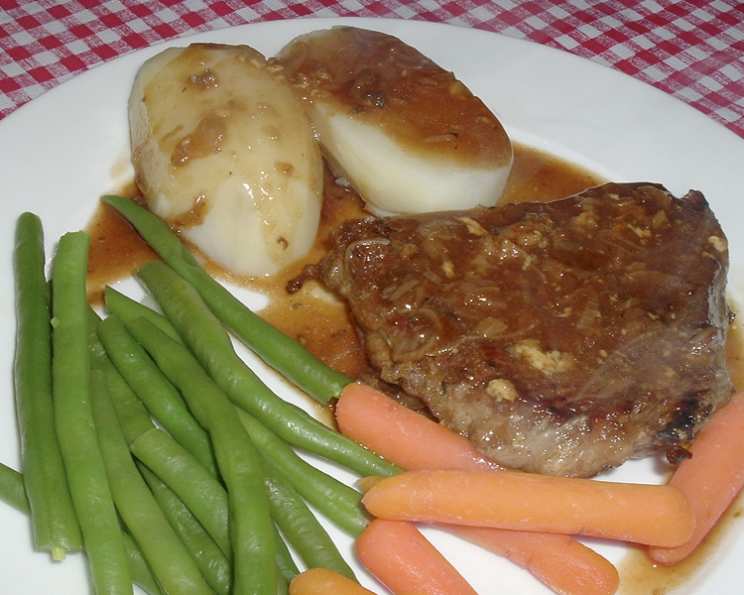
Dijon Steak: A Weeknight Classic
I remember the first time I made Dijon steak. I was a newlywed, eager to impress my husband with my culinary skills, which were, shall we say, still developing. The aroma of the mustard mingling with the beef gravy filled our tiny apartment, and I felt like a proper chef, even though the recipe was deceptively simple. That night, nestled in our cozy kitchen, we savored each bite of the tender steak, the tangy Dijon adding a touch of sophistication to our humble meal. It became a regular on our table, a testament to the fact that great food doesn’t always require hours in the kitchen.
Recipe Overview
- Prep Time: 5 minutes
- Cook Time: 35 minutes
- Total Time: 40 minutes
- Servings: 4
- Dietary Type: Comfort Food
Ingredients
- 4 (4 ounce) beef cube steaks
- 1 tablespoon butter
- 1 (12 ounce) jar beef gravy
- 3 tablespoons half-and-half
- 1 tablespoon Dijon mustard
- 2 tablespoons chopped fresh parsley
Equipment Needed
- Large skillet with a lid
Instructions
-
Begin by preparing your skillet. Place a large skillet over medium-high heat. Once hot, add 1 tablespoon of butter and allow it to melt completely, coating the bottom of the pan.
-
Next, brown the 4 beef cube steaks quickly on both sides in the melted butter. This step is crucial for developing a rich, savory crust on the meat. Don’t overcrowd the pan; work in batches if necessary to ensure proper browning. This should only take about 2-3 minutes per side.
-
Once the steaks are browned, remove them from the skillet and set aside. Keep them warm; I usually place them on a plate and loosely tent with foil.
-
Now, reduce the heat to medium-low. To the same skillet, add 1 (12 ounce) jar of beef gravy, 3 tablespoons of half-and-half, and 1 tablespoon of Dijon mustard.
-
Heat, stirring continuously, until the sauce is bubbly and well combined. The Dijon mustard should be fully incorporated into the gravy, creating a smooth, creamy consistency.
-
Return the beef cube steaks to the pan with the gravy mixture. Ensure the steaks are submerged in the sauce.
-
Turn the heat down to low; cover the skillet with a lid and let it simmer for about 30 minutes, or until the steaks are cooked through and tender. Check the liquid level periodically; if the sauce becomes too thick, add water as needed to maintain a desirable consistency.
-
Just before serving, sprinkle 2 tablespoons of chopped fresh parsley over the steaks. This adds a pop of freshness and visual appeal.
Expert Tips & Tricks
- Don’t skip the browning: Searing the steaks before simmering them in the gravy is essential for developing flavor. The Maillard reaction, which occurs during browning, creates hundreds of complex flavor compounds that enhance the overall taste of the dish.
- Control the heat: Simmering the steaks on low heat ensures that they cook gently and evenly without becoming tough or dry. Avoid boiling the gravy, as this can cause it to thicken too much and potentially burn.
- Deglaze the pan (optional): After browning the steaks and before adding the gravy, consider deglazing the pan with a splash of red wine or beef broth. This will loosen any browned bits stuck to the bottom of the skillet and add even more depth of flavor to the sauce.
- Adjust the Dijon: If you prefer a stronger mustard flavor, feel free to add a little more Dijon mustard to the gravy. Start with a small amount and taste as you go, adjusting to your preference.
- Tenderizing the Meat: For even more tender steak, consider using a meat mallet to gently pound the cube steaks before cooking. This helps break down some of the muscle fibers.
Serving & Storage Suggestions
Dijon steak is best served hot, straight from the skillet. It pairs wonderfully with mashed potatoes, rice, egg noodles, or a simple side salad. For a more substantial meal, consider serving it with roasted vegetables like broccoli, asparagus, or carrots.
Leftover Dijon steak can be stored in an airtight container in the refrigerator for up to 3-4 days. To reheat, gently warm the steak and gravy in a skillet over low heat, stirring occasionally, or microwave until heated through. You may need to add a little water or beef broth to the gravy if it has thickened during storage. This dish is not recommended for freezing as the gravy texture may change upon thawing.
Nutritional Information
| Nutrient | Amount per Serving | % Daily Value |
|---|---|---|
| Calories | 250 kcal | 13% |
| Total Fat | 12g | 18% |
| Saturated Fat | 6g | 30% |
| Cholesterol | 70mg | 23% |
| Sodium | 800mg | 35% |
| Total Carbohydrate | 8g | 3% |
| Dietary Fiber | 1g | 4% |
| Sugars | 2g | N/A |
| Protein | 25g | 50% |
Note: Nutritional information is an estimate and may vary based on specific ingredients and portion sizes.
Variations & Substitutions
- Creamy Dijon Steak: For an even richer and creamier sauce, substitute the half-and-half with heavy cream or crème fraîche.
- Mushroom Dijon Steak: Add sliced mushrooms to the skillet along with the gravy and simmer them until tender for a delicious mushroom-infused sauce.
- Wine-Infused Dijon Steak: Deglaze the pan with a dry red wine after browning the steaks for a more complex flavor profile.
- Spicy Dijon Steak: Add a pinch of red pepper flakes or a dash of hot sauce to the gravy for a spicy kick.
- Herb Variations: Experiment with different herbs like thyme, rosemary, or oregano instead of parsley to customize the flavor.
FAQs (Frequently Asked Questions)
Q: Can I use a different cut of beef?
A: Yes, while cube steaks are traditionally used, you can substitute them with other tender cuts of beef, such as sirloin or round steak. Just adjust the cooking time accordingly to ensure the meat is cooked through but not overcooked.
Q: Can I make this dish ahead of time?
A: Yes, you can prepare the Dijon steak up to a day in advance. Store it in an airtight container in the refrigerator and reheat it gently before serving.
Q: Can I use dried parsley instead of fresh parsley?
A: While fresh parsley adds a brighter flavor, you can use dried parsley in a pinch. Use about half the amount of dried parsley as you would fresh parsley (1 tablespoon).
Q: Is Dijon mustard necessary, or can I use another type of mustard?
A: Dijon mustard provides a unique flavor profile that is characteristic of this dish. While you can experiment with other types of mustard, such as stone-ground or yellow mustard, the flavor will be different.
Q: How do I know when the steaks are done?
A: The steaks are done when they are tender and easily pierced with a fork. The internal temperature should reach 145°F (63°C) for medium-rare, 160°F (71°C) for medium, or 170°F (77°C) for well-done.
Final Thoughts
Dijon steak is a comforting and flavorful dish that is perfect for a quick and easy weeknight meal. Its simplicity belies its sophistication, making it a delightful addition to any home cook’s repertoire. So, gather your ingredients, fire up the skillet, and experience the magic of Dijon steak. Don’t be afraid to experiment with variations and make it your own! I’d love to hear how it turns out – please share your feedback and photos! Consider serving it with a crisp green salad and a glass of your favorite red wine for a complete and satisfying meal. Happy cooking!