
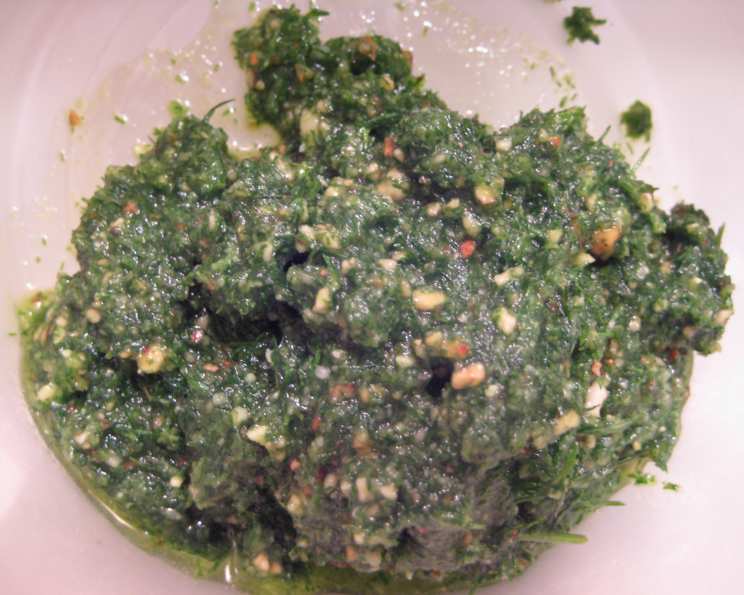
Vibrant Dill Pesto: A Culinary Symphony of Fresh Flavors
The scent of dill instantly transports me back to my grandmother’s garden. As a child, I would spend hours alongside her, carefully snipping the feathery fronds of dill from their stalks. She always said dill was a happy herb, and she was right – its bright, clean aroma filled the air with sunshine and promise. She used it liberally, and one of my fondest memories is the way she’d stir freshly made pesto into her creamy potato salad. This dill pesto recipe is my way of honoring her and the simple, joyful flavors of her kitchen.
Recipe Overview
- Prep Time: 10 minutes
- Cook Time: 0 minutes
- Total Time: 10 minutes
- Yields: ¾ cup
- Dietary Type: Vegetarian
Ingredients
- 1 ½ cups packed fresh dill leaves
- ½ cup packed fresh flat-leaf parsley (Italian)
- 2 tablespoons pistachios or 2 tablespoons pine nuts
- 2 cloves garlic, smashed
- 3 tablespoons extra virgin olive oil
- 2 tablespoons freshly grated parmesan cheese
Equipment Needed
- Blender or food processor
- Small bowl
Instructions
- Begin by gathering all your fresh ingredients. The quality of your dill and parsley will directly impact the flavor of the pesto, so choose the freshest you can find.
- In a blender or food processor, combine the dill, parsley, pistachios (or pine nuts), and smashed garlic.
- Whirl the mixture until the herbs and nuts are finely minced. You may need to stop the blender occasionally and scrape down the sides to ensure everything is evenly processed. The goal is to achieve a relatively smooth, slightly chunky texture.
- With the blender still running, gradually add the olive oil. This will help emulsify the mixture, creating a creamy and cohesive pesto.
- Once the oil is incorporated, add the freshly grated parmesan cheese. Continue to process until the cheese is blended evenly throughout the pesto. Taste and adjust seasonings as needed; a pinch of salt and pepper can enhance the flavors.
- Transfer the finished dill pesto to a small bowl.
- Cover the bowl tightly and chill in the refrigerator until ready to use. Chilling allows the flavors to meld and deepen.
Expert Tips & Tricks
- Herb Freshness: For the most vibrant flavor, use dill and parsley that are freshly picked or purchased. Avoid herbs that are wilted or have started to turn yellow.
- Nut Choice: Pistachios offer a slightly sweet and earthy flavor that pairs beautifully with dill, while pine nuts provide a more delicate, buttery taste. Experiment to find your preferred nut. Walnuts or almonds can also be used.
- Garlic Intensity: If you prefer a milder garlic flavor, consider roasting the garlic cloves before adding them to the pesto. Roasting mellows the garlic’s sharpness and adds a touch of sweetness.
- Cheese Considerations: While parmesan is the traditional choice, other hard cheeses like Pecorino Romano or Grana Padano can also be used. For a vegetarian or vegan option, nutritional yeast can be substituted for parmesan cheese to achieve a similar savory, cheesy flavor.
- Oil Quality: Using high-quality extra virgin olive oil is crucial for the overall flavor of the pesto. Look for an oil with a robust, fruity aroma and a slightly peppery finish.
- Blending Technique: Avoid over-processing the pesto, as this can result in a paste-like texture. Pulse the blender in short bursts, stopping to scrape down the sides as needed, to achieve a slightly chunky consistency.
- Adjusting Consistency: If the pesto is too thick, add a teaspoon or two of olive oil until you reach your desired consistency. If it’s too thin, add a few more nuts or a bit more parmesan cheese.
Serving & Storage Suggestions
This vibrant dill pesto is incredibly versatile and can be used in a variety of dishes. It’s fantastic with seafood, especially grilled salmon or shrimp. It also complements grilled chicken, roasted vegetables, and pasta dishes beautifully. Try stirring it into scrambled eggs for a flavorful breakfast or spreading it on sandwiches and wraps for a pop of freshness.
-
Serving Suggestions:
- Toss with pasta for a quick and flavorful meal.
- Spread on grilled fish or chicken.
- Use as a dip for vegetables or crackers.
- Stir into yogurt or sour cream for a delicious dip.
- Drizzle over roasted potatoes or grilled vegetables.
- Spread on bagels with lox and cream cheese for a brunch treat.
-
Storage:
- Refrigerator: Store the dill pesto in an airtight container in the refrigerator for up to 3-4 days. To prevent browning, drizzle a thin layer of olive oil over the surface of the pesto before sealing the container.
- Freezer: For longer storage, freeze the pesto in ice cube trays. Once frozen, transfer the pesto cubes to a freezer bag or container. Frozen pesto can be stored for up to 3 months. Thaw in the refrigerator before using.
Nutritional Information
| Nutrient | Amount per Serving | % Daily Value |
|---|---|---|
| Calories | 694.2 kcal | N/A |
| Calories from Fat | 638 kcal | 92% |
| Total Fat | 70.9 g | 109% |
| Saturated Fat | 11 g | 55% |
| Cholesterol | 11.7 mg | 3% |
| Sodium | 239.7 mg | 9% |
| Total Carbohydrate | 9.6 g | 3% |
| Dietary Fiber | 3.1 g | 12% |
| Sugars | 1 g | 4% |
| Protein | 10.3 g | 20% |
Note: Nutritional information is an estimate and may vary based on specific ingredients and portion sizes.
Variations & Substitutions
- Vegan Dill Pesto: Substitute the parmesan cheese with 2 tablespoons of nutritional yeast.
- Nut-Free Dill Pesto: Replace the pistachios or pine nuts with sunflower seeds or pumpkin seeds.
- Lemon Dill Pesto: Add 1 tablespoon of lemon juice and 1 teaspoon of lemon zest for a bright, citrusy flavor.
- Spicy Dill Pesto: Add a pinch of red pepper flakes or a small, minced jalapeño pepper for a touch of heat.
- Herb Variations: Experiment with different herbs, such as mint, chives, or basil, to create your own unique pesto variations.
FAQs (Frequently Asked Questions)
Q: Can I use dried dill instead of fresh dill?
A: While fresh dill is highly recommended for the best flavor and texture, you can use dried dill in a pinch. Use about 1 tablespoon of dried dill for every 1 ½ cups of fresh dill leaves.
Q: How long does dill pesto last?
A: Dill pesto will last for 3-4 days in the refrigerator and up to 3 months in the freezer.
Q: Why is my pesto bitter?
A: Over-processing the pesto can release bitter compounds from the herbs and nuts. Be sure to pulse the blender in short bursts and avoid over-blending.
Q: Can I make dill pesto without a food processor?
A: Yes, you can make dill pesto by hand by finely chopping all the ingredients and then mixing them together with the olive oil and cheese.
Q: Is dill pesto healthy?
A: Yes, dill pesto is a relatively healthy condiment. Dill and parsley are packed with vitamins and antioxidants, and the olive oil provides healthy fats.
Final Thoughts
I hope you’ll give this dill pesto recipe a try and discover the vibrant, refreshing flavors it has to offer. It’s a simple yet elegant condiment that can elevate countless dishes, adding a touch of freshness and brightness to your meals. Whether you’re a seasoned chef or a beginner cook, this recipe is easy to follow and yields delicious results. Don’t be afraid to experiment with different variations and make it your own. Enjoy!