
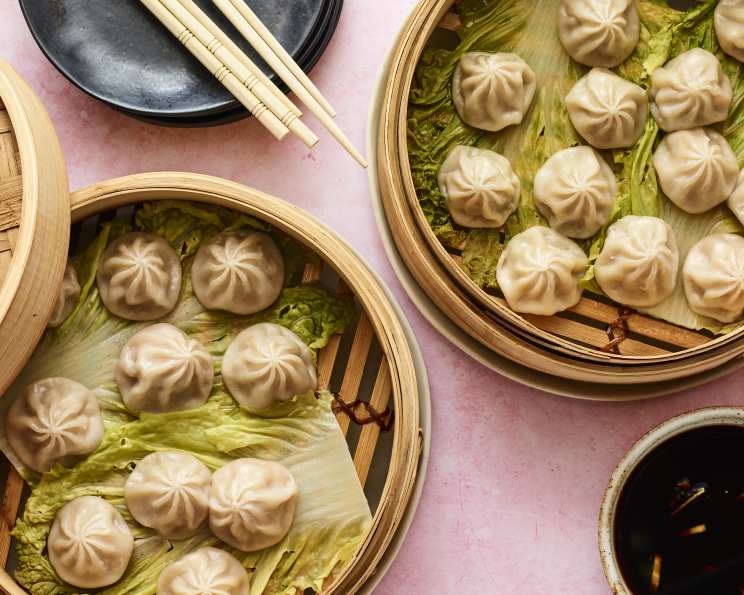
Mastering the Art of Din Tai Fung Style Xiao Long Bao (Soup Dumplings)
The first time I tasted an authentic Xiao Long Bao, or soup dumpling, from Din Tai Fung, I was utterly transformed. The delicate, almost translucent skin, the flavorful burst of broth, the perfectly seasoned pork filling—it was a symphony of textures and tastes that danced on my palate. I remember thinking, “This is culinary perfection.” Determined to recreate this experience at home, I embarked on a journey to learn the secrets behind these delectable morsels.
Recipe Overview
- Prep Time: 3 hours
- Cook Time: 12-15 minutes
- Total Time: 3 days (including chilling and resting)
- Yields: 75 dumplings
- Dietary Type: Not specified
Ingredients
Soup Mixture:
- 10 cups water
- 3 tablespoons water (may need more)
- 3 lbs chicken parts (wings, backs, and necks)
- 2 1⁄2 ounces Chinese-style cured smoked ham or 2 1/2 ounces Smithfield Ham, cut into 4 slices
- 3⁄4 cup green onion, roughly chopped (white parts only)
- 2 slices peeled fresh ginger (1 inch diameter, 1/2 inch thick)
- 1 dried shiitake mushroom
- 1 large garlic clove, flattened
- 1 tablespoon soy sauce
- 2 teaspoons shaoxing wine
- 1 tablespoon unflavored gelatin
Filling:
- 1 lb ground pork
- 1⁄4 lb uncooked shrimp, peeled, deveined, and finely chopped
- 1⁄3 cup green onion, minced (white parts only)
- 3 tablespoons sugar
- 2 tablespoons soy sauce
- 1 large garlic clove, minced
- 3⁄4 teaspoon salt
- 1⁄2 teaspoon ground black pepper
- 1⁄2 teaspoon peeled fresh ginger, finely grated
- 1⁄2 teaspoon shaoxing wine
- 1⁄4 teaspoon sesame oil
Dumplings:
- 75 dumpling wrappers (3 inch square or round)
- 1 large head napa cabbage, leaves separated
Sauce:
- 1 cup black vinegar
- 6 tablespoons soy sauce
- 2 tablespoons very thin matchstick-size strips peeled fresh ginger
Equipment Needed
- Large pot
- Fine-mesh strainer
- 13x9x2-inch glass dish
- Large bowl
- Wooden spoon or fork
- Rimmed baking sheets
- Parchment paper
- Bamboo steamer basket (or metal steamer rack)
- Wok (or large pot)
Instructions
Day 1: Making the Soup Aspic
- Begin by combining 10 cups of water and all remaining soup ingredients (except the gelatin) in a large pot.
- Bring the mixture to a boil over high heat. As it comes to a boil, meticulously skim off any foam that rises to the surface. This step is crucial for achieving a clear and flavorful broth.
- Once boiling, reduce the heat to low and simmer, uncovered, for approximately 2 hours and 30 minutes, or until the chicken pieces are very soft and beginning to fall apart. Be sure to add more water by the cupful, if needed, to ensure the chicken remains submerged throughout the simmering process.
- After simmering, strain the soup through a fine-mesh strainer. Discard the solids.
- Return the strained broth to the same pot. Boil the broth until it has reduced to 2 cups, which should take about 35 minutes. Season the reduced broth to taste with salt and pepper.
- In a small bowl, pour 3 tablespoons of water. Sprinkle the gelatin over the water. Allow the gelatin to stand until it has softened.
- Add the softened gelatin to the hot broth and stir until the gelatin is completely dissolved.
- Transfer the gelatin-infused broth to a 13x9x2-inch glass dish. Cover the dish tightly and refrigerate the broth overnight to allow it to set into an aspic.
Day 2: Preparing the Filling
- In a large bowl, combine all of the filling ingredients: ground pork, chopped shrimp, minced green onion, sugar, soy sauce, minced garlic, salt, pepper, grated ginger, shaoxing wine, and sesame oil.
- Using a fork or wooden spoon, mix the ingredients together just until they are blended. Be careful not to overmix, as this can result in a tough filling.
- Cut the aspic into 1/3-inch cubes.
- Add one-third of the aspic cubes to the pork mixture. Gently stir with a wooden spoon just until the aspic is incorporated. The aspic should remain in distinct cubes and not be completely mashed into the pork.
- Cover the bowl and refrigerate the pork mixture. Return the remaining aspic to the refrigerator as well.
Day 3: Assembling the Dumplings
- Line 2 rimmed baking sheets with parchment paper. This will prevent the dumplings from sticking.
- Place 1 dumpling wrapper on your work surface.
- Spoon approximately 1 very generous teaspoon of filling onto the center of the wrapper. Ensure that each dumpling contains at least 2 aspic cubes.
- Lightly brush the edges of the dumpling wrapper with water. This will help to seal the dumpling.
- Bring one corner of the wrapper up and around the filling. Then, carefully pleat the remaining edges of the wrapper at regular intervals all around the filling, working your way around the circle. The goal is to create a bundle-like shape with a small opening at the top.
- Once all of the edges are pleated, gather the top edges of the wrapper together and twist at the top to enclose the filling completely. This will help to prevent the soup from leaking out during cooking.
- Place the assembled dumpling on the prepared baking sheet.
- Repeat the process with the remaining wrappers and filling.
- Refrigerate the assembled dumplings, covered, for 1 day. Alternatively, you can freeze them in a single layer in covered containers for up to 2 weeks.
Day 4: Cooking and Serving
- On the day you plan to serve the dumplings, line each layer of a bamboo steamer basket with napa cabbage leaves. The cabbage leaves will prevent the dumplings from sticking and will also impart a subtle flavor. If you don’t have a bamboo steamer, you can use a metal steamer rack lined with cabbage leaves and set over water in a large pot.
- Place the dumplings atop the cabbage leaves, spacing them apart so they don’t stick together.
- Fill a wok (or large pot) with enough water to reach just below the bottom of the bamboo steamer basket (or metal steamer rack).
- Bring the water to a boil.
- Cover the steamer and steam the dumplings until they are cooked through. This will take approximately 12 minutes for fresh dumplings and 15 minutes for frozen dumplings. Keep an eye on the water level and add more water to the wok if it is evaporating too quickly.
- While the dumplings are steaming, prepare the dipping sauce by mixing 1 cup of black vinegar, 6 tablespoons of soy sauce, and 2 tablespoons of very thin matchstick-size strips of peeled fresh ginger in a small bowl.
- Serve the dumplings immediately, passing the sauce alongside for dipping.
Expert Tips & Tricks
- The key to a great Xiao Long Bao is the soup. Don’t skimp on the time it takes to make the broth and reduce it properly.
- Keep the filling cold. This will prevent the aspic from melting too quickly and making the dumplings difficult to assemble.
- Don’t overfill the wrappers. Overfilling will make the dumplings prone to bursting.
- Pleating takes practice. Don’t be discouraged if your first few dumplings aren’t perfect. The more you practice, the better you’ll become.
- If freezing, freeze the dumplings in a single layer on a baking sheet before transferring them to a container. This will prevent them from sticking together.
Serving & Storage Suggestions
Serve these delightful soup dumplings immediately after steaming for the best experience. The hot broth inside is what makes them so special! Offer the black vinegar and ginger dipping sauce alongside to complement the savory flavors.
Leftovers can be stored in the refrigerator for up to 24 hours, but the dumpling wrappers tend to get soggy. Reheating is best done by gently steaming them again for a few minutes, although the broth may not be as abundant as when freshly made. Frozen uncooked dumplings should be cooked directly from frozen; do not thaw.
Nutritional Information
Note: Nutritional information is an estimate and can vary based on specific ingredients and portion sizes.
| Nutrient | Amount per Serving | % Daily Value |
|---|---|---|
| Calories | 155 kcal | N/A |
| Total Fat | 4.1 g | 6% |
| Saturated Fat | 1.2 g | 6% |
| Cholesterol | 23.9 mg | 7% |
| Sodium | 369.8 mg | 15% |
| Total Carbohydrate | 19.4 g | 6% |
| Dietary Fiber | 0.7 g | 2% |
| Sugars | 0.6 g | N/A |
| Protein | 9.3 g | 18% |
Variations & Substitutions
- For a vegetarian option, you can substitute the pork and shrimp filling with a mixture of finely chopped mushrooms, tofu, and vegetables like spinach or cabbage. Use vegetable broth for the soup aspic.
- To make these gluten-free, source gluten-free dumpling wrappers. You can often find these at specialty Asian markets. Be sure to double-check all other ingredients, like soy sauce, to ensure they are also gluten-free.
- Experiment with different broth flavors. Try using a dashi-based broth or adding different aromatics like star anise or cinnamon to the soup mixture.
FAQs (Frequently Asked Questions)
Q: Why is the soup chilled into an aspic before being added to the dumplings?
A: Chilling the soup into an aspic allows it to be easily incorporated into the filling. The heat from steaming melts the aspic, creating the signature soup inside the dumpling.
Q: Can I use pre-made dumpling wrappers?
A: Yes, pre-made dumpling wrappers will save you time. Look for wrappers that are specifically designed for soup dumplings, as they tend to be thinner and more pliable.
Q: What if my dumplings burst during cooking?
A: Bursting can be caused by overfilling the dumplings or not sealing them properly. Make sure to use the right amount of filling and ensure the edges are well-sealed.
Q: How do I prevent the dumplings from sticking to the steamer?
A: Lining the steamer basket with napa cabbage leaves or parchment paper will prevent the dumplings from sticking.
Q: Can I freeze the assembled dumplings?
A: Yes, the assembled dumplings can be frozen. Freeze them in a single layer on a baking sheet before transferring them to a container to prevent them from sticking together.
Final Thoughts
While the process of making Din Tai Fung style Xiao Long Bao is a multi-day affair, the effort is absolutely worth it. The delicate, flavorful dumplings are a testament to the magic that happens when quality ingredients and careful technique come together. Don’t be intimidated by the steps; embrace the journey and enjoy the process. Share your creations with friends and family, and watch their faces light up with each savory, broth-filled bite. Perhaps pair your Xiao Long Bao with a pot of Jasmine tea to elevate your experience. Happy cooking!