
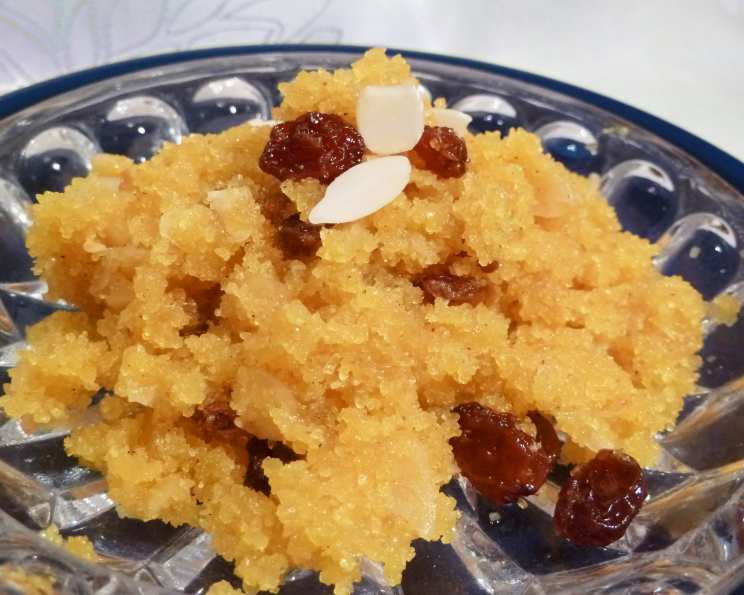
Divine Semolina Dessert – Suji Halva
The first time I tasted Suji Halva, I was in a small temple kitchen in Vrindavan, India. The air, thick with the scent of sandalwood and ghee, carried the sweet aroma of cardamom and toasted semolina. A kind lady pressed a small bowl into my hands, the halva still warm from the stove. Each spoonful was a revelation—a melt-in-your-mouth symphony of textures and flavors that left me feeling comforted and utterly content. That experience cemented my love for this humble yet transcendent dessert.
Recipe Overview:
- Prep Time: 15 minutes
- Cook Time: 20 minutes
- Total Time: 35 minutes
- Servings: 6-8
- Yield: About 6 cups
- Dietary Type: Vegetarian
Ingredients:
- 2 3/4 cups water
- 1 1/4 cups sugar
- 1/2 teaspoon saffron strands, soaked in 1 tablespoon boiling hot milk
- 140 g unsalted butter
- 1 1/4 cups semolina (coarse grained)
- 1/3 cup sliced almonds
- 1 teaspoon ground cardamom
- 1/3 cup sultanas
Equipment Needed:
- 2-litre/quart saucepan
- 2- or 3-litre/quart saucepan
- Tight-fitting lid
- Heat-diffuser (optional)
Instructions:
- In a 2-litre/quart saucepan, combine the water, sugar, and the saffron strands soaked in hot milk. Place over moderate heat, stirring to dissolve the sugar completely.
- Bring the mixture to a boil, then reduce the heat to very low. Cover the saucepan with a tight-fitting lid to keep the syrup hot and prevent evaporation.
- Melt the unsalted butter in a 2- or 3-litre/quart saucepan over low heat, stirring occasionally to prevent burning.
- Add the semolina to the melted butter. Slowly and rhythmically stir-fry the grains for about 20 minutes. It’s crucial to maintain a low heat and stir constantly to prevent scorching and ensure even toasting. The semolina should darken to a tan colour and release a nutty, aromatic fragrance. This step is vital for developing the characteristic flavour and texture of the halva.
- Add the sliced almonds to the toasting semolina towards the end of the toasting process (around the last 5 minutes). This will lightly toast the almonds, enhancing their flavour and adding a pleasant crunch to the finished dish.
- While the semolina is toasting, raise the heat under the syrup to medium, add the ground cardamom and the sultanas, and bring it to a rolling boil. This ensures the syrup is hot and ready to be incorporated into the semolina.
- Raise the heat under the semolina for 1 minute, stirring continuously. This helps to further toast the grains and prepare them to absorb the hot syrup.
- Remove the saucepan of semolina from the heat. Slowly and carefully pour the hot syrup into the semolina, stirring steadily to prevent lumps from forming. The grains may initially splutter as the hot syrup comes into contact with the hot semolina, but the spluttering will quickly subside as the liquid is absorbed.
- Return the halva to the stove and stir steadily over very low heat until the grains fully absorb the liquid. The mixture will start to form into a pudding-like consistency and pull away from the sides of the pan. This usually takes about 5-7 minutes.
- Place a tight-fitting lid on the saucepan and cook over the lowest possible heat for 5 minutes. Using a heat-diffuser underneath the pan is highly recommended at this stage to prevent scorching and ensure even cooking.
- Remove the covered saucepan from the heat and allow the halva to steam for an additional 5 minutes. This allows the semolina to fully hydrate and develop a soft, fluffy texture.
- Serve hot.
Expert Tips & Tricks:
- Toast the semolina properly: This is the most important step! Don’t rush it. The longer you toast it (without burning), the more flavourful and less “raw” the halva will taste.
- Use a heavy-bottomed pan: This will help prevent scorching, especially during the toasting and final cooking stages.
- Keep the syrup hot: Adding cold syrup to hot semolina can result in a gummy texture.
- Ghee (clarified butter) substitution: For an even richer flavor, substitute half or all of the unsalted butter with ghee.
- Don’t overcook: Overcooked halva can become dry and crumbly. Look for a pudding-like consistency that pulls away from the sides of the pan.
Serving & Storage Suggestions:
Serve Suji Halva hot, garnished with extra sliced almonds or a sprinkle of ground cardamom. It’s delicious on its own or served with a dollop of fresh cream, custard, or a scoop of vanilla ice cream. Leftover halva can be stored in an airtight container in the refrigerator for up to 3 days. To reheat, gently warm it in a saucepan over low heat, adding a splash of milk or water if needed to loosen the consistency. You can also microwave it in short bursts, stirring in between, until heated through. While freezing is not ideal (it can alter the texture), it is possible. Thaw overnight in the refrigerator and reheat as described above.
Nutritional Information:
| Nutrient | Amount per Serving | % Daily Value |
|---|---|---|
| Calories | 512 kcal | – |
| Calories from Fat | 196 g | 38% |
| Total Fat | 21.9 g | 33% |
| Saturated Fat | 12.2 g | 61% |
| Cholesterol | 50.2 mg | 16% |
| Sodium | 7.9 mg | 0% |
| Total Carbohydrate | 75.7 g | 25% |
| Dietary Fiber | 2.4 g | 9% |
| Sugars | 47.2 g | 188% |
| Protein | 6 g | 12% |
Note: Nutritional information is an estimate and may vary based on specific ingredients and portion sizes.
Variations & Substitutions:
- Nut Variations: Substitute almonds with other nuts like pistachios, cashews, or walnuts.
- Fruit Variations: Add other dried fruits like raisins, chopped apricots, or dates.
- Rosewater: Add a teaspoon of rosewater to the syrup for a delicate floral aroma.
- Saffron Alternatives: While saffron provides a unique flavor and color, you can use a pinch of turmeric powder for a similar golden hue (though the flavor will be different).
- Sweetener Options: Adjust the amount of sugar to your liking. You can also substitute a portion of the sugar with honey or maple syrup.
FAQs (Frequently Asked Questions):
Q: Why is my halva too dry?
A: This could be due to overcooking or not adding enough syrup. Next time, reduce the cooking time or add a little extra hot water or milk to moisten it.
Q: My halva is too sticky and gummy. What did I do wrong?
A: This usually happens when the semolina isn’t toasted properly or when the syrup is added too quickly. Ensure the semolina is toasted to a light tan colour and add the syrup slowly, stirring constantly.
Q: Can I make this recipe ahead of time?
A: Yes, you can make the halva a day ahead of time. Store it in the refrigerator and reheat gently before serving.
Q: Can I use fine semolina instead of coarse?
A: While coarse semolina is traditionally used, you can use fine semolina. However, the texture of the halva will be slightly different – it will be smoother and less grainy.
Q: How do I know when the semolina is properly toasted?
A: The semolina should be a light tan colour and release a nutty, aromatic fragrance. Be careful not to burn it, as this will impart a bitter taste.
Final Thoughts:
Suji Halva is more than just a dessert; it’s a warm embrace, a sweet memory waiting to be made. This simple recipe, passed down through generations, is a testament to the beauty of humble ingredients transformed into something truly extraordinary. I encourage you to try it, experiment with variations, and share the joy of this divine dessert with your loved ones. The aroma of toasted semolina and cardamom filling your kitchen is a reward in itself!