
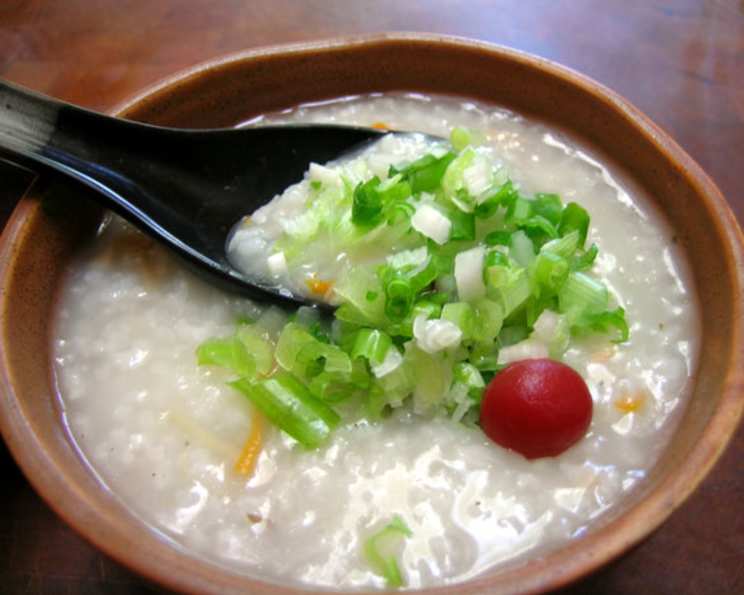
Dried Oyster and Scallop Congee: A Taste of Home
The aroma of congee simmering on the stove instantly transports me back to my grandmother’s kitchen. I remember huddling close, watching her stir the creamy rice porridge, the gentle bubbling sounds a comforting lullaby. She would always add a special ingredient, something different each time, depending on what she found fresh at the market. But the dried seafood congee, particularly on colder days, was a favorite – a warm hug in a bowl that nourished both body and soul, and a taste I’ve been chasing ever since.
Recipe Overview
- Prep Time: 30 minutes
- Cook Time: 40-50 minutes
- Total Time: 1 hour 10 minutes – 1 hour 20 minutes
- Servings: 4-6
- Yield: About 6 cups
- Dietary Type: Varies (see variations)
Ingredients
- 1 cup medium grain rice, soaked for 30 minutes
- 12 cups water
- 1 teaspoon oil
- 1 carrot, diced
- 4 large dried oysters, pre-soaked
- 4 large dried scallops, pre-soaked
- 2 spring onions, chopped
Equipment Needed
- Large pot or rice cooker
Instructions
- Soak the dried oysters and scallops: Place the dried oysters and dried scallops in separate bowls of cold water and soak for at least 2 hours to soften them. Reserve the soaking liquids from both. This liquid is full of umami and adds a great depth of flavor to the congee.
- Prepare the seafood: After soaking, shred the scallops into smaller pieces. Cut the oysters into smaller, more manageable pieces as well.
- Dice the carrot: Peel the carrot and dice it into small, approximately 0.5cm cubes. Consistent size ensures even cooking.
- Rinse the rice: Wash and rinse the rice several times under cold water until the water runs clear. This removes excess starch, preventing the congee from becoming too gummy.
- Combine ingredients: In a large pot, add the rinsed rice, water, and the reserved soaking liquid from the oysters and scallops. Bring the mixture to a boil over high heat.
- Add oysters, carrots, and oil: Once boiling, add the chopped oysters, diced carrots, and oil to the pot. The oil helps to prevent the rice from sticking to the bottom.
- Simmer and cook: Reduce the heat to low, allowing the congee to gently boil and bubble for 20 minutes. Stir occasionally to prevent sticking.
- Add the scallops: Add the shredded scallops to the pot and continue to simmer the congee for another 20-30 minutes, or until the rice has broken down and the congee has reached your desired consistency. Remember to stir occasionally. The longer it simmers, the creamier it becomes.
- Serve: Turn off the heat and let the congee sit for a few minutes to thicken slightly. Ladle the congee into bowls and garnish with chopped spring onions before serving.
Expert Tips & Tricks
- Achieving the right consistency: The key to perfect congee is patience. The longer it simmers, the creamier and more broken down the rice will become. Adjust the cooking time to your preference. Some prefer a thicker congee, while others enjoy a more watery consistency.
- Boosting flavor: For an even deeper flavor, consider adding a small piece of ginger to the congee while it simmers. Remove the ginger before serving.
- Pre-soaking is crucial: Don’t skip the pre-soaking of the dried oysters and scallops. This rehydrates them, making them more tender and releasing their flavorful essence.
- Using a rice cooker: While the stovetop method works well, a rice cooker with a “congee” setting can simplify the process. Just add all the ingredients to the rice cooker and let it do its work.
- Don’t have dried oysters or scallops? You can substitute with other dried seafood such as shrimp or shiitake mushrooms for a different but equally delicious flavor profile.
- Salt: The dried seafood is salty, so be sure to taste before adding any salt to the congee.
Serving & Storage Suggestions
Serve the dried oyster and scallop congee hot, garnished with chopped spring onions for a fresh, vibrant touch. It can also be served with a drizzle of sesame oil, a dash of white pepper, or a side of Chinese fried dough sticks (youtiao) for dipping.
Leftover congee can be stored in an airtight container in the refrigerator for up to 3 days. To reheat, simply add a splash of water or broth and heat gently on the stovetop or in the microwave, stirring occasionally.
While congee is best enjoyed fresh, it can be frozen for longer storage. Allow the congee to cool completely before transferring it to a freezer-safe container. Frozen congee can be stored for up to 2 months. Thaw overnight in the refrigerator before reheating. Be aware that the texture might change slightly after freezing.
Nutritional Information
| Nutrient | Amount per Serving | % Daily Value |
|---|---|---|
| Calories | 350 kcal | 18% |
| Total Fat | 5g | 6% |
| Saturated Fat | 1g | 5% |
| Cholesterol | 20mg | 7% |
| Sodium | 300mg | 13% |
| Total Carbohydrate | 60g | 22% |
| Dietary Fiber | 3g | 11% |
| Sugars | 2g | |
| Protein | 15g | 30% |
Note: Nutritional information is an estimate and may vary based on specific ingredients and portion sizes.
Variations & Substitutions
- Vegetarian/Vegan: For a vegetarian or vegan version, omit the dried oysters and scallops and substitute with dried shiitake mushrooms for a similar umami flavor. You can also add other vegetables like bok choy, spinach, or peas.
- Gluten-Free: This recipe is naturally gluten-free.
- Protein Boost: Add shredded chicken or pork for a heartier congee.
- Spicy Kick: Add a pinch of red pepper flakes or a drizzle of chili oil for a spicy kick.
- Different Grains: While medium grain rice is traditional, you can experiment with other types of rice, such as long grain rice or brown rice, for a different texture and flavor.
FAQs (Frequently Asked Questions)
Q: Can I use pre-cooked rice to make congee?
A: While you can use pre-cooked rice, it won’t break down as easily and the congee won’t be as creamy. It’s best to start with raw rice for the best texture.
Q: How do I prevent the congee from sticking to the bottom of the pot?
A: Stir the congee frequently, especially during the final 30 minutes of simmering. Using a heavy-bottomed pot can also help distribute heat more evenly.
Q: Can I make this in a slow cooker?
A: Yes, you can! Combine all ingredients in a slow cooker and cook on low for 6-8 hours, or on high for 3-4 hours.
Q: What if I don’t have time to soak the dried oysters and scallops for 2 hours?
A: While longer soaking is ideal, you can reduce the soaking time to 1 hour. Just make sure the seafood is softened before adding it to the congee.
Q: Can I add other toppings to the congee?
A: Absolutely! Congee is a versatile dish that can be customized with a variety of toppings. Some popular choices include fried shallots, preserved vegetables, peanuts, and soy sauce.
Final Thoughts
This Dried Oyster and Scallop Congee is more than just a recipe; it’s a connection to my heritage, a reminder of family, and a testament to the simple comfort of a home-cooked meal. I encourage you to try this recipe and create your own memories with it. Feel free to adapt it to your liking, experiment with different ingredients, and share your creations. Whether you’re seeking a nourishing breakfast, a comforting lunch, or a light dinner, this congee is sure to satisfy. And don’t forget to let me know how it turns out!