
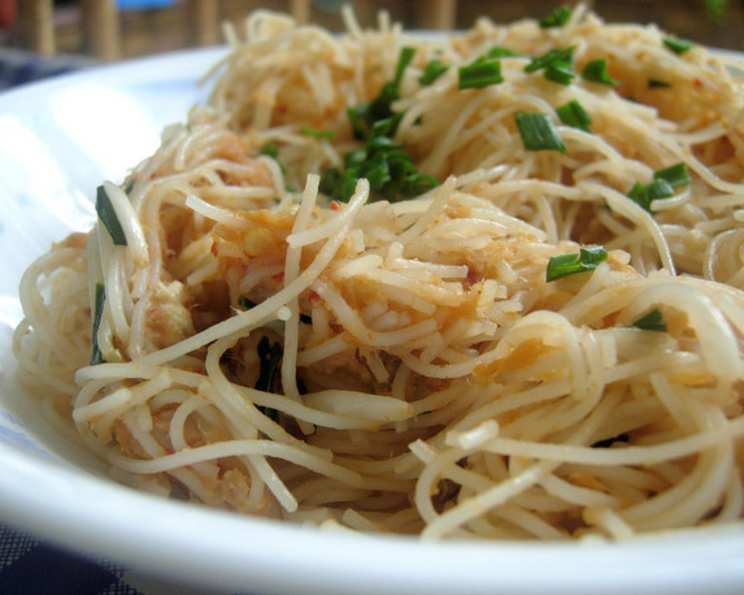
Dry Fried Mee Siam: A Symphony of Southeast Asian Flavors
The first time I tasted Mee Siam was at a bustling hawker stall in Singapore, the air thick with humidity and the aroma of a hundred different dishes. It wasn’t the most visually appealing plate – a tangle of thin rice noodles clinging to a brownish sauce – but one bite, and I was hooked. The explosion of sweet, sour, spicy, and savory notes danced on my tongue. It was an experience that transported me to the heart of Southeast Asia, a culinary memory that I’ve cherished ever since. Now, I’m excited to share my own version of this delightful dish, one that captures the very essence of those street-food memories.
Recipe Overview
- Prep Time: 25 minutes
- Cook Time: 10 minutes
- Total Time: 35 minutes
- Servings: 5
- Yield: 1 large pan
- Dietary Type: Not Vegetarian (Contains Shrimp and Fish Sauce)
Ingredients
- 250 g thin rice vermicelli (soaked in water for 10 minutes, then drained)
- 200 g bean sprouts
- 250 g prawns
- Oil (for frying)
- 1 tablespoon tamarind pulp (dissolved in 1/2 cup warm water, then strained)
- 2 cups water (for cooking prawns)
- 3 garlic cloves
- 6 shallots
- 1 tablespoon preserved soybeans (tau cheong)
- 50 g dried shrimp
- 12 dried chilies, soaked
- 2 candlenuts
- 1 stalk lemongrass (sliced)
- 1 inch shrimp paste
- 1 tablespoon sugar
- 1⁄4 teaspoon pepper
- 1 tablespoon fish sauce
Equipment Needed
- Large pot or wok
- Blender or food processor
- Large mixing bowl
- Strainer
Instructions
- Begin by preparing the prawns. Bring the 2 cups of water to a boil in a pot. Add the prawns and cook until they turn pink and are just cooked through. Remove the prawns from the boiling water immediately to prevent overcooking and plunge them into a bowl of ice water. This will stop the cooking process and keep them tender.
- Once the prawns have cooled, peel them, leaving the tails on for a more attractive presentation if desired. Set the peeled prawns aside for garnishing later. Reserve 1 cup of the stock used to cook the prawns; this will add depth of flavor to the sauce.
- Now, prepare the rempah (spice paste), the heart of Mee Siam’s flavor. In a blender or food processor, combine the garlic, shallots, preserved soybeans, dried shrimp, dried chilies (soaked to soften them), candlenuts, lemongrass, and shrimp paste. Blend until you have a smooth, fragrant paste. You may need to add a tablespoon or two of water to facilitate the blending process.
- Heat about 1/3 cup of oil in a large wok or pan over medium heat. Once the oil is hot, add the rempah and fry until fragrant and the paste darkens slightly. This usually takes about 5-7 minutes. Be careful not to burn the paste, as this will impart a bitter flavor to the dish.
- Add the tamarind juice (prepared by dissolving the tamarind pulp in warm water and straining) and 1 cup of the reserved prawn stock to the wok. Bring the mixture to a boil, then reduce the heat and simmer for about 5 minutes, allowing the flavors to meld together beautifully.
- Add the soaked and drained rice vermicelli to the wok. Using tongs or chopsticks, stir-fry the noodles, ensuring they are evenly coated with the sauce. Be gentle to avoid breaking the noodles too much. If the noodles seem too dry, add a little more prawn stock or water, a tablespoon at a time, until they reach the desired consistency.
- Season the noodles with sugar, pepper, and fish sauce. Adjust the amounts to your taste preference. For an extra layer of tanginess, add a squeeze of lime juice at this stage.
- Finally, add the bean sprouts and chives. Toss until the bean sprouts are just limp and slightly softened. You want them to retain a bit of their crunch for texture.
- Serve the Mee Siam immediately, garnished with the cooked prawns.
Expert Tips & Tricks
- Rempah Prep: The rempah can be made ahead of time and stored in the refrigerator for up to 3 days. This will save you time on the day you want to cook the Mee Siam.
- Noodle Texture: Overcooked noodles are a common mistake. Soaking the rice vermicelli for only 10 minutes is crucial; any longer and they become mushy.
- Spice Level: Adjust the number of dried chilies according to your spice preference. For a milder flavor, remove the seeds from the chilies before blending.
- Tamarind Tang: The tanginess of the tamarind can vary. Taste the sauce and add more tamarind juice if needed to achieve the desired balance.
- Garnish Galore: Get creative with your garnishes! Besides the cooked prawns, consider adding sliced hard-boiled eggs, fried tofu puffs, or calamansi lime wedges for an extra burst of flavor.
Serving & Storage Suggestions
Serve Dry Fried Mee Siam hot, garnished with the cooked prawns. A sprinkle of freshly chopped cilantro or some crispy fried shallots adds a nice visual appeal and enhances the flavor.
Leftovers can be stored in an airtight container in the refrigerator for up to 2 days. Reheat in a wok or pan over medium heat, adding a splash of water or broth if the noodles seem dry. While Mee Siam is best enjoyed fresh, it can be reheated successfully if stored properly. Freezing is not recommended as it can alter the texture of the noodles.
Nutritional Information
| Nutrient | Amount per Serving | % Daily Value |
|---|---|---|
| Calories | 410 kcal | 21% |
| Total Fat | 18g | 28% |
| Saturated Fat | 3g | 15% |
| Cholesterol | 180mg | 60% |
| Sodium | 1500mg | 63% |
| Total Carbohydrate | 50g | 17% |
| Dietary Fiber | 3g | 12% |
| Sugars | 8g | |
| Protein | 20g | 40% |
Note: Nutritional information is an estimate and may vary depending on specific ingredients and portion sizes.
Variations & Substitutions
- Vegetarian Mee Siam: Omit the prawns and fish sauce. Use vegetable broth instead of prawn stock and add more preserved soybeans for umami flavor. Fried tofu can be used as a protein substitute.
- Gluten-Free Mee Siam: Ensure the fish sauce and preserved soybeans are gluten-free. Some brands may contain gluten.
- Spicier Mee Siam: Add more dried chilies to the rempah or sprinkle chili flakes on top before serving.
- Creamier Mee Siam: For a richer sauce, add a splash of coconut milk to the wok along with the tamarind juice.
FAQs (Frequently Asked Questions)
Q: Can I use fresh chilies instead of dried chilies?
A: Yes, you can substitute fresh red chilies for dried chilies. Use about half the amount, and be sure to remove the seeds if you prefer a milder flavor.
Q: What if I can’t find preserved soybeans (tau cheong)?
A: If you can’t find tau cheong, you can use miso paste as a substitute. Use about half the amount of miso paste as you would tau cheong.
Q: Can I make this dish ahead of time?
A: While Mee Siam is best served fresh, you can prepare the rempah ahead of time and store it in the refrigerator for up to 3 days.
Q: How do I prevent the noodles from sticking together?
A: Ensure the noodles are well-coated with the sauce while stir-frying. If they still stick, add a little more prawn stock or water to loosen them up.
Q: Can I use a different type of noodles?
A: While thin rice vermicelli is traditional for Mee Siam, you can experiment with other types of noodles, such as thicker rice noodles or even egg noodles. The cooking time may need to be adjusted accordingly.
Final Thoughts
Dry Fried Mee Siam is more than just a dish; it’s an experience, a journey of flavors that transports you to the vibrant streets of Southeast Asia. I encourage you to try this recipe and create your own version of this beloved classic. Don’t be afraid to experiment with different ingredients and adjust the flavors to your liking. And most importantly, share your culinary creation with friends and family! Let me know how it turns out. Selamat makan! (Happy eating!)