
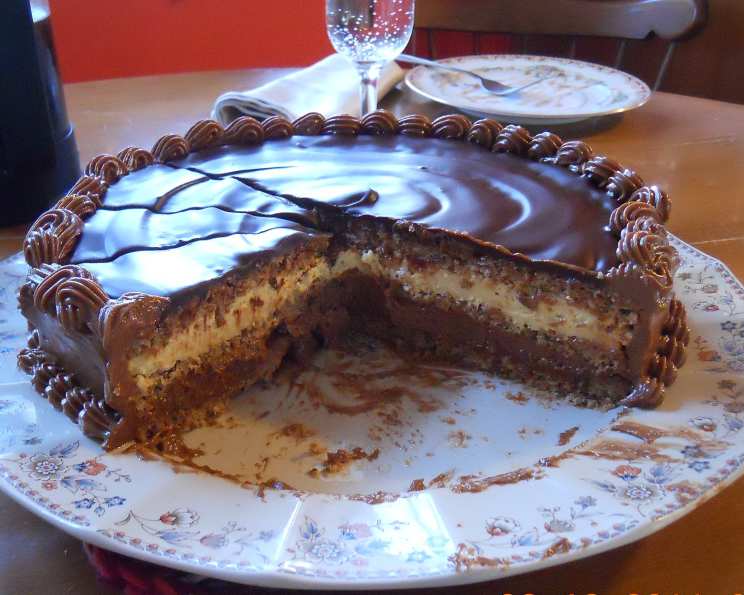
Duchess of Parma Torte: A Culinary Masterpiece
I remember the first time I encountered the Duchess of Parma Torte. I was a young apprentice, overwhelmed by the sheer artistry of pastry. Our head chef, a stern but brilliant woman named Madame Dubois, presented it with a flourish. The layers of meringue, the shimmering chocolate glaze, the whisper of hazelnut – it was a revelation, a testament to the transformative power of dedication in the kitchen. It looked intimidating, and I’m not going to lie, it is a time commitment. But every bite is worth the effort and this torte will definitely impress!
Recipe Overview
- Prep Time: 2 hours
- Cook Time: 22 minutes
- Total Time: 4 hours
- Servings: 8-12
- Yield: 1 torte
- Dietary Type: Not Gluten-Free
Ingredients
For Chocolate Buttercream:
- 8 egg yolks
- 1 cup sugar
- 6 tablespoons strong brewed espresso
- 1/4 cup dark rum
- 1 ounce unsweetened chocolate, melted
- 4 ounces bittersweet chocolate, melted
- 1 cup unsalted butter, room temperature
- 6 tablespoons unsalted butter, room temperature
For Meringues:
- 2 tablespoons unsalted butter
- 4 tablespoons flour, plus more for pan
- 2 cups hazelnuts, toasted and skinned
- 3/4 cup sugar
- 7 large egg whites (you may need extra)
- 1/4 teaspoon cream of tartar
For Zabaione Buttercream:
- 5 egg yolks
- 7 tablespoons dry marsala
- 1/4 cup sugar
- 1 teaspoon dark rum
- 12 tablespoons unsalted butter, room temperature
For Glaze:
- 2 1/2 ounces bittersweet chocolate
- 2 1/2 tablespoons unsalted butter
- 2 teaspoons light corn syrup
Equipment Needed
- Electric mixer
- Candy thermometer
- 3 x 9-inch round cake pans
- Parchment paper
- Food processor
- Double boiler or heatproof bowl and saucepan
- Flat round cake plate
Instructions
-
Chocolate Buttercream: In the bowl of an electric mixer, combine the egg yolks, sugar, espresso, and rum.
-
Remove the bowl from the mixer and whisk by hand over a pan of boiling water. Ensure the bottom of the bowl doesn’t touch the water. Use a candy thermometer and stop whisking when the mixture reaches between 160 and 165 degrees Fahrenheit and has thickened into a custard.
-
Place the bowl back on the mixer and beat on high speed until the mixture has cooled (about 8 to 10 minutes). It should be thickened.
-
Add the melted unsweetened chocolate and melted bittersweet chocolate.
-
Beat in the 1 cup of room-temperature butter one tablespoon at a time, scraping the sides of the bowl occasionally.
-
Finally, beat in the 6 tablespoons of room-temperature butter. The buttercream should be silky and fluffy. If it seems too soft, refrigerate it for 20 minutes and beat again to fluff it up. If making ahead, cover and refrigerate.
-
Meringues: Butter and flour three 9-inch round cake pans. Cut circles of parchment paper to fit the bottom of each pan and place them inside.
-
Preheat the oven to 350 degrees Fahrenheit.
-
In a food processor, grind the hazelnuts with half of the sugar (3/8 cup) and all of the flour. The nuts should be very finely ground but not turned into nut butter.
-
In a clean, grease-free bowl, beat the egg whites with the cream of tartar until stiff peaks form.
-
Gently fold the nut mixture into the meringue, being careful not to deflate the meringue.
-
Spread the meringue mixture evenly into the prepared cake pans.
-
Bake for 22 minutes, or until the meringues are golden brown. They should feel almost hard to the touch, but still slightly springy.
-
Let the meringues cool completely in the pans.
-
Run a knife around the edges of each meringue layer and carefully remove them from the pans.
-
Trim any ragged edges to create even circles. Leave in a cool, dry place until ready to assemble the torte.
-
Zabaione Buttercream: In the bowl of an electric mixer, combine the egg yolks, marsala, sugar, and rum.
-
Remove the bowl from the mixer and whisk by hand over a pan of simmering water until a candy thermometer reads between 160 and 165 degrees Fahrenheit. The mixture should be a thick custard.
-
Return the bowl to the mixer and beat on high speed for 8 to 10 minutes, or until the mixture has cooled and thickened.
-
Add 9 tablespoons of the room-temperature butter one tablespoon at a time, beating until each addition is fully incorporated and smooth.
-
Add the remaining 3 tablespoons of butter all at once and beat until smooth and thick. If the buttercream isn’t thick enough, chill it for 20 minutes and beat again. If making ahead, cover and refrigerate.
-
Glaze: Combine the bittersweet chocolate, butter, and corn syrup in a small bowl. Place the bowl over a pan of simmering water (or use a double boiler).
-
Stir until the mixture is smooth and glossy. Set aside.
-
Assembling the Torte: Protect the edges of a flat, round cake plate with strips of parchment paper or paper towels.
-
Dab about a tablespoon of the chocolate buttercream in the center of the plate to help hold the torte in place.
-
Place one meringue layer in the center of the plate.
-
Spread a layer of chocolate buttercream about 3/4 inch thick over the meringue, making it slightly thicker around the edges.
-
Set the second meringue layer upside down on top of the chocolate buttercream.
-
Spread all of the zabaione buttercream over the meringue, again making it slightly thicker around the edges.
-
Top with the last meringue layer, placing it upside down.
-
Firm the torte in the refrigerator for 30 minutes.
-
Spread a thin layer of chocolate buttercream along the sides and top of the torte, filling any gaps.
-
Using a piping bag fitted with a decorative tip, pipe an undulating border around the outer edge of the top layer.
-
Refrigerate the torte for at least one hour before glazing.
-
About one hour before serving, spoon the glaze over the top of the torte and spread it evenly so that it reaches the buttercream border. Avoid refrigerating the torte after glazing, if possible, as it can dull the glaze’s sheen.
Expert Tips & Tricks
- Toasting Hazelnuts: To ensure the hazelnuts release their skins easily, toast them in a 350°F oven for 10-15 minutes, or until fragrant and the skins crack. Let them cool slightly before rubbing them in a clean kitchen towel to remove the skins.
- Meringue Stability: Ensuring a grease-free bowl and using room temperature egg whites are key for stable meringues. A pinch of salt can also help stabilize the egg whites.
- Buttercream Consistency: If either buttercream becomes too soft, chilling it briefly and then re-whipping it will help restore its texture. Conversely, if it becomes too firm, let it sit at room temperature for a few minutes and then beat it again.
- Meringue Cracks: Don’t worry too much about small cracks in the meringue layers. The buttercream will help to hold everything together.
- Marsala Substitute: If you can’t find dry Marsala, you can use a dry sherry or even a fortified wine like Madeira in a pinch.
- Espresso Substitute: If you don’t have espresso, you can use very strong brewed coffee.
Serving & Storage Suggestions
Serve the Duchess of Parma Torte chilled, but not directly from the refrigerator, as this allows the flavors to fully develop. The torte is best enjoyed within 2-3 days of assembly. Store leftover torte in an airtight container in the refrigerator. While freezing is possible, it may affect the texture of the meringues and buttercream, so it’s best to enjoy it fresh. It can be stored in the refrigerator for up to 3 days. It is not recommended to store at room temperature.
Nutritional Information
(Please note that these are estimates and will vary based on specific ingredients used.)
| Nutrient | Amount per Serving | % Daily Value |
|---|---|---|
| Calories | 750 kcal | 38% |
| Total Fat | 50g | 77% |
| Saturated Fat | 30g | 150% |
| Cholesterol | 250mg | 83% |
| Sodium | 50mg | 2% |
| Carbohydrates | 65g | 22% |
| Fiber | 3g | 12% |
| Sugar | 50g | 100% |
| Protein | 10g | 20% |
Variations & Substitutions
- Nut Variation: Use almonds or walnuts instead of hazelnuts for a different flavor profile.
- Chocolate Intensity: Adjust the ratio of unsweetened to bittersweet chocolate to control the overall bitterness of the chocolate buttercream and glaze.
- Booze-Free: Omit the rum from the chocolate buttercream and zabaione buttercream for an alcohol-free version. Replace the Marsala with grape juice or apple cider.
- Citrus Zabaione: Add a teaspoon of orange or lemon zest to the zabaione buttercream for a bright, citrusy flavor.
FAQs (Frequently Asked Questions)
Q: Can I make the meringue layers ahead of time?
A: Yes, the meringue layers can be made a day in advance and stored in an airtight container at room temperature. This actually helps them to dry out slightly, which can improve their texture in the torte.
Q: How do I prevent the meringues from sticking to the pan?
A: Thoroughly buttering and flouring the cake pans, along with using parchment paper liners, will help prevent the meringues from sticking.
Q: Can I use a stand mixer for all the buttercream steps?
A: Yes, a stand mixer is recommended for both buttercreams. Using a hand mixer is also an option, but will require more effort.
Q: Why is my chocolate buttercream grainy?
A: This could be due to the chocolate seizing or the butter being too cold. Make sure the melted chocolate is smooth and the butter is at room temperature. If it happens, try gently warming the bowl over a pan of simmering water while whisking until smooth.
Q: How can I tell if the zabaione is cooked enough?
A: The zabaione should be thick enough to coat the back of a spoon. Use a candy thermometer to ensure it reaches between 160 and 165 degrees Fahrenheit for food safety and proper consistency.
Final Thoughts
The Duchess of Parma Torte may seem like a challenge, but the resulting symphony of textures and flavors is truly unforgettable. Don’t be afraid to take your time, follow the steps carefully, and enjoy the process. This torte is a perfect centerpiece for special occasions and is sure to impress your friends and family. If you want to pair it with a drink, I recommend a robust, full bodied red wine or even a dessert wine. And I hope you will share your experience and variations – I’m always looking for new ways to explore this classic dessert.