
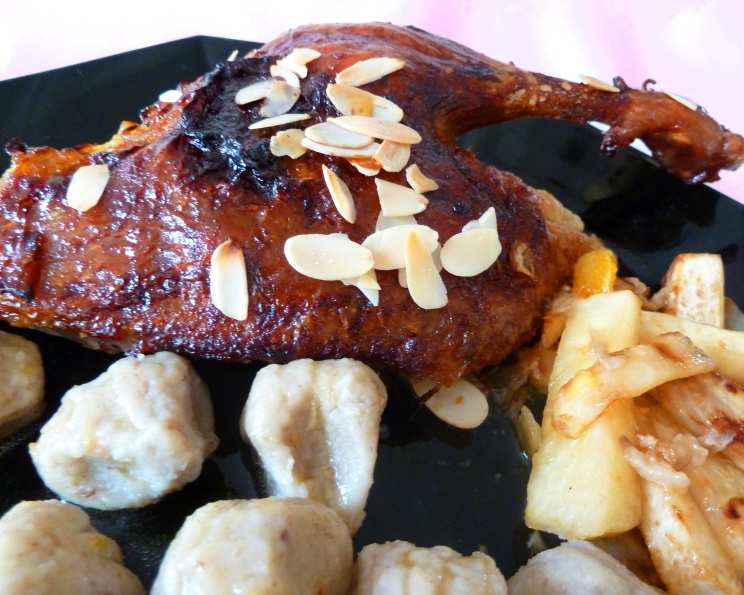
Duck à L’orange: A Culinary Classic
The first time I experienced Duck à l’Orange, I was a young cook assisting in a bustling Parisian kitchen. The air, thick with the aroma of roasting fowl and caramelized sugar, was intoxicating. Watching the chef, a man weathered by years of experience, expertly carve the glistening duck and drape it in the vibrant orange sauce was like witnessing a culinary masterpiece unfold. That single dish, a symphony of savory duck and citrusy sweetness, ignited my passion for classic French cuisine, a passion that continues to burn brightly to this day.
Recipe Overview
- Prep Time: 20 minutes
- Cook Time: 1 hour 20 minutes
- Total Time: 1 hour 40 minutes
- Servings: 6
- Dietary Type: None Specified
Ingredients
- 2 ducks, about 3 lbs each, plump
- 5 tablespoons sugar
- 2 tablespoons vinegar
- 1 cup duck broth, made with giblets of duck, otherwise use commercial chicken broth
- 2 oranges, plump, ripe
- 1 tablespoon Cointreau liqueur or 1 tablespoon Grand Marnier
- 3 ounces sliced almonds
- 2 tablespoons butter, melted
- 2 stalks celery, long, finely chopped
- 1 onion, chopped finely
- Salt
- White pepper
- Orange slice (extra for garnish)
Equipment Needed
- Oven bags (optional, for pre-roasting)
- Oven tin
- Small heavy-bottomed pot
- Whisk
- Suitable container for resting duck
- Oven dish
- Small pot (same one used for sauce initially)
- Heated serving platter
- Gravy boat (optional)
Instructions
-
Preheat your oven to 400 degrees F (200 degrees C).
-
Prick the duck breasts all over with a fork. This helps render the fat during the pre-roasting process.
-
Place each duck into a separate oven bag. If you don’t have oven bags, you can skip this step but be prepared for more oven splatter. Place the bagged ducks in an oven tin and roast in the preheated oven for 1 hour. This step is crucial for rendering excess fat from the duck, resulting in crispier skin and a less greasy final dish. Remember to retain the rendered duck fat – it’s liquid gold for roasting potatoes!
-
While the ducks are roasting, prepare the orange sauce. In a small, heavy-bottomed pot, combine the sugar and vinegar. Boil together until the mixture becomes like toffee. Be very careful during this step, as hot sugar can cause severe burns.
-
Zest the oranges, being careful to avoid the bitter white pith underneath. Then, juice the oranges. The quantity of juice isn’t critical, but aim for about ½ cup.
-
Very carefully pour the duck broth or chicken broth into the toffee mixture. Stand back as it will sizzle and bubble vigorously.
-
Add the orange juice, orange zest, and Cointreau or Grand Marnier to the pot. If you absolutely have no orange liqueur, rum can be used in a pinch, but avoid other hard liquors as they won’t provide the same flavor profile.
-
Stir the sauce mixture with a whisk over very low heat until the toffee has completely melted into the juice and liqueur. The sauce should be smooth and slightly thickened.
-
After the ducks have roasted for 1 hour, remove them from the oven. Cut open the bags carefully and transfer the ducks to a suitable container.
-
Carve the four breast pieces neatly from the ducks, and cut off the legs into four whole sections. Do not divide the legs further.
-
Arrange the breast and leg pieces neatly in an oven dish.
-
Ladle the orange sauce over the duck pieces.
-
Return the dish to the oven for approximately 20 minutes, or until the duck is tender. Do not baste the duck during this final roasting period.
-
If your oven tends to run hot, reduce the temperature to 350 degrees F (180 degrees C) during the final 20 minutes of roasting to prevent the sauce from burning.
-
While the duck is finishing in the oven, prepare the almond garnish. In the small pot you used for the sauce (no need to clean it), fry the sliced almonds in the melted butter until they are pale brown. Watch them carefully, as almonds burn quickly.
-
Remove the duck from the oven and transfer the pieces to a heated serving platter. Sprinkle with salt, then scatter the almonds over the duck. Keep the platter warm, uncovered.
-
Return the sauce in the oven dish to the small pot. Add the chopped celery and onion, and simmer until the celery softens.
-
Taste the sauce and adjust the seasoning with salt and white pepper to your liking.
-
Pour the sauce into a gravy boat. If a significant amount of the sauce has cooked away, you can ladle it around the duck on the platter, but avoid pouring it directly on the duck, as this will soften the skin.
-
Garnish the platter with thinly sliced orange slices, if desired.
-
Serve immediately with basmati rice or South African Yellow Rice, and a green vegetable such as young green beans.
Expert Tips & Tricks
- Rendering Duck Fat: Pricking the duck skin thoroughly is crucial for rendering fat properly. Don’t be shy – use a fork or a sharp knife to create numerous small punctures.
- Sauce Consistency: If your orange sauce is too thin, you can thicken it by simmering it for a few more minutes, allowing the liquid to reduce. Conversely, if it becomes too thick, add a splash of duck or chicken broth.
- Almond Toasting: Keep a close eye on the almonds while toasting. They can go from perfectly golden brown to burnt in a matter of seconds.
- Duck Doneness: A meat thermometer inserted into the thickest part of the thigh should register 165°F (74°C) for safe consumption.
- Make-Ahead Option: The orange sauce can be made a day in advance and stored in the refrigerator. Reheat gently before serving.
Serving & Storage Suggestions
Duck à l’Orange is best served immediately while the skin is crisp and the sauce is vibrant. Leftovers should be stored in an airtight container in the refrigerator for up to 3 days. Reheat gently in a low oven or microwave. Be aware that the skin will lose some of its crispness upon reheating. The sauce can be stored separately for optimal flavor. Freezing is not recommended, as the texture of the duck may be affected.
Nutritional Information
| Nutrient | Amount per Serving | % Daily Value |
|---|---|---|
| Calories | 1901.4 kcal | N/A |
| Calories from Fat | 1594 g | 84% |
| Total Fat | 177.2 g | 272% |
| Saturated Fat | 58.9 g | 294% |
| Cholesterol | 331.4 mg | 110% |
| Sodium | 311.9 mg | 12% |
| Total Carbohydrate | 20.8 g | 6% |
| Dietary Fiber | 3.3 g | 13% |
| Sugars | 16.1 g | 64% |
| Protein | 52.3 g | 104% |
Note: These values are estimates and can vary based on specific ingredients and portion sizes.
Variations & Substitutions
- Spicy Duck à l’Orange: Add a pinch of red pepper flakes to the orange sauce for a subtle kick.
- Honey Glazed Duck: Substitute honey for the sugar in the sauce for a richer, more floral flavor.
- Blood Orange Duck: Use blood oranges instead of regular oranges for a deeper color and slightly tart flavor.
- Duck with Dried Cherries: Add dried cherries to the sauce during the final simmering stage for a festive twist.
FAQs (Frequently Asked Questions)
Q: Can I use frozen duck for this recipe?
A: Yes, but make sure to thaw the duck completely in the refrigerator before cooking. Pat it dry with paper towels before pricking the skin.
Q: What if I don’t have duck broth?
A: Chicken broth makes a perfectly acceptable substitute. You can also use vegetable broth, but the flavor will be slightly different.
Q: How do I know when the duck is cooked through?
A: Use a meat thermometer inserted into the thickest part of the thigh, avoiding the bone. It should register 165°F (74°C).
Q: Can I make this recipe without the liqueur?
A: Yes, you can omit the Cointreau or Grand Marnier. However, it adds a depth of flavor that is worth including if possible. Consider substituting with orange extract, but use it sparingly.
Q: My orange sauce is too bitter. What can I do?
A: The bitterness may be due to the white pith from the orange zest. Add a small amount of honey or sugar to balance the flavors.
Final Thoughts
Duck à l’Orange, while seemingly complex, is a dish that’s absolutely achievable in your home kitchen. Don’t be intimidated; embrace the process, savor the aromas, and enjoy creating a truly memorable meal. I encourage you to try this recipe, experiment with variations, and share your experiences with fellow food enthusiasts. Pair this exquisite dish with a crisp Sauvignon Blanc or a light-bodied Pinot Noir for a perfect culinary experience. Bon appétit!