
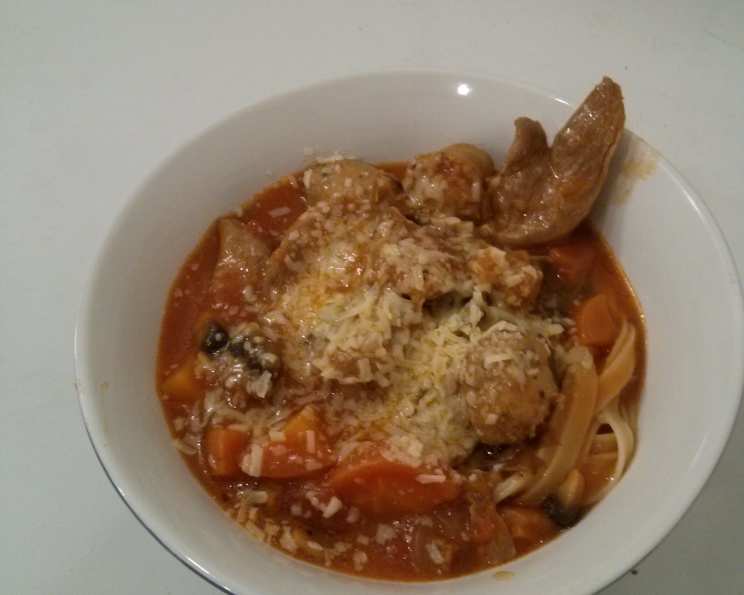
Duck Bolognese: A Rich and Savory Culinary Adventure
There’s something inherently comforting about a long-simmered Bolognese sauce, isn’t there? I remember, years ago, while interning at a small trattoria in Bologna, the nonna of the family would always have a massive pot bubbling away on the back burner, its aroma permeating the entire restaurant. This Duck Bolognese, though a departure from tradition, evokes that same sense of warmth and satisfaction. The deep, savory notes of the duck, combined with the classic Bolognese vegetables and herbs, create a dish that’s both sophisticated and deeply comforting, a true culinary hug.
Recipe Overview
- Prep Time: 30 minutes
- Cook Time: 4 hours
- Total Time: 4 hours 30 minutes
- Servings: 4-6
- Yield: About 8 cups of sauce
- Dietary Type: Not specified (contains dairy and meat)
Ingredients
- 1/2 cup olive oil
- 1/2 lb Italian sausage, mild
- 1 lb duck breast, sliced
- 1/2 yellow onion, diced
- 2 carrots, diced
- 2 celery ribs, diced
- 1 cup white mushroom, sliced
- 2 cups tomatoes, whole and canned
- 1 cup white wine
- 4 cups chicken stock
- 1/2 cup tomato paste
- 1 1/2 cups milk
- 1 tablespoon sage, fresh, chopped
- 1/3 cup Parmesan cheese, grated, plus more for serving
- Salt and pepper to taste
- 1 lb pasta, cooked, drained, and ready to serve (pasta of your choice)
Equipment Needed
- Large pot or Dutch oven
- Wooden spoon
- Cutting board
- Knife
Instructions
- Begin by heating the olive oil in a large pot or Dutch oven over medium-high heat.
- Add the Italian sausage and sliced duck breast to the hot oil. Brown the meat, breaking up the sausage with a wooden spoon as it cooks. Ensure the sausage is cooked through and the duck develops a nice sear. This step is crucial for building depth of flavor in the sauce.
- Once the meat is nicely browned, remove it from the pot and set it aside. Don’t discard any of the flavorful rendered fat in the pot – that’s where the magic happens!
- Add the diced yellow onion, diced carrots, and diced celery ribs to the pot. Cook the vegetables until they have softened, approximately 5 minutes. Stir frequently to prevent burning and ensure even cooking. This process, known as soffritto in Italian cooking, forms the aromatic base of the Bolognese.
- Add the sliced white mushrooms to the pot and cook for another 3-5 minutes, until they release their moisture and begin to brown.
- Pour in the white wine, scraping up any browned bits from the bottom of the pot. These browned bits, known as fond, are packed with flavor and will add complexity to the sauce. Allow the wine to simmer for a few minutes, reducing slightly.
- Return the browned sausage and duck to the pot.
- Add the canned whole tomatoes. If using whole tomatoes, crush them with your hands or a spoon as you add them to the pot.
- Pour in the chicken stock and stir in the tomato paste.
- Add the milk, chopped fresh sage, and Parmesan cheese.
- Bring the mixture to a boil, then immediately reduce the heat to low. Cover the pot and simmer for at least 3 hours, or even longer if you have the time. The longer the sauce simmers, the richer and more flavorful it will become. Stir occasionally to prevent sticking.
- Season the sauce with salt and pepper to taste. Remember to taste and adjust the seasoning throughout the cooking process, as the flavors will evolve over time.
- Before serving, check the consistency of the sauce. If it’s too thick, add a little more chicken stock or water to thin it out. If it’s too thin, remove the lid and simmer for a bit longer to allow some of the liquid to evaporate.
- Serve the Duck Bolognese over your favorite cooked pasta. Garnish with additional Parmesan cheese and a sprinkle of fresh sage, if desired.
Expert Tips & Tricks
- For a deeper, richer flavor, consider using duck confit in addition to, or instead of, the duck breast. The confit will add an incredible level of richness and complexity to the sauce.
- If you don’t have fresh sage on hand, you can substitute dried sage, but use it sparingly as dried herbs are more potent than fresh ones. A teaspoon of dried sage should be sufficient.
- To achieve an even smoother sauce, use an immersion blender to partially blend the Bolognese after it has simmered for a few hours. This will create a creamier texture without completely obliterating the chunks of meat and vegetables.
- If the sauce becomes too acidic, add a pinch of sugar to balance the flavors.
- For a spicier kick, add a pinch of red pepper flakes to the sauce along with the vegetables.
Serving & Storage Suggestions
Serve the Duck Bolognese hot over your favorite cooked pasta. A classic choice would be tagliatelle or pappardelle, but any pasta shape will work well. Garnish with grated Parmesan cheese and fresh sage, if desired. A side of crusty bread is also a welcome addition for soaking up the delicious sauce.
Leftover Duck Bolognese can be stored in an airtight container in the refrigerator for up to 3-4 days. For longer storage, freeze the sauce in freezer-safe containers for up to 2-3 months. To reheat, thaw the sauce in the refrigerator overnight and then gently warm it in a saucepan over medium heat, stirring occasionally. You may need to add a little bit of water or chicken stock to thin it out if it has thickened during storage. Do not leave the cooked sauce at room temperature for more than 2 hours.
Nutritional Information
(Please note: Nutritional information is an estimate and may vary based on specific ingredients and portion sizes.)
| Nutrient | Amount per Serving | % Daily Value |
|---|---|---|
| Calories | 692 kcal | 35% |
| Total Fat | 32.85g | 51% |
| Saturated Fat | 8.65g | 43% |
| Cholesterol | 106.9 mg | 36% |
| Sodium | 803.8 mg | 33% |
| Carbohydrates | 58.75g | 20% |
| Fiber | 3.95g | 16% |
| Sugar | 8.55g | N/A |
| Protein | 34.6g | 69% |
Variations & Substitutions
- For a leaner version, use ground turkey or chicken instead of Italian sausage and duck breast.
- To make it gluten-free, serve the Duck Bolognese over gluten-free pasta or zucchini noodles.
- For a dairy-free option, omit the milk and Parmesan cheese. You can substitute the milk with unsweetened almond milk or coconut milk, although it will slightly alter the flavor. Consider nutritional yeast to replace the cheesiness.
- Experiment with different types of mushrooms, such as shiitake or cremini, for a more complex flavor.
- Add other vegetables, such as bell peppers or zucchini, to the sauce for added nutrients and flavor.
- For a richer flavor, add a splash of balsamic vinegar towards the end of the cooking time.
FAQs (Frequently Asked Questions)
Q: Can I use pre-ground duck instead of slicing duck breast?
A: Yes, you can use pre-ground duck. However, slicing the duck breast allows you to get a better sear, which adds more flavor to the Bolognese.
Q: How can I prevent the sauce from sticking to the bottom of the pot?
A: Stir the sauce frequently, especially during the first few hours of simmering. You can also use a heavy-bottomed pot or Dutch oven to help distribute the heat evenly.
Q: Can I make this recipe in a slow cooker?
A: Yes, you can adapt this recipe for a slow cooker. Brown the sausage and duck as directed, then transfer all the ingredients to the slow cooker. Cook on low for 6-8 hours or on high for 3-4 hours.
Q: What kind of wine should I use for the Bolognese?
A: A dry white wine, such as Sauvignon Blanc or Pinot Grigio, works well in this recipe. Avoid using sweet wines, as they will make the sauce too sweet.
Q: Can I add cream to make it extra rich?
A: While not traditional, adding a splash of heavy cream towards the end of the cooking time will certainly make the sauce even richer and more decadent. About 1/4 to 1/2 cup should be sufficient.
Final Thoughts
I hope you’re inspired to try this Duck Bolognese. It’s a truly special dish that’s perfect for a cozy night in or a celebratory gathering. Don’t be afraid to experiment with the recipe and make it your own. Let me know what you think, and feel free to share your own tips and variations! A glass of robust red wine, like a Chianti Classico or a Sangiovese, would be the perfect complement to this rich and flavorful sauce. Buon appetito!