
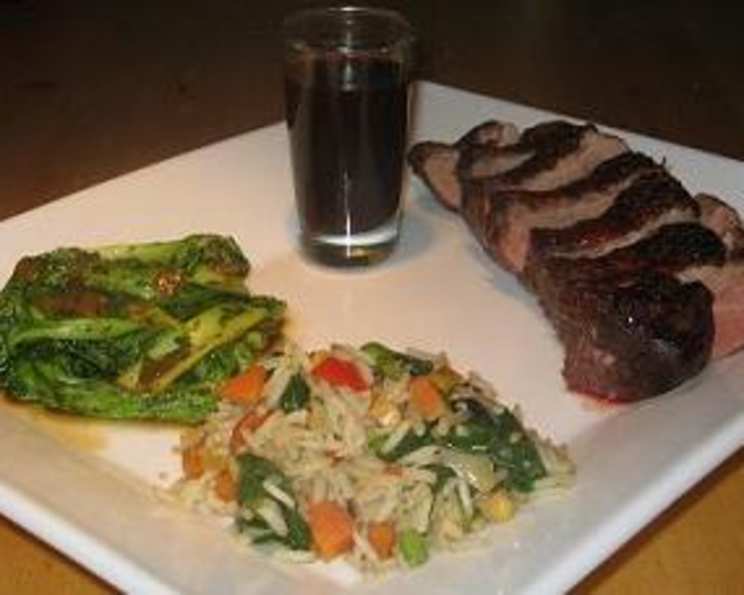
Duck Magret with Bok Choy and Vegetable Fried Rice: A Symphony of Flavors
The first time I tasted perfectly cooked duck magret, it was an epiphany. The crisp, rendered skin shattering to reveal succulent, ruby-red meat beneath – an experience that remains etched in my memory. Paired with the vibrant colors and textures of bok choy and a fragrant vegetable fried rice, it transforms into a complete, unforgettable meal. This recipe captures the essence of that experience, bringing together classic French technique with Asian-inspired sides for a delightful fusion.
Recipe Overview
- Prep Time: 20 minutes
- Cook Time: 35 minutes
- Total Time: 55 minutes
- Servings: 4
- Dietary Type: Gluten-Free (with appropriate soy sauce)
Ingredients
- 4 magret duck breasts (skin on; if magret breasts are unavailable, use regular duck breasts, adjusting cooking time accordingly)
For the Sauce:
- ¾ cup hoisin sauce (Blue Dragon brand recommended for its balanced flavor)
- ¼ cup plum sauce (Sharwood’s plum sauce with a hint of ginger recommended)
Bok Choy:
- 1 tablespoon peanut oil
- 8 heads bok choy, medium in size, leaves separated
- 4-5 green onions, sliced
- 1 garlic clove, crushed
- 1 teaspoon ginger, grated
- 1 ½ tablespoons soy sauce
- 1 teaspoon turmeric
- 1 ½ teaspoons sugar
- 1 ½ tablespoons fresh coriander, finely chopped
Vegetable Fried Rice:
- 1 tablespoon olive oil
- 2 teaspoons sesame oil
- 1 ½ cups cooked white rice (cooled and slightly dried for best results)
- 4 green onions, sliced
- 1 large carrot, diced
- 2 celery ribs, diced
- 1 small red pepper, diced
- 80g shiitake mushrooms, chopped
- ¼ cup frozen corn
- ¼ cup frozen peas
- 100g baby spinach leaves, coarsely chopped
- 2-3 teaspoons soy sauce
- 1 teaspoon sugar
Equipment Needed
- Non-stick frying pan
- Baking dish
- Wire rack
- Small saucepan
- Wok or large frying pan
Instructions
-
Prepare the Duck: Score the duck skin in a crosshatch pattern, being careful not to cut into the flesh. This will help the fat render evenly and create a crispy skin. Prick the duck skin all over with a fork.
-
Render the Fat: Heat a non-stick frying pan over medium heat. Place the duck breasts skin-side down in the pan. Cook until the skin is deeply browned and very crisp, about 15-20 minutes. Be sure to pour off the rendered duck fat periodically, reserving it for future cooking (it’s excellent for roasting potatoes!).
-
Bake the Duck: Preheat the oven to 180°C (350°F). Place the duck breasts on a wire rack set inside a baking dish, skin-side up. Bake for 20-25 minutes, or until cooked to your desired doneness. For medium-rare, the internal temperature should reach about 54°C (130°F). Remember that the duck will continue to cook slightly as it rests.
-
Rest the Duck: Remove the duck from the oven and let it rest for at least 5 minutes before slicing. This allows the juices to redistribute, resulting in a more tender and flavorful breast. If you want extra crispy skin, turn on the broiler/grill for the last couple of minutes, keeping a close eye to prevent burning.
-
Prepare the Sauce: While the duck is resting, combine the hoisin sauce and plum sauce in a small saucepan. Heat over low heat until warmed through. Keep warm until ready to serve.
-
Prepare the Bok Choy: Cut the ends off the bok choy and separate the leaves. Heat the peanut oil in a wok or large frying pan over medium-high heat. Add the green onions, garlic, and ginger, and stir-fry for about a minute until fragrant.
-
Cook the Bok Choy: Add the sugar, soy sauce, and turmeric to the pan. Add the bok choy and stir-fry for 3-5 minutes, until the bok choy is tender-crisp. Stir in the fresh coriander just before serving.
-
Prepare the Vegetable Fried Rice: Heat the olive oil and sesame oil in a wok over medium-high heat. Add the carrot, celery, mushrooms, and red pepper, and stir-fry for 2-3 minutes, until slightly softened.
-
Finish the Fried Rice: Add the soy sauce, peas, corn, and spinach to the wok. Stir-fry for a couple more minutes, until the spinach is wilted and the vegetables are heated through.
-
Add the Rice: Finally, add the cooked rice and sugar to the wok. Stir-fry until the rice is thoroughly mixed with the vegetables and heated through. Serve immediately.
-
Assemble and Serve: Slice the rested duck breast thinly, against the grain. Arrange the sliced duck on plates with the bok choy and vegetable fried rice. Drizzle generously with the hoisin-plum sauce. Serve immediately.
Expert Tips & Tricks
- Scoring the Duck: Ensure your knife is sharp when scoring the duck skin. This makes the process much easier and prevents tearing the skin.
- Rendering Duck Fat: Don’t overcrowd the pan when rendering the duck fat. Cook in batches if necessary to ensure even browning.
- Crispy Skin Secrets: Drying the duck skin with paper towels before cooking helps achieve maximum crispiness. A brief stint under the broiler at the end also works wonders.
- Rice for Fried Rice: Using day-old rice that has been refrigerated is essential for achieving the right texture in fried rice. Freshly cooked rice tends to clump together.
- Flavor Boost: A touch of sesame oil added at the very end of the fried rice cooking process enhances the aroma and flavor.
Serving & Storage Suggestions
Serve the duck magret immediately for the best flavor and texture. The crispy skin will soften over time. To present attractively, fan the sliced duck breast on the plate, alongside a generous portion of the bok choy and fried rice. Drizzle the sauce artfully over the duck.
Leftover duck magret can be stored in an airtight container in the refrigerator for up to 3 days. The skin will lose some of its crispness, but the flavor will remain. Reheat gently in a pan or oven. Leftover fried rice should also be stored in the refrigerator in an airtight container and consumed within 2 days. Reheat in a pan or microwave. The bok choy is best eaten fresh, but leftovers can be stored in the fridge for a day.
Nutritional Information
| Nutrient | Amount per Serving | % Daily Value |
|---|---|---|
| Calories | 750 kcal | 38% |
| Total Fat | 45g | 69% |
| Saturated Fat | 15g | 75% |
| Cholesterol | 240mg | 80% |
| Sodium | 850mg | 35% |
| Total Carbohydrate | 50g | 17% |
| Dietary Fiber | 5g | 20% |
| Sugars | 10g | |
| Protein | 40g | 80% |
Note: Nutritional information is an estimate and may vary based on specific ingredients and portion sizes.
Variations & Substitutions
- Gluten-Free: Use tamari or a gluten-free soy sauce in the bok choy and fried rice.
- Vegetarian: Substitute the duck breasts with firm tofu, pan-fried until golden brown.
- Spicy Kick: Add a pinch of red pepper flakes to the bok choy or a dash of sriracha to the fried rice for extra heat.
- Seasonal Vegetables: Swap out the frozen corn and peas in the fried rice for seasonal vegetables like asparagus, snap peas, or edamame.
- Different Rice: Experiment with brown rice or quinoa in the fried rice for a healthier twist.
FAQs (Frequently Asked Questions)
Q: Can I use regular duck breasts instead of magret?
A: Yes, you can, but magret breasts are larger and have a thicker layer of fat. You may need to adjust the cooking time accordingly to ensure the duck is cooked to your desired doneness.
Q: How do I know when the duck is cooked properly?
A: The best way is to use a meat thermometer. For medium-rare, aim for an internal temperature of 54°C (130°F). Remember to let the duck rest after cooking, as it will continue to cook slightly.
Q: What if I don’t have a wok?
A: A large frying pan works just fine for making the vegetable fried rice. Just make sure it’s large enough to accommodate all the ingredients without overcrowding.
Q: Can I make the sauce ahead of time?
A: Yes, the sauce can be made a day or two in advance and stored in the refrigerator. Simply reheat it gently before serving.
Q: Is it necessary to score the duck skin?
A: Scoring the duck skin is highly recommended. It helps the fat render evenly and creates a crispy skin, which is a key element of this dish.
Final Thoughts
This Duck Magret with Bok Choy and Vegetable Fried Rice is more than just a meal; it’s an experience. The combination of crispy duck skin, succulent meat, and vibrant Asian-inspired sides is a true delight for the senses. Don’t be intimidated by the multiple components – each element is surprisingly simple to prepare. Gather your ingredients, follow the steps, and prepare to be amazed by the symphony of flavors you’ll create. I encourage you to try this recipe and share your feedback! Perhaps you’ll even pair it with a crisp Riesling to further elevate the experience. Bon appétit!