
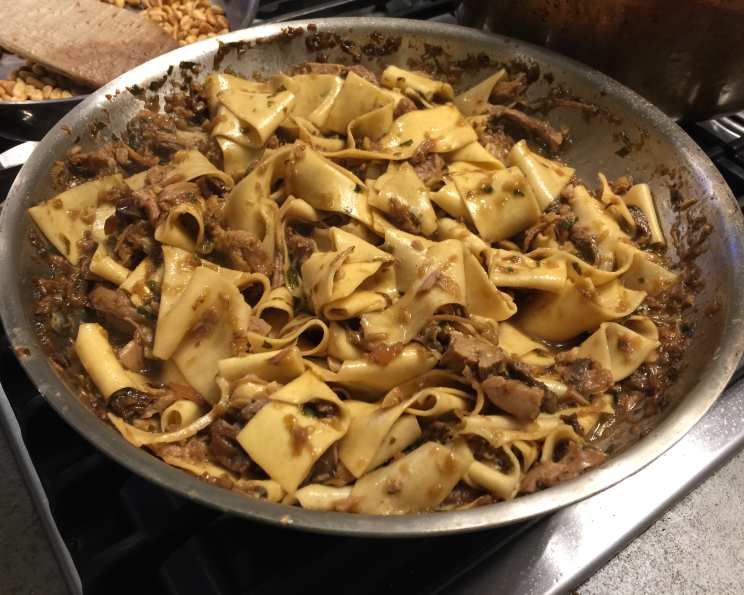
Duck Sugo With Pappardelle: A Culinary Symphony
The first time I tasted duck sugo, it wasn’t in a Michelin-starred restaurant, but in the cozy kitchen of a Tuscan farmhouse. The nonna, her hands gnarled with age and wisdom, stirred a bubbling pot, the aroma of rich duck fat and fragrant herbs filling the air. As she ladled the hearty sauce over wide ribbons of pappardelle, she winked and said, “This is the taste of home, bambina.” That simple meal, shared with warmth and laughter, sparked a lifelong love affair with this deeply satisfying dish.
Recipe Overview
- Prep Time: 45 minutes
- Cook Time: 45 minutes
- Total Time: 1 hour 30 minutes
- Servings: 4-6
- Yield: Approximately 6 servings
- Dietary Type: Not suitable for: Gluten-free, Dairy-free
Ingredients
- 2 cups roast duck, shredded, skin removed
- 2 1/2 cups veal enriched duck stock
- 1/4 cup dried porcini mushrooms
- 2 tablespoons fresh rosemary leaves
- 3 large sage leaves
- 4 garlic cloves
- 1/2 onion
- 2 celery stalks
- 2 tablespoons duck fat
- 1/2 cup white wine
- 1/2 cup parsley, plus 1/4 cup parsley, for later use
- 6 ounces fresh pappardelle pasta
- 1/2 cup grated Parmesan cheese (or Manchego)
- Salt and pepper, to taste
Equipment Needed
- Large pot or Dutch oven
- Skillet
- Food processor
- Cheesecloth
- Pasta pot
Instructions
-
Begin by rehydrating the dried porcini mushrooms. Bring 1 cup of duck stock to a boil in a small saucepan. Pour the boiling stock over the porcini mushrooms in a heatproof bowl. Allow the mushrooms to stand for 30 minutes, giving them ample time to plump up and release their earthy flavor.
-
Once the porcini mushrooms are rehydrated, carefully remove them from the stock. Squeeze them dry over the bowl to extract as much liquid as possible. Coarsely chop the rehydrated porcini mushrooms and set them aside.
-
Strain the porcini soaking liquid through a cheesecloth-lined sieve. This step is crucial for removing any grit or sediment that may have settled at the bottom of the bowl. Reserve the strained porcini liquid; it will add a tremendous depth of flavor to the sugo.
-
Now, prepare the aromatic base for the sugo. Roughly chop the onion and celery. In a food processor, combine the onion, celery, sage leaves, rosemary leaves, and 1/2 cup of parsley. Pulse until the mixture is finely pureed, creating a vibrant green paste.
-
In a large skillet or Dutch oven, heat the duck fat over medium heat. The rendered duck fat will impart a luxurious richness to the sauce. Once the fat is shimmering, add the pureed vegetable and herb mixture.
-
Mince the garlic cloves finely and add them to the skillet. Sauté the mixture for about 5-7 minutes, stirring occasionally, until the vegetables soften and release their fragrant aromas. Be careful not to burn the garlic.
-
Add the chopped rehydrated porcini mushrooms to the skillet. Continue to sauté for another 3-5 minutes, allowing the mushrooms to meld with the other flavors.
-
Deglaze the pan with 1/2 cup of white wine. Pour the wine into the skillet and scrape up any browned bits from the bottom of the pan. Allow the wine to reduce slightly, about 2-3 minutes, intensifying its flavor.
-
Pour in the remaining duck stock (1 1/2 cups) and the reserved porcini liquid. Bring the mixture to a simmer, then reduce the heat to low. Simmer gently for about 30 minutes, or until the sauce has reduced to your desired consistency. Stir occasionally to prevent sticking.
-
Add the shredded roast duck to the sugo. Stir well to combine, ensuring that the duck is evenly coated in the sauce. Heat through for about 5-10 minutes, allowing the flavors to meld together. Season the sugo with salt and pepper to taste. Remember that the stock may already be quite salty, so taste before adding more salt.
-
While the sugo is simmering, cook the fresh pappardelle pasta according to package directions in a large pot of boiling salted water. Fresh pasta cooks very quickly, typically in just a few minutes.
-
Reserve about 1/2 cup of the pasta cooking water before draining the pasta. This starchy water can be used to adjust the consistency of the sugo, if needed.
-
Drain the cooked pappardelle pasta and add it directly to the skillet with the duck sugo. Toss the pasta and sauce together until well coated, adding a splash of the reserved pasta water if the sauce seems too thick.
-
Roughly chop the remaining 1/4 cup of parsley.
-
To serve, divide the pappardelle with duck sugo among individual bowls. Sprinkle with the chopped parsley and grated Parmesan cheese (or Manchego). Serve immediately.
Expert Tips & Tricks
- Duck Fat is Key: Don’t skimp on the duck fat! It adds incredible richness and depth of flavor. If you don’t have rendered duck fat on hand, you can often find it at specialty stores or butcher shops. As a last resort, you can substitute with olive oil, but the flavor will be different.
- Make-Ahead Magic: The duck sugo can be made a day or two in advance. In fact, the flavors often deepen and improve over time. Store the sugo in an airtight container in the refrigerator. Reheat gently over low heat before serving.
- Adjusting Consistency: If the sugo becomes too thick while simmering, add a splash of duck stock or pasta water to thin it out. If it’s too thin, continue to simmer it until it reaches your desired consistency.
- Quality Ingredients Matter: Use the best quality ingredients you can find. The flavor of the dish will reflect the quality of the ingredients. Seek out fresh herbs, high-quality duck stock, and good Parmesan cheese.
- Don’t Overcook the Duck: Be careful not to overcook the shredded duck in the sugo. It’s already cooked, so you just want to heat it through. Overcooked duck can become dry and tough.
Serving & Storage Suggestions
Serve the Duck Sugo with Pappardelle immediately after preparing for the best flavor and texture. Garnish with fresh parsley and grated Parmesan cheese (or Manchego) for an elegant presentation.
Leftover Duck Sugo can be stored in an airtight container in the refrigerator for up to 3 days. Reheat gently over low heat on the stovetop, adding a splash of duck stock or water if needed to loosen the sauce. You can also freeze the sugo for longer storage, up to 2 months. Thaw it overnight in the refrigerator before reheating.
Nutritional Information
| Nutrient | Amount per Serving | % Daily Value |
|---|---|---|
| Calories | 450 kcal | 23% |
| Total Fat | 25g | 38% |
| Saturated Fat | 10g | 50% |
| Cholesterol | 50mg | 17% |
| Sodium | 300mg | 13% |
| Total Carbohydrate | 40g | 13% |
| Dietary Fiber | 3g | 12% |
| Sugars | 4g | – |
| Protein | 20g | 40% |
Variations & Substitutions
- Gluten-Free Option: Use gluten-free pappardelle pasta to make this dish suitable for those with gluten sensitivities.
- Vegetarian Twist: Substitute the shredded duck with roasted mushrooms or lentils for a vegetarian version.
- Spice It Up: Add a pinch of red pepper flakes to the sugo for a touch of heat.
- Regional Adaptation: Use different types of cheese depending on your region. Pecorino Romano, Asiago, or Grana Padano would all be delicious substitutes for Parmesan.
- Herb Variations: Experiment with different herbs to customize the flavor of the sugo. Thyme, oregano, or marjoram would all be good additions.
FAQs (Frequently Asked Questions)
Q: Can I use store-bought duck stock?
A: Yes, but homemade duck stock will always provide a richer, more complex flavor. If using store-bought, look for a high-quality brand with a low sodium content.
Q: Can I use other types of pasta?
A: Absolutely! While pappardelle is the classic choice, other wide, flat noodles like tagliatelle or fettuccine would also work well.
Q: How can I make this dish lighter?
A: You can reduce the amount of duck fat used and substitute some of the duck stock with chicken stock. However, keep in mind that this will affect the overall flavor of the dish.
Q: Can I add vegetables to the sugo?
A: Yes, feel free to add other vegetables to the sugo, such as diced carrots, zucchini, or bell peppers. Just sauté them along with the onions and celery.
Q: How do I know when the sugo is ready?
A: The sugo is ready when it has reduced to your desired consistency and the flavors have melded together. It should be thick enough to coat the pasta nicely.
Final Thoughts
This Duck Sugo with Pappardelle is more than just a recipe; it’s an experience. It’s the warmth of a Tuscan kitchen, the aroma of fragrant herbs, and the satisfaction of a perfectly balanced dish. Don’t be intimidated by the seemingly long list of ingredients. Each one plays a crucial role in creating a truly unforgettable meal. So, gather your ingredients, put on some music, and get ready to embark on a culinary adventure. And when you’re finished, please share your creations and feedback – I can’t wait to hear how it turns out!