
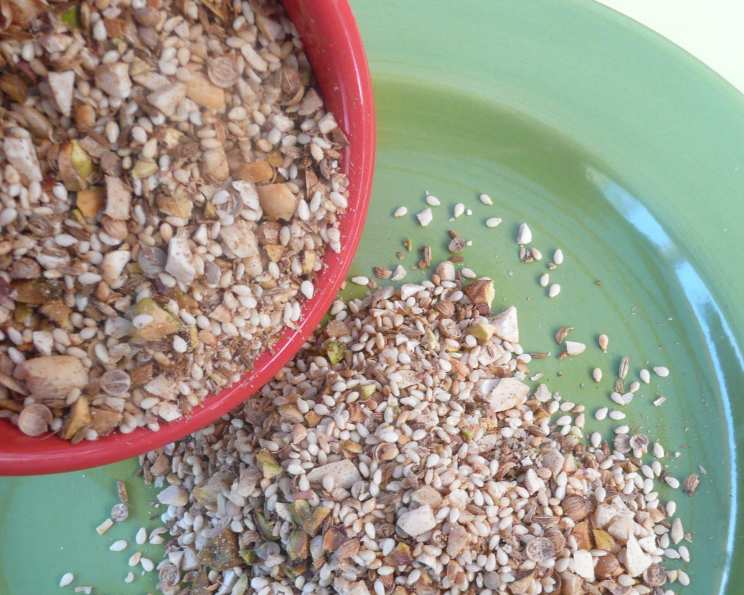
Dukkah: An Egyptian Spice Symphony
The first time I tasted dukkah, I was wandering through a bustling market in Cairo. The air hummed with the calls of vendors and the aroma of exotic spices. A small stall, overflowing with colorful mounds of seeds and nuts, caught my eye. The vendor offered me a piece of fresh bread, dipped in olive oil and then generously coated in a fragrant, nutty blend. The explosion of textures and flavors – earthy, savory, and subtly sweet – was an instant revelation. I was hooked. Since then, I’ve experimented with countless variations, always chasing that perfect balance of spice and crunch.
Recipe Overview
- Prep Time: 15 minutes
- Cook Time: 10 minutes
- Total Time: 25 minutes
- Yields: 2 cups
- Dietary Type: Vegan, Gluten-Free
Ingredients
- 150 g sesame seeds
- 50 g coriander seeds
- 50 g cumin seeds
- 50 g pistachios, shelled
- 75 g macadamia nuts, roughly chopped (or whole blanched almonds)
- 2 teaspoons sea salt (please don’t use table salt!)
- Freshly ground black pepper, to taste
Equipment Needed
- Baking sheet
- Skillet or frying pan
- Spice grinder or food processor
- Airtight container
Instructions
-
Preheat your oven to 200°C (390°F). This temperature is specifically for roasting the pistachios and macadamia nuts.
-
The key to a flavorful dukkah is toasting the spices and nuts properly. Begin by dry-roasting the sesame seeds in a dry skillet over medium heat. Stir them frequently to prevent burning. They’re ready when they become fragrant and lightly golden, this should only take a minute or two. Remove them from the pan immediately and set aside to cool.
-
Next, add the coriander seeds and cumin seeds to the same dry skillet. Dry roast them together over medium heat, stirring constantly, until they become fragrant and slightly darker in color. This should take about 2-3 minutes. Be careful not to burn them, as this will result in a bitter taste. Remove from the pan and set aside to cool.
-
Spread the macadamia nuts and pistachios on a baking sheet in a single layer. Roast them in the preheated oven for about 5 minutes, or until they are lightly golden brown. Watch them carefully, as nuts can burn quickly. Remove from the oven and allow them to cool completely. Cooling the nuts is crucial to avoid making a paste when they are processed later.
-
Once all the spices have cooled, transfer them to a spice grinder, food processor, or use a mortar and pestle. Grind them to your preferred consistency. Some people prefer a coarse grind for a more rustic texture, while others prefer a finer grind. Adjust the processing time to achieve your desired result.
-
Remove the ground spices from the grinder or processor and place them in a bowl.
-
After the nuts have completely cooled, place them in the food processor. Process them until they are finely chopped but not completely pulverized. You want a slightly coarse texture, not a smooth paste.
-
Combine the ground spices and chopped nuts in a bowl. Add the sea salt and freshly ground black pepper to taste. Mix well to ensure all the ingredients are evenly distributed.
-
Store the dukkah in an airtight container, preferably in the refrigerator, to maintain its freshness and flavor.
Expert Tips & Tricks
-
Roasting Individually: Roasting each spice and nut separately allows for optimal flavor development. Each ingredient requires a slightly different roasting time to reach its peak flavor.
-
Don’t Over-Process: Be careful not to over-process the nuts, as they can release their oils and turn into a paste. Pulse the food processor in short bursts to maintain a desirable coarse texture.
-
Adjust the Spices: Feel free to adjust the ratio of spices to suit your personal preferences. If you prefer a more intense cumin flavor, add a bit more cumin seeds.
-
Salt is Key: The salt is crucial for bringing out the flavors of the spices and nuts. Don’t skimp on the salt, but start with the recommended amount and adjust to taste.
-
Spice Grinder vs. Food Processor: A spice grinder is ideal for achieving a fine powder with the spices. However, a food processor works well if you’re aiming for a coarser texture. You can also use a mortar and pestle for a truly traditional approach.
Serving & Storage Suggestions
Dukkah is incredibly versatile and can be used in a variety of ways.
- Traditional Dip: Serve it as a traditional dip with fresh bread and extra virgin olive oil.
- Crust or Breading: Use it as a flavorful crust or breading for lamb, shrimp, fish, or chicken.
- Salad Topping: Sprinkle it over salads for added texture and flavor.
- Pasta Enhancement: Add it to pasta dishes for a nutty and savory element.
- Egg Garnish: Sprinkle it over scrambled eggs for a delightful twist.
- Soup Garnish: It could even be good on roasted carrot soup!
Store dukkah in an airtight container at room temperature for up to 2 weeks, or in the refrigerator for up to 1 month. Storing it in the refrigerator will help preserve its freshness and prevent the nuts from becoming rancid.
Nutritional Information
| Nutrient | Amount per Serving | % Daily Value |
|---|---|---|
| Calories | 1007.7 kcal | N/A |
| Calories from Fat | 783 g | 78% |
| Total Fat | 87 g | 133% |
| Saturated Fat | 11.8 g | 58% |
| Cholesterol | 0 mg | 0% |
| Sodium | 2386.6 mg | 99% |
| Total Carbohydrate | 54.5 g | 18% |
| Dietary Fiber | 27.8 g | 111% |
| Sugars | 4.4 g | 17% |
| Protein | 28.9 g | 57% |
Note: Nutritional information is an estimate and may vary based on specific ingredients and portion sizes.
Variations & Substitutions
- Nut Variations: Feel free to experiment with different types of nuts, such as almonds, walnuts, or hazelnuts.
- Spice Variations: Add a pinch of chili flakes for a touch of heat, or a teaspoon of smoked paprika for a smoky flavor.
- Seed Variations: Substitute some of the sesame seeds with sunflower seeds or pumpkin seeds for added nutritional value and flavor.
- Vegan Cheese Dukkah: Add nutritional yeast to give it a cheesy flavor.
FAQs (Frequently Asked Questions)
Q: Can I make dukkah without a food processor?
A: Yes, you can use a mortar and pestle to grind the spices and nuts. It will require more effort, but it’s a traditional method that yields a fantastic result.
Q: How do I prevent the nuts from turning into paste when processing?
A: Ensure the nuts are completely cooled before processing them. Pulse the food processor in short bursts to avoid over-processing and releasing too much oil.
Q: Can I use table salt instead of sea salt?
A: While you can, sea salt is recommended for its more complex flavor. If using table salt, use slightly less as it is more intensely salty.
Q: How long does dukkah last?
A: Dukkah can last up to 2 weeks at room temperature or up to 1 month in the refrigerator. Storing it in the fridge helps preserve its freshness.
Q: Can I freeze dukkah?
A: While not ideal, you can freeze dukkah in an airtight container for up to 3 months. However, the texture may change slightly upon thawing.
Final Thoughts
Dukkah is more than just a spice blend; it’s a culinary adventure waiting to happen. Its versatility and unique flavor profile can elevate even the simplest of dishes. I encourage you to try this recipe and experiment with different variations to create your own signature dukkah. Don’t be afraid to get creative and share your culinary creations with friends and family. Bon appétit!