
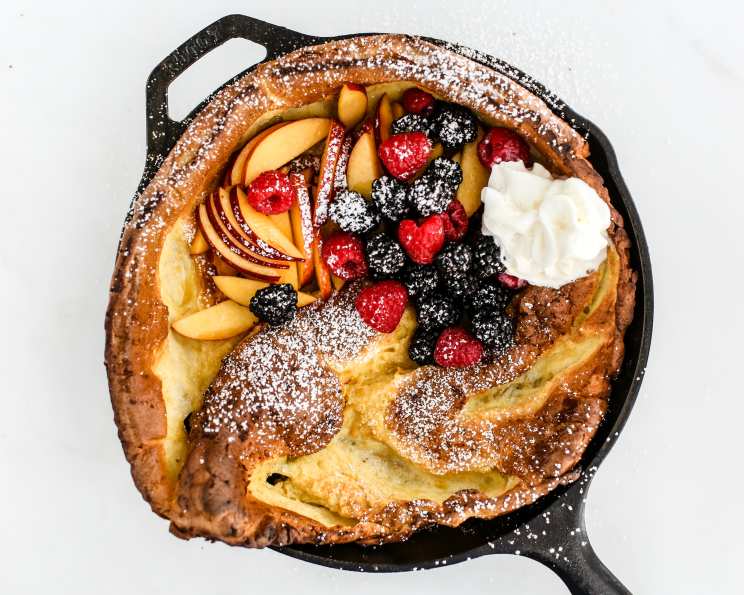
The Timeless Charm of Dutch Baby Pancakes
I still remember the first time I saw a Dutch Baby pancake emerge from the oven. It was at a small breakfast cafe in Seattle, and the sight was nothing short of magical. The pancake had puffed up dramatically, creating golden, crispy walls that framed a soft, custardy center. The aroma of warm butter and vanilla filled the air, promising a taste that lived up to the visual spectacle. Paired with a generous topping of fresh berries and a dusting of powdered sugar, it was a breakfast experience that has stayed with me, sparking a lifelong love for this simple yet elegant dish.
Recipe Overview
- Prep Time: 10 minutes
- Cook Time: 28-30 minutes
- Total Time: 40 minutes
- Servings: 2-3
- Yield: 1 Dutch Baby
- Dietary Type: Vegetarian
Ingredients
- ¾ cup milk
- ½ cup unbleached all-purpose flour
- 2 large eggs
- 1 ½ tablespoons sugar
- ½ teaspoon pure vanilla extract
- 3 tablespoons unsalted butter
- 1 tablespoon confectioners’ sugar
- 1 ½ cups thinly sliced fresh fruit, of choice (peaches, nectarines, strawberries, raspberries, blackberries, blueberries, mangoes, etc.)
Equipment Needed
- Pie plate or oven-proof skillet
- Whisk
- Oven
Instructions
-
Fifteen minutes before baking, preheat the oven to 450°F (232°C). Ensure you have a pie plate or oven-proof skillet ready.
-
In a mixing bowl, whisk together the milk, flour, eggs, sugar, and vanilla extract until smooth. A few small lumps are okay, but avoid overmixing.
-
Place the unsalted butter in the pie plate or skillet and place the pan in the preheated oven. Let the butter melt completely. This should take just a few minutes. Watch carefully so the butter doesn’t burn.
-
Once the butter is melted, use a brush to coat the rim and entire inside of the pan with the melted butter. This ensures the Dutch Baby will puff up properly and prevent sticking.
-
Slowly pour the batter into the hot pan. Be careful as the pan will be very hot.
-
Bake for 20 minutes. The Dutch Baby should begin to puff up dramatically around the edges.
-
Reduce the oven temperature to 350°F (175°C) and bake for another 8-10 minutes, or until the pancake is well-browned and set. The center should no longer be jiggly.
-
Remove from oven and sieve confectioners’ sugar generously over the top.
-
Serve immediately with fresh fruit spooned into the center of the pancake.
Expert Tips & Tricks
- Batter Prep: The batter can be made up to a day ahead and refrigerated. This allows the gluten in the flour to relax, resulting in a slightly more tender Dutch Baby. Just be sure to whisk it again before pouring it into the hot pan.
- Hot Pan is Key: The success of a Dutch Baby relies heavily on the hot pan. Don’t skip the step of melting the butter in the oven. The sudden blast of heat against the cold batter is what creates that dramatic puff.
- Doneness Test: The Dutch Baby is done when the edges are deeply golden brown and the center is mostly set. A slight jiggle in the very center is okay, as it will continue to set as it cools.
- Preventing Soggy Bottoms: Serve the Dutch Baby immediately after baking. The longer it sits, the more the edges will deflate and the bottom can become slightly soggy.
- Oven Variations: Ovens can vary in temperature, so keep a close eye on the Dutch Baby during baking. If it’s browning too quickly, reduce the temperature slightly or cover loosely with foil for the last few minutes of baking.
Serving & Storage Suggestions
A Dutch Baby is best served immediately, while it is still warm and puffed up. Arrange the sliced fresh fruit attractively in the center. You can also add a dollop of whipped cream or a drizzle of maple syrup for extra indulgence.
Leftovers are best stored in the refrigerator, but they will lose their puffy texture. To reheat, you can bake them in a 350°F (175°C) oven for a few minutes or microwave them briefly. Note that they will be flatter and denser than when freshly baked. It is best not to freeze Dutch Baby Pancakes as the texture will change significantly.
Nutritional Information
| Nutrient | Amount per Serving | % Daily Value |
|---|---|---|
| Calories | 451.7 kcal | N/A |
| Calories from Fat | 231 g | 51% |
| Total Fat | 25.7 g | 39% |
| Saturated Fat | 14.6 g | 73% |
| Cholesterol | 244.6 mg | 81% |
| Sodium | 119.1 mg | 4% |
| Total Carbohydrate | 42 g | 14% |
| Dietary Fiber | 0.8 g | 3% |
| Sugars | 13.8 g | N/A |
| Protein | 12.7 g | 25% |
Note: Nutritional information is an estimate and may vary based on specific ingredients and portion sizes.
Variations & Substitutions
- Gluten-Free: Substitute the all-purpose flour with a gluten-free all-purpose blend. Make sure the blend contains xanthan gum or another binder to help with the structure.
- Dairy-Free: Use your favorite plant-based milk instead of dairy milk. Melt coconut oil instead of butter.
- Citrus Zest: Add a teaspoon of lemon or orange zest to the batter for a bright, aromatic twist.
- Spiced Dutch Baby: Include a pinch of cinnamon, nutmeg, or cardamom to the batter for a warm, comforting flavor.
- Savory Dutch Baby: Omit the sugar and vanilla, and add herbs like thyme or rosemary. Top with sautéed vegetables and cheese for a savory brunch option.
- Seasonal Fruit: Adapt the fruit topping to the season. Use berries in the summer, apples and pears in the fall, and citrus fruits in the winter.
FAQs (Frequently Asked Questions)
Q: Why did my Dutch Baby not puff up?
A: The most common reason is that the pan wasn’t hot enough. Make sure to melt the butter in the oven before adding the batter. Also, ensure your oven is properly preheated.
Q: Can I use a cast iron skillet instead of a pie plate?
A: Absolutely! A cast iron skillet works wonderfully for Dutch Babies, providing even heat distribution and a crispy crust.
Q: Can I add fruit to the batter before baking?
A: It’s best to add the fruit after baking, as adding it to the batter can weigh it down and prevent it from puffing up properly.
Q: How do I prevent the Dutch Baby from deflating too quickly after baking?
A: While some deflation is normal, serving it immediately helps. Also, avoid opening the oven door too frequently during baking, as this can cause temperature fluctuations.
Q: Can I double the recipe?
A: Yes, you can double the recipe, but you’ll need to use a larger pan or bake two separate Dutch Babies.
Final Thoughts
The Dutch Baby pancake is more than just a breakfast dish; it’s an experience. It’s the delight of watching a simple batter transform into a golden masterpiece, the anticipation of that first bite of crispy edge and custardy center, and the joy of sharing it with loved ones. Don’t be intimidated by its impressive appearance – it’s surprisingly easy to make. Give this recipe a try, experiment with your favorite fruit combinations, and let the warmth and comfort of a homemade Dutch Baby brighten your day. I encourage you to share your creations and feedback! Maybe try pairing it with a strong cup of coffee or a mimosa for a truly special brunch. Happy baking!