
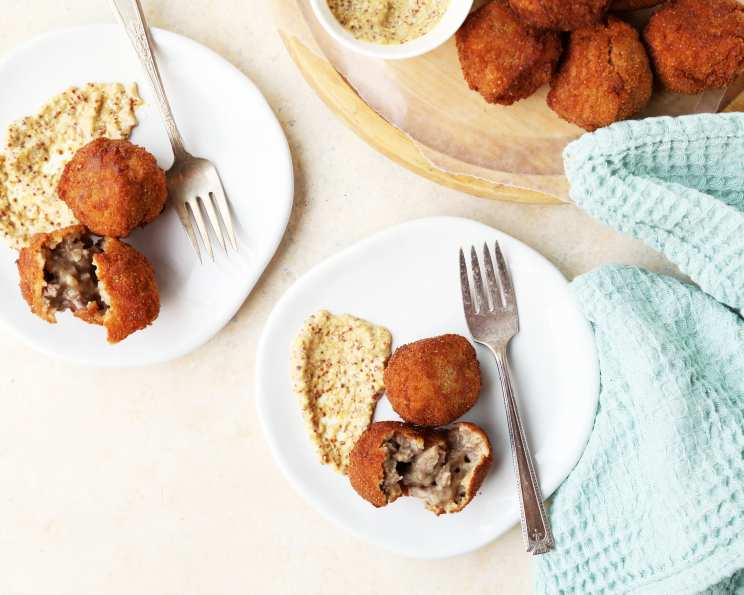
Dutch Bitterballen: Bite-Size Veal Croquettes
The scent of frying oil still takes me back to the bustling markets of Amsterdam. As a young culinary student, I was captivated by the endless rows of food stalls, each offering a unique taste of Dutch cuisine. Among all the treats, it was the bitterballen that stole my heart. These crispy, golden orbs, filled with a savory, melt-in-your-mouth ragout, were the perfect afternoon snack, especially when dipped in creamy mustard. They were my introduction to Dutch gezelligheid – that cozy, convivial feeling of being together and enjoying good food.
Recipe Overview
- Prep Time: 30 minutes
- Cook Time: 1 hour 15 minutes (including simmering and frying)
- Total Time: 1 day, 2 hours (including chilling time)
- Servings: 24
- Yield: 24 bitterballen
- Dietary Type: Not Gluten-Free
Ingredients
- 200g veal shoulder, cubed
- 1 bouquet garni (typically parsley, thyme, and bay leaf tied together)
- 400ml beef stock
- 30g butter
- 30g flour
- Salt and pepper, to taste
- Nutmeg, to taste
- 2 eggs
- 100g breadcrumbs
- Sunflower oil, for frying
- French mustard, for serving
Equipment Needed
- Large saucepan
- Measuring jug
- Cutting board
- Knife
- Whisk
- Flat plate
- Deep plates or shallow bowls
- Deep-fat fryer or large, deep pot
- Slotted spoon or spider
- Paper towels
Instructions
- Prepare the Veal: In a large saucepan, combine the cubed veal shoulder, bouquet garni, and beef stock.
- Simmer the Veal: Bring the mixture slowly to a boil, then reduce the heat to low and simmer gently for about 1 hour, or until the veal is very tender. The meat should easily fall apart when prodded with a fork.
- Strain and Reserve Stock: Carefully strain the veal and stock mixture, reserving 200ml of the stock in a measuring jug. Discard the bouquet garni.
- Slice the Veal: Once the veal has cooled slightly, slice the cooked meat very thinly. The finer you slice it, the better the texture of the final ragout. You can also shred the meat if you prefer.
- Make the Roux: In a clean saucepan, melt the butter over medium heat. Once melted, stir in the flour and cook for about 1-2 minutes, stirring constantly. This creates a roux, the base for the sauce. The roux should be smooth and pale golden in color.
- Create the Ragout Sauce: Gradually add the reserved stock to the roux, while whisking continuously to prevent lumps from forming. Continue stirring until the sauce thickens and becomes smooth. This may take a few minutes.
- Cook the Sauce: Once the sauce is smooth, reduce the heat to low and let it cook gently for about 2 minutes, stirring occasionally. This helps to develop the flavors and eliminate any raw flour taste.
- Combine Meat and Sauce: Stir in the sliced veal into the sauce, ensuring it’s evenly distributed. Season generously with salt, pepper, and nutmeg to taste. Don’t be afraid to be generous with the seasoning, as it will mellow out during chilling and frying.
- Chill the Ragout: Pour the ragout onto a flat plate or shallow dish, spreading it out evenly. Cover with plastic wrap, pressing the wrap directly onto the surface of the ragout to prevent a skin from forming. Refrigerate for at least 4 hours, or preferably overnight, until the ragout is firm enough to handle.
- Prepare the Egg Wash: In a deep plate or shallow bowl, beat the eggs with one tablespoon of water to create an egg wash. This helps the breadcrumbs adhere to the bitterballen.
- Shape the Bitterballen: Once the ragout is firm, use your hands or a small spoon to shape the ragout into 24 balls, each slightly smaller than a golf ball. Work quickly to prevent the ragout from warming up too much.
- Coat in Breadcrumbs: Roll each bitterbal in the breadcrumbs, ensuring it’s completely coated.
- Egg Wash Dip: Dip the breadcrumb-coated bitterballen into the beaten egg mixture, ensuring they are evenly coated.
- Second Breadcrumb Coating: Roll the egg-washed bitterballen in the breadcrumbs again, creating a thicker, more protective coating. This double coating is crucial for achieving a crispy exterior and preventing the ragout from leaking during frying.
- Repeat Coating (Optional): For an extra-crispy coating, repeat steps 13 and 14.
- Heat the Oil: Heat sunflower oil in a deep-fat fryer or a large, deep pot to 180 degrees Celsius (350 degrees Fahrenheit). Use a thermometer to ensure the oil is at the correct temperature.
- Deep Fry: Carefully lower the bitterballen into the hot oil, frying them in batches of 6 at a time to avoid overcrowding the fryer and lowering the oil temperature too much. Fry for 3-4 minutes, or until they are golden brown and crisp.
- Drain: Remove the fried bitterballen from the oil using a slotted spoon or spider and place them on paper towels to drain excess oil.
- Serve: Serve the warm bitterballen immediately on a plate with a generous serving of French mustard next to it.
Expert Tips & Tricks
- Make Ahead: The ragout can be made up to 2 days in advance and stored in the refrigerator. This makes the process much easier and more manageable.
- Freezing: Uncooked bitterballen can be frozen for up to 2 months. Freeze them on a baking sheet lined with parchment paper before transferring them to a freezer bag. Fry them directly from frozen, adding a minute or two to the frying time.
- Breadcrumb Variations: For a more rustic texture, use panko breadcrumbs. You can also add finely grated Parmesan cheese to the breadcrumbs for extra flavor.
- Preventing Leaks: The key to preventing the bitterballen from leaking during frying is to ensure they are well-chilled and thoroughly coated in breadcrumbs. A double or triple coating is highly recommended.
- Oil Temperature: Maintaining the correct oil temperature is crucial for achieving crispy, golden brown bitterballen. If the oil is too hot, the bitterballen will burn on the outside before the ragout is heated through. If the oil is too cool, they will absorb too much oil and become greasy.
Serving & Storage Suggestions
Serve bitterballen immediately while they are hot and crispy. They are traditionally served with French mustard for dipping, but other sauces like mayonnaise or aioli can also be used. Leftover bitterballen can be stored in an airtight container in the refrigerator for up to 2 days. To reheat, bake them in a preheated oven at 180 degrees Celsius (350 degrees Fahrenheit) for about 10-15 minutes, or until heated through and crispy. Alternatively, they can be reheated in an air fryer. Reheating in the microwave is not recommended, as it will make them soggy.
Nutritional Information
| Nutrient | Amount per Serving | % Daily Value |
|---|---|---|
| Calories | 48 kcal | N/A |
| Calories from Fat | 19 kcal | N/A |
| Total Fat | 2.1 g | 3% |
| Saturated Fat | 1 g | 5% |
| Cholesterol | 25 mg | 8% |
| Sodium | 115.1 mg | 4% |
| Total Carbohydrate | 4 g | 1% |
| Dietary Fiber | 0.2 g | 0% |
| Sugars | 0.3 g | 1% |
| Protein | 3 g | 6% |
Variations & Substitutions
- Vegetarian Bitterballen: Substitute the veal with mushrooms, lentils, or a combination of vegetables. Finely chop the vegetables and sauté them before adding them to the sauce.
- Gluten-Free Bitterballen: Use gluten-free breadcrumbs and a gluten-free flour blend for the roux. Ensure all other ingredients are also gluten-free.
- Spicy Bitterballen: Add a pinch of cayenne pepper or chili flakes to the ragout for a spicy kick.
- Cheese Bitterballen: Add shredded cheese, such as Gouda or Gruyere, to the ragout for a cheesy flavor.
- Smoked Bitterballen: Use smoked veal or add smoked paprika to the ragout for a smoky flavor.
FAQs (Frequently Asked Questions)
Q: Can I use a different type of meat other than veal?
A: Yes, you can substitute veal with beef, chicken, or even lamb. Just adjust the cooking time accordingly to ensure the meat is tender.
Q: What is a bouquet garni, and is it essential?
A: A bouquet garni is a bundle of herbs, typically parsley, thyme, and bay leaf, used to flavor stocks and sauces. While not strictly essential, it adds a depth of flavor to the ragout. If you don’t have one, you can add the herbs individually.
Q: Why is it important to chill the ragout before shaping the bitterballen?
A: Chilling the ragout makes it easier to handle and shape into balls. It also helps the bitterballen hold their shape during frying.
Q: Can I bake the bitterballen instead of deep-frying them?
A: While deep-frying is the traditional method, you can bake them for a slightly healthier option. Bake them in a preheated oven at 200 degrees Celsius (400 degrees Fahrenheit) for about 20-25 minutes, or until golden brown and crispy, flipping halfway through. Note that the texture won’t be quite the same as deep-fried bitterballen.
Q: What is the best way to prevent the bitterballen from sticking to the bottom of the fryer?
A: Ensure the oil is hot enough and don’t overcrowd the fryer. Also, gently shake the fryer basket occasionally to prevent the bitterballen from sticking.
Final Thoughts
I urge you to embark on this culinary adventure and experience the delightful flavors of Dutch bitterballen! These bite-sized veal croquettes are more than just a snack; they are a taste of Dutch culture and hospitality. Don’t be intimidated by the steps – each one contributes to the incredible texture and taste. Share your creations with friends and family, and don’t forget the mustard! Eet smakelijk!