
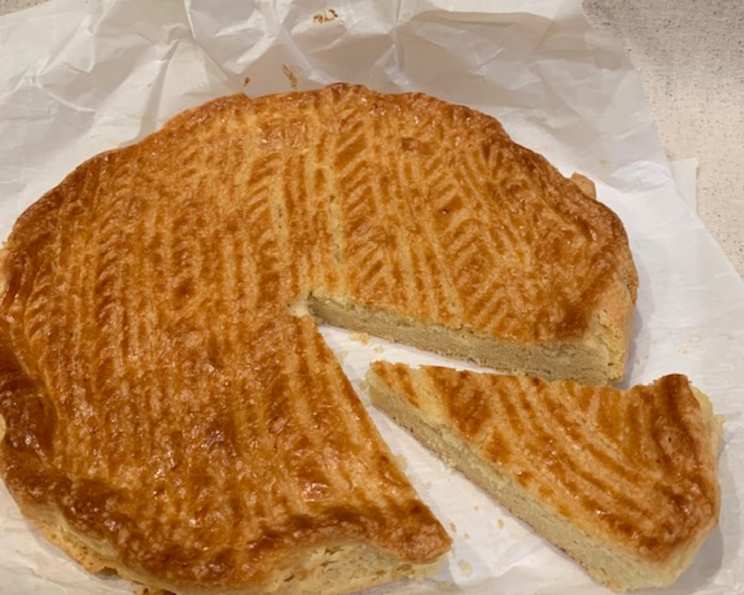
Dutch Butter Cake (Boterkoek): A Taste of Nostalgia
The scent of Boterkoek instantly transports me back to my Oma’s kitchen. I remember standing on a stool, mesmerized as she pressed the dough into a round pan, her hands moving with a practiced grace honed over decades. The aroma of butter and almonds baking in the oven filled the small house, promising warmth and comfort. That first bite, the slightly crumbly texture giving way to intense buttery richness, was pure magic – a taste I’ve been chasing ever since.
Recipe Overview
- Prep Time: 15 minutes
- Cook Time: 30 minutes
- Total Time: 45 minutes
- Servings: 12
- Yield: 1 (9-inch) cake
- Dietary Type: Not Gluten-Free
Ingredients
- ⅔ cup (150g) unsalted butter, softened
- 1 cup (200g) sugar
- 1 teaspoon almond flavoring
- 1 egg, divided (you’ll need approximately 1 teaspoon for brushing)
- 1 ½ cups (180g) all-purpose flour
- ¼ teaspoon salt
- ½ teaspoon baking powder
Equipment Needed
- 9-inch round baking dish
- Parchment paper
- Mixer (handheld or stand mixer)
- Fork
- Measuring cups and spoons
Instructions
-
Preheat your oven to 350°F (175°C). This is crucial for even baking and achieving that perfect golden crust.
-
In a mixing bowl, cream together the softened butter, sugar, and almond flavoring until the mixture is light and fluffy. This step is essential for incorporating air into the dough, resulting in a tender crumb. Don’t rush it; take your time to ensure the ingredients are fully combined.
-
Add the egg to the creamed mixture. Reserve approximately 1 teaspoon of the beaten egg in a separate small bowl. You’ll use this reserved egg for brushing the top of the cake later.
-
In a separate bowl, whisk together the flour, salt, and baking powder. This ensures the baking powder is evenly distributed throughout the flour, which is important for consistent rising.
-
Gradually add the dry ingredients to the wet ingredients, mixing until just combined. Be careful not to overmix, as this can develop the gluten in the flour and result in a tough cake. You should end up with a solid, slightly sticky dough.
-
Line your 9-inch round baking dish with parchment paper. This will prevent the cake from sticking and make it easier to remove once baked. Make sure the parchment paper extends slightly over the edges of the pan for easy lifting.
-
Press the dough evenly into the prepared baking dish. Use your fingers or the back of a spoon to create a smooth, even surface.
-
Brush the top of the dough with the reserved beaten egg. This will give the cake a beautiful golden-brown sheen.
-
Using a fork, score the top of the cake crosswise in two directions, creating a diamond pattern. This not only looks decorative but also helps the cake bake evenly. Press the fork gently but firmly to create defined lines.
-
Bake in the preheated oven for approximately 30 minutes, or until the top is golden brown. The baking time may vary slightly depending on your oven, so keep an eye on the cake and check for doneness. A toothpick inserted into the center should come out clean, though it might have a little bit of buttery residue.
-
Allow the Boterkoek to cool completely in the baking dish before removing and cutting it into 12 portions. This allows the cake to firm up, making it easier to slice neatly.
Expert Tips & Tricks
- Softened butter is key: Ensure your butter is truly softened but not melted. It should be pliable to the touch. If it’s too cold, it won’t cream properly with the sugar.
- Almond extract alternatives: While almond extract provides the classic flavor, you can experiment with other extracts like vanilla or lemon for a different twist.
- Even baking: If you notice the edges of the cake browning too quickly, you can tent it with foil during the last 10-15 minutes of baking.
- Make-ahead option: The dough can be made ahead of time and stored in the refrigerator for up to 24 hours. Bring it to room temperature before pressing it into the baking dish.
Serving & Storage Suggestions
Serve Boterkoek in small slices, as it is quite rich. It’s delicious on its own or paired with a cup of coffee or tea.
- Room Temperature: Boterkoek can be stored at room temperature in an airtight container for up to 3 days.
- Refrigerator: For longer storage, keep it in the refrigerator for up to a week.
- Freezer: Boterkoek freezes well. Wrap it tightly in plastic wrap and then foil, or place it in a freezer-safe container. It can be frozen for up to 2 months. Thaw it overnight in the refrigerator before serving. It can be eaten directly from the fridge or freezer.
Nutritional Information
Here’s an approximate nutritional breakdown per serving (based on 12 servings):
| Nutrient | Amount per Serving | % Daily Value |
|---|---|---|
| Calories | 219 kcal | 11% |
| Total Fat | 11 g | 17% |
| Saturated Fat | 7 g | 35% |
| Cholesterol | 43 mg | 14% |
| Sodium | 71 mg | 3% |
| Total Carbohydrate | 29 g | 10% |
| Dietary Fiber | 0 g | 0% |
| Sugars | 17 g | – |
| Protein | 2 g | 4% |
Note: Nutritional information is an estimate and can vary based on specific ingredients and portion sizes.
Variations & Substitutions
- Gluten-Free: Substitute the all-purpose flour with a gluten-free blend for a gluten-free version. Be sure to use a blend that contains xanthan gum for binding.
- Citrus Zest: Add the zest of one lemon or orange to the dough for a bright, citrusy flavor.
- Spice It Up: A pinch of cinnamon, nutmeg, or cardamom can add warmth and complexity to the flavor profile.
- Chocolate Chips: Fold in mini chocolate chips to the dough for a decadent twist.
FAQs (Frequently Asked Questions)
Q: Can I use salted butter instead of unsalted butter?
A: Yes, but omit or reduce the added salt in the recipe to compensate for the salt in the butter.
Q: Why is my Boterkoek crumbly?
A: This is characteristic of Boterkoek. It is similar to shortbread and will be quite crumbly. However, overmixing the dough can also contribute to a crumbly texture. Be sure to mix until just combined.
Q: Can I make this recipe without almond flavoring?
A: Yes, you can substitute vanilla extract or another flavor extract of your choice. However, the almond flavoring gives Boterkoek its distinct flavor.
Q: How do I prevent the bottom of the cake from burning?
A: Make sure your oven rack is positioned in the center of the oven. You can also place a baking sheet underneath the baking dish to shield the bottom from direct heat.
Q: My cake is still soft in the middle after 30 minutes. What should I do?
A: Continue baking for an additional 5-10 minutes, checking for doneness every few minutes. Ovens can vary, so the baking time may need to be adjusted.
Final Thoughts
Boterkoek is more than just a cake; it’s a taste of history, a connection to family traditions, and a reminder of simpler times. Whether you’re Dutch or simply a lover of delicious baked goods, I encourage you to try this recipe. Share it with your loved ones, savor each buttery bite, and create your own memories around this classic treat. I hope you enjoy making and eating Boterkoek as much as I do. Laat het je smaken! (Enjoy your meal!)