
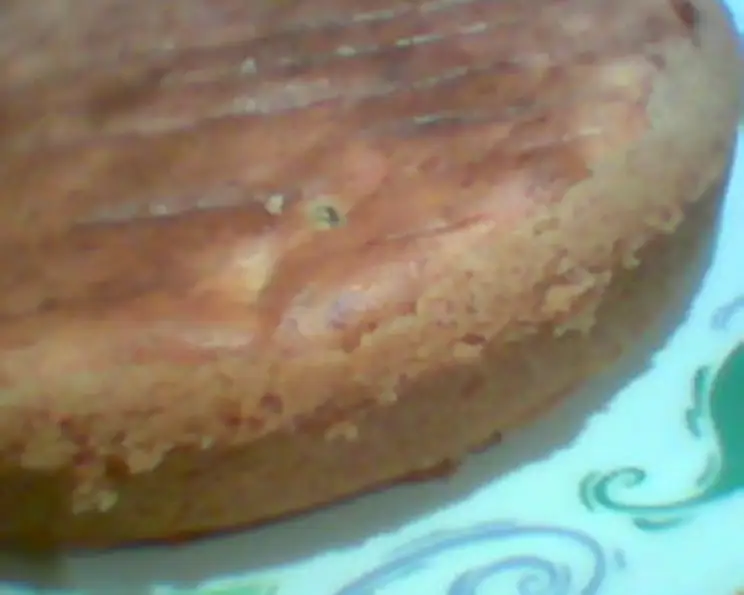
A Taste of the Unexpected: My Dutch Cheesecake Discovery
I’ll never forget the first time I tasted this cheesecake. It wasn’t in a quaint Dutch cafe, but at a potluck hosted by a dear friend, Sarah, whose culinary adventurousness always impressed me. Among the sea of familiar chocolate brownies and potato salads, this cheesecake stood out. Its golden hue, the subtle tanginess that danced on my tongue, and the delicate raisin surprises within the creamy filling—it was unlike any cheesecake I’d ever experienced. Sarah sheepishly admitted she’d “borrowed” the recipe from an online forum years ago, and now, after much coaxing, she’s allowed me to share this hidden gem with you.
Recipe Overview
- Prep Time: 20 minutes
- Cook Time: 45 minutes
- Total Time: 1 hour 5 minutes
- Servings: 10
- Yield: 1 (8-inch) tart
- Dietary Type: Not specified (contains dairy & eggs)
Ingredients
For the Crust:
- Shortbread crust (prepared from your favorite recipe, or store-bought)
For the Cheesecake:
- 2 large eggs, separated
- ¼ cup confectioners’ sugar
- 2 teaspoons confectioners’ sugar
- 1 ½ cups Gouda cheese, grated
- ⅓ cup light cream or ⅓ cup half-and-half
- ¼ cup unbleached flour
- 1 teaspoon lemon juice
- 1 teaspoon lemon zest, grated
- ⅓ cup golden raisins
Equipment Needed
- 8-inch tart pan
- Large mixing bowls
- Electric mixer
- Rubber spatula
- Grater
- Measuring cups and spoons
Instructions
-
Preheat your oven to 350 degrees F (175 degrees C). Make sure your oven rack is positioned in the center for even baking.
-
In a large mixing bowl, beat the egg yolks and ¼ cup of confectioners’ sugar together until well blended. This step is crucial for achieving a smooth and creamy filling. Use an electric mixer and beat on medium speed for about 5 minutes, or until the mixture becomes pale and slightly thickened.
-
To the egg yolk mixture, beat in the grated Gouda cheese, light cream (or half-and-half), unbleached flour, lemon juice, lemon zest, and golden raisins. Ensure all ingredients are well incorporated, scraping down the sides of the bowl as needed to prevent any lumps.
-
In a separate clean and dry mixing bowl, beat the egg whites until frothy. This is best achieved with an electric mixer. Once the egg whites are frothy, gradually add the remaining 2 teaspoons of confectioners’ sugar, continuing to beat until the whites form stiff, glossy peaks. Stiff peaks are essential for giving the cheesecake its airy texture; they should hold their shape when the beaters are lifted. Be careful not to overbeat, or the egg whites will become dry and grainy.
-
Gently fold the beaten egg whites into the cheese mixture. This step requires a delicate touch to avoid deflating the egg whites. Use a rubber spatula and cut down through the center of the mixture, then gently fold the bottom layer over the top. Rotate the bowl and repeat until just combined. It’s okay if there are a few streaks of egg white remaining; overmixing will result in a dense cheesecake.
-
Pour the cheesecake mixture into the prepared shortbread crust. Spread the mixture evenly to ensure even baking.
-
Bake in the preheated oven for 45 minutes. The cheesecake is done when the filling is set around the edges but still slightly jiggly in the center. A toothpick inserted near the center should come out with a few moist crumbs attached.
-
Cool the cheesecake to room temperature on a wire rack. This gradual cooling process prevents the cheesecake from cracking. Once cooled, chill in the refrigerator for at least 2 hours before serving. Chilling allows the flavors to meld and the filling to set completely.
Expert Tips & Tricks
- Grate the Gouda finely: Finely grated Gouda will melt more evenly into the filling, resulting in a smoother texture.
- Room temperature ingredients: Using room-temperature eggs allows them to whip up to a greater volume, leading to a lighter cheesecake.
- Preventing cracks: To minimize cracks, try baking the cheesecake in a water bath. Wrap the bottom of the tart pan in foil and place it in a larger baking pan. Pour hot water into the larger pan, reaching halfway up the sides of the tart pan. The steam from the water bath will help keep the cheesecake moist and prevent it from cracking.
- Make-ahead tip: The cheesecake can be made a day or two in advance and stored in the refrigerator. In fact, the flavors often improve after a day or two.
Serving & Storage Suggestions
Serve this Dutch cheesecake chilled, straight from the refrigerator. A light dusting of confectioners’ sugar or a dollop of whipped cream adds a touch of elegance. It pairs beautifully with a cup of strong coffee or a glass of dessert wine.
Leftovers can be stored in an airtight container in the refrigerator for up to 3-4 days. The cheesecake does not freeze well, as the texture can become grainy upon thawing.
Nutritional Information
| Nutrient | Amount per Serving | % Daily Value |
|---|---|---|
| Calories | 250 kcal | 13% |
| Total Fat | 15g | 23% |
| Saturated Fat | 9g | 45% |
| Cholesterol | 80mg | 27% |
| Sodium | 150mg | 7% |
| Total Carbohydrate | 20g | 7% |
| Dietary Fiber | 1g | 4% |
| Sugars | 12g | – |
| Protein | 8g | 16% |
Please note: This is an estimated nutritional breakdown and can vary based on specific ingredient brands and preparation methods.
Variations & Substitutions
- Gluten-free: Use a gluten-free shortbread crust made with a gluten-free flour blend.
- Spice it up: Add a pinch of nutmeg or cinnamon to the filling for a warm, comforting flavor.
- Citrus burst: Experiment with different citrus zests, such as orange or grapefruit, for a unique twist.
- Berry Delight: Swirl in a homemade berry compote into the batter before baking for a fruity and colorful cheesecake.
FAQs (Frequently Asked Questions)
Q: Can I use a different type of cheese instead of Gouda?
A: While Gouda is traditional, you can experiment with other semi-hard cheeses like Edam or Gruyere. Keep in mind that the flavor profile will change.
Q: Why is it important to fold the egg whites gently?
A: Folding gently preserves the air in the egg whites, ensuring a light and airy cheesecake texture. Overmixing will deflate the whites and result in a dense, heavy cheesecake.
Q: How do I know when the cheesecake is done baking?
A: The cheesecake is done when the edges are set and the center is slightly jiggly. A toothpick inserted near the center should come out with a few moist crumbs attached.
Q: Can I make this cheesecake without a shortbread crust?
A: Yes, you can use a graham cracker crust or even a cookie crumb crust instead.
Q: Why did my cheesecake crack?
A: Cracking can be caused by several factors, including baking at too high a temperature, overbaking, or rapid cooling. Using a water bath during baking and allowing the cheesecake to cool gradually can help prevent cracking.
Final Thoughts
This Dutch cheesecake, adopted from a forgotten corner of the internet, has become a cherished recipe in my repertoire. It’s a testament to the fact that culinary treasures can be found in the most unexpected places. I urge you to try this recipe and experience the unique flavor and texture for yourself. Don’t hesitate to add your own personal touches and share your creations!