
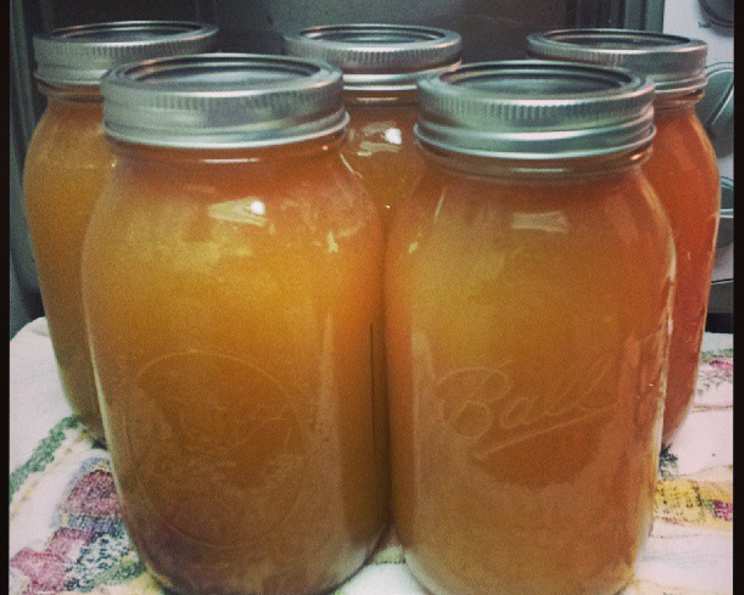
The Alchemy of Leftovers: Crafting Liquid Gold with Ham Stock
I remember my grandmother, a woman who could stretch a dollar further than anyone I knew, always had a pot simmering on the stove. In the colder months, it was often the remnants of a holiday ham transforming into something truly special. The rich, savory aroma that permeated her house was a promise of hearty soups, flavorful stews, and comforting meals to come. It wasn’t just about frugality; it was about respect for the ingredients and the magic of transforming humble leftovers into something extraordinary. That pot of ham stock was the heart of her kitchen, and now, it’s a tradition I happily carry on.
Recipe Overview
- Prep Time: 20 minutes
- Cook Time: 3 hours 25 minutes
- Total Time: 13 hours 25 minutes (includes cooling and chilling time)
- Yields: 5 quarts
- Serves: 20
- Dietary Type: Varies (can be adapted for low-sodium)
Ingredients
- 3 lbs ham, bone-in
- 3 stalks celery
- 2 onions
- 5 quarts water (or enough to cover ham bone)
Equipment Needed
- Large Stock Pot
- Cutting Board
- Knife
- Slotted Spoon
- Measuring Cups
- Refrigerator
- 5 Quart Jars
- Pressure Canner
- Jar Lifter
Instructions
- First, the delicious task of enjoying the ham itself! Cook the ham according to your preferred method and enjoy the ham meat in meals for approximately a week. This recipe uses the leftover bone.
- Once you’ve enjoyed the majority of the ham, it’s time to create the stock. Take the remaining ham bone and cut most of the remaining meat off, leaving some attached to the bone for added flavor during the simmering process.
- In a large stock pot, combine the ham bone, 3 stalks of celery (washed and snapped in half), 2 onions (skin on, chopped in half), and 5 quarts of water (or enough to completely cover the ham bone). The onion skins will add a lovely golden color to your stock.
- Bring the mixture to a boil over high heat.
- Once boiling, reduce the heat to low and allow the stock to simmer gently for 3 hours, stirring occasionally to prevent sticking.
- After 3 hours of simmering, carefully remove the ham bone, celery, and onion from the stock using a slotted spoon. Discard the cooked celery and onion. They’ve given up all their flavor.
- Carefully pick any remaining ham meat off the bone and set it aside. Discard the bone.
- Return the picked ham meat back into the stock. This will add flavor and body to the final product.
- Carefully transfer the pot of stock into the refrigerator to allow the fat to congeal and solidify on the surface. This will take several hours, or preferably overnight.
- Once the fat is solid on the surface of the chilled stock, remove and discard it. This step is important for a clearer, less greasy stock.
- Reheat the defatted stock over medium heat.
- While the stock is reheating, sterilize 5 quart jars and heat the lids/bands according to the manufacturer’s instructions. Proper sterilization is crucial for safe canning.
- Prepare your pressure canner according to the manufacturer’s instructions. Ensure that you have the correct amount of water in the canner.
- Once the jars are sterilized, fill them with the hot stock (and remaining ham bits), leaving 1 inch of headspace at the top of each jar.
- Clean the jar rims with a clean, damp cloth. This ensures a proper seal. Then, apply the sterilized lids and bands to each jar, tightening them fingertip tight.
- Carefully place the filled jars into the prepared pressure canner and apply the pressure canner lid, securing it tightly.
- Heat the canner over medium-high heat until a steady stream of steam has been produced for 10 minutes. This step vents the canner and removes air.
- Place the jiggler weight on top of the vent at 10 lbs of pressure. Once the jiggler starts rocking back and forth steadily, indicating the correct pressure has been reached, allow the cans to cook for 25 minutes.
- After 25 minutes, remove the canner from the heat and allow it to cool completely until the pressure vent falls on its own. Do not force the process by running cold water over the canner.
- Once the pressure vent has fallen, remove the jiggler weight.
- Wait 10 minutes before opening the canner. This allows the pressure to equalize gradually.
- Carefully remove the lid from the canner and take the jars out using a jar lifter.
- Set the jars on a clean, dry, flat surface, such as a towel-lined countertop, and allow them to cool undisturbed for 24 hours. During this time, you should hear the lids “pop,” indicating a successful seal.
- After 24 hours, remove the bands, wipe the jars down with a clean, damp cloth, and store them in a cool, dark place. The bands are only needed for the sealing process.
Expert Tips & Tricks
- Roast the ham bone: For an even deeper flavor, roast the ham bone in a 400°F (200°C) oven for 30 minutes before adding it to the pot.
- Add aromatics: Feel free to add other aromatics to the stock, such as a bay leaf, peppercorns, or a few cloves of garlic.
- Don’t over-salt: Ham is already quite salty, so avoid adding any additional salt to the stock until after it’s finished simmering. You can always add more later if needed.
- Skim the scum: As the stock simmers, you may notice some scum rising to the surface. Skim this off with a spoon for a clearer final product.
- Ice Bath Cooling: Speed up the cooling of the canner by placing the bottom of the canner into an ice bath. Never pour water over the top.
Serving & Storage Suggestions
This delicious ham stock is perfect as a base for soups, stews, sauces, and braised dishes. Use it in split pea soup, bean soup, or to add depth to gravies. Properly canned ham stock is shelf-stable for up to a year, stored in a cool, dark place. Once opened, refrigerate and use within 5-7 days. You can also freeze the stock in freezer-safe containers for longer storage (up to 3 months).
Nutritional Information
(Estimated, per 1 cup serving)
| Nutrient | Amount per Serving | % Daily Value |
|---|---|---|
| Calories | 50 kcal | 3% |
| Total Fat | 2g | 3% |
| Saturated Fat | 0.5g | 3% |
| Cholesterol | 15mg | 5% |
| Sodium | 500mg | 22% |
| Total Carbohydrate | 0g | 0% |
| Dietary Fiber | 0g | 0% |
| Sugars | 0g | 0% |
| Protein | 5g | 10% |
Variations & Substitutions
- Low-Sodium Ham Stock: If you’re watching your sodium intake, look for a lower-sodium ham or use a combination of ham bone and chicken or turkey bones. You can also dilute the finished stock with water.
- Vegetarian Variation: While this is a ham stock, you can achieve a similar savory flavor by using smoked paprika and a vegetarian bouillon cube in a vegetable stock.
- Spicy Ham Stock: Add a pinch of red pepper flakes or a halved jalapeño pepper to the pot while simmering for a spicy kick.
FAQs (Frequently Asked Questions)
Q: Why leave the skin on the onions?
A: Leaving the skin on the onions during simmering adds a rich golden color and subtle depth of flavor to the stock.
Q: How do I know if my jars are properly sealed?
A: After 24 hours of cooling, the lid should be concave and not flex when pressed in the center. You should also hear a clear “pop” sound as the jars cool, indicating a vacuum seal.
Q: Can I use a water bath canner instead of a pressure canner?
A: No, ham stock is a low-acid food and requires pressure canning to eliminate the risk of botulism. A water bath canner will not reach a high enough temperature to ensure safety.
Q: What if my stock is too salty?
A: You can try adding a peeled potato to the stock while reheating. The potato will absorb some of the excess salt. Remove the potato before using the stock.
Q: Can I freeze the ham stock instead of canning it?
A: Yes, you can freeze the ham stock in freezer-safe containers or bags for up to 3 months. Be sure to leave some headspace in the containers as the stock will expand when frozen.
Final Thoughts
There’s something profoundly satisfying about transforming what would otherwise be discarded into a valuable kitchen staple. This ham stock recipe is more than just a set of instructions; it’s a connection to a way of cooking that values resourcefulness and flavor. So, the next time you enjoy a delicious ham, don’t toss that bone! Let it be the starting point for a culinary adventure that will enrich your meals and warm your soul. I encourage you to try this recipe, experiment with different aromatics, and create a ham stock that is uniquely yours. And please, share your creations and variations – I’m eager to hear about them! Perhaps pair it with crusty bread, grilled cheese, or even a ham pot pie!