
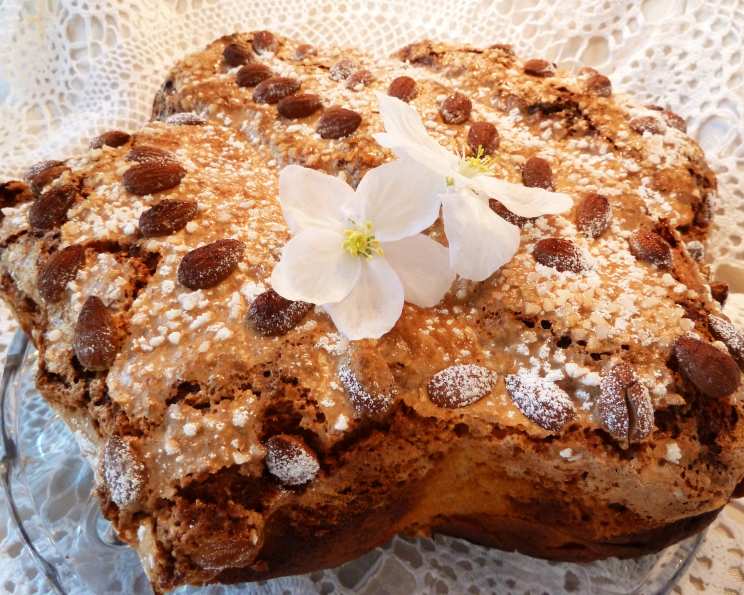
Easter Dove: A Taste of Italian Spring
The aroma of citrus and sweet dough baking slowly in the oven – that’s the unmistakable scent of Easter in my family. Growing up, my Nonna Emilia would always make a Colomba di Pasqua, or Easter Dove, and the whole house would fill with the warm, inviting fragrance. It wasn’t just a cake; it was a symbol of peace and renewal, a sweet promise of the spring to come, shared amongst loved ones. I remember sneaking bites of the candied citrus as she prepared the dough, the vibrant flavors a joyful anticipation of the feast to follow. Today, I carry on that tradition, hoping to imbue my own home with the same love and delicious anticipation.
Recipe Overview
- Prep Time: 2 hours 50 minutes (plus overnight resting)
- Cook Time: 50 minutes
- Total Time: 20 hours 50 minutes
- Servings: 8-12
- Yield: 1 Colomba
- Dietary Type: Not specified
Ingredients
Dough:
- 25 g fresh yeast
- 200 g baking flour
- 100 ml milk, lukewarm
- 300 g Manitoba flour (wheat flour rich of gluten, alternative: 300 g baking flour)
- 120 g sugar
- 250 g butter, soft, at room temperature (or good quality margarine)
- 1 pinch salt
- 1/2 teaspoon vanilla extract
- 1 lemon, zest of
- 1 orange, zest of
- 1 tablespoon honey
- 3 egg yolks
- 100 g lemon zest, candied
- 100 g orange zest, candied
- 100 g marzipan, grated
Glaze:
- 100 g ground almonds
- 100 g powdered sugar
- 1 pinch vanilla extract
- 2 egg whites
- 50 g almonds, whole with skin
- 50 g granulated sugar
- 2 tablespoons powdered sugar, for topping
Equipment Needed
- Food processor
- Mixing bowls
- Measuring cups and spoons
- Spatula
- Dove-shaped mold (or material to create one)
- Baking paper
- Oven
Instructions
- In the bowl of a food processor, combine 100 g baking flour, 100 ml lukewarm milk, and 25 g fresh yeast. Mix until just combined.
- Cover the bowl and let the mixture rise in a warm place for 30 minutes.
- Add another 100 g baking flour. If the mixture seems too thick, add 1-2 tablespoons of water. Process until smooth.
- Cover the bowl and let the mixture rise again in a warm place for another 30 minutes.
- Add 150 g Manitoba flour, 60 g sugar, and 80 g soft butter to the risen dough. Process well until a soft dough forms.
- Cover the bowl and let the dough rise in a warm place for approximately 2 hours.
- Add the remaining 150 g Manitoba flour and 170 g soft butter to the dough. Process until the butter is fully incorporated.
- Continue to process the dough at a slow speed for 30 minutes. This is a crucial step for developing the gluten and creating the characteristic texture of the Colomba.
- Add a pinch of salt, 60 g sugar, 1/2 teaspoon vanilla extract, the zest of one lemon and one orange, and 1 tablespoon honey. Process to combine.
- Add the 3 egg yolks one at a time, processing after each addition. If the dough appears too sticky, add 1-2 tablespoons of additional flour.
- Now, add the 100 g candied lemon zest, 100 g candied orange zest, and 100 g grated marzipan to the dough. Process until evenly distributed throughout.
- Cover the bowl and let the dough rise in a warm place for approximately 8 hours, or preferably overnight. This long, slow rise is essential for developing the complex flavors of the Colomba.
- The next day, work the dough well to release any trapped air.
- Now, shape the dove. Form one long piece for the body and two smaller pieces for the wings. Place the shaped dough in your Colomba mold. If you don’t have a dove-shaped mold, you can create one using cardboard and aluminum foil.
- Let the dough rise in the mold in a warm place for approximately 6 hours.
- Preheat the oven to 200°C (392°F).
- While the dough is rising, prepare the glaze. In a bowl, mix together 100 g ground almonds, 100 g powdered sugar, and a pinch of vanilla extract. Add the 2 egg whites one at a time, stopping before the mixture becomes too liquid. You want a thick, spreadable glaze.
- Gently glaze the risen dove with the thick almond mixture using a spatula, being careful not to deflate the dough. Sprinkle the 50 g whole almonds and 50 g granulated sugar evenly over the glaze. Before baking, top with 2 tablespoons of powdered sugar.
- Bake for 10 minutes at 200°C (392°F). Then, reduce the oven temperature to 175°C (347°F). Protect the glaze with a sheet of baking paper and bake for an additional 40 minutes.
- The Colomba is done when a toothpick inserted into the center comes out clean.
- Let cool completely on a wire rack before serving.
Expert Tips & Tricks
- Temperature is key: Make sure all your ingredients are at room temperature, especially the butter and eggs. This helps them emulsify properly, creating a smooth and even dough.
- Don’t over-mix: Over-mixing develops too much gluten, resulting in a tough cake. Mix until just combined.
- Patience is a virtue: The long rising times are essential for the flavor and texture of the Colomba. Don’t rush the process!
- Protect the glaze: Covering the glaze with baking paper during the final baking stage prevents it from burning.
- Homemade Candied Citrus: For an even more authentic flavor, try making your own candied citrus peels!
Serving & Storage Suggestions
Serve the Colomba di Pasqua as a centerpiece for your Easter brunch or dessert. It pairs perfectly with a glass of Vin Santo or a cup of strong Italian coffee.
To store, wrap the cooled Colomba tightly in plastic wrap or place it in an airtight container. It will keep at room temperature for up to 3 days. You can also freeze it for up to a month. To thaw, let it sit at room temperature for several hours. Reheating isn’t typically necessary, but you can warm it slightly in a low oven if desired.
Nutritional Information
| Nutrient | Amount per Serving | % Daily Value |
|---|---|---|
| Calories | 873.4 kcal | N/A |
| Calories from Fat | 351 g | 40% |
| Total Fat | 39.1 g | 60% |
| Saturated Fat | 18.1 g | 90% |
| Cholesterol | 177.2 mg | 59% |
| Sodium | 297.4 mg | 12% |
| Total Carbohydrate | 120.8 g | 40% |
| Dietary Fiber | 7.7 g | 30% |
| Sugars | 61.7 g | 246% |
| Protein | 14.9 g | 29% |
Note: Nutritional information is an estimate and may vary based on specific ingredients and portion sizes.
Variations & Substitutions
- Gluten-Free Colomba: Substitute the Manitoba flour and baking flour with a gluten-free blend. Be sure to add a binder like xanthan gum for structure.
- Citrus Variations: Experiment with different candied citrus fruits, such as grapefruit or clementines.
- Nut-Free Glaze: Replace the ground almonds with an equal amount of crushed amaretti cookies or gluten-free oat flour for a nut-free option.
- Chocolate Chips: Add 100g of chocolate chips along with the candied fruits for a chocolatey twist.
- Lemon Glaze: For a tangier glaze, mix powdered sugar with lemon juice instead of almond flour and egg whites.
FAQs (Frequently Asked Questions)
Q: Can I use active dry yeast instead of fresh yeast?
A: Yes, you can. Use about half the amount (12.5 g) of active dry yeast. Bloom it in the lukewarm milk for 5-10 minutes before adding the flour.
Q: What is Manitoba flour, and why is it important?
A: Manitoba flour is a strong wheat flour with a high gluten content. It provides the structure and elasticity needed for the Colomba’s characteristic airy texture. If you can’t find it, you can substitute with regular baking flour, but the final result might be slightly denser.
Q: Can I make the dough in a stand mixer instead of a food processor?
A: Absolutely! Use the dough hook attachment and follow the same steps. It might take a bit longer to incorporate the ingredients.
Q: My dough isn’t rising. What could be the problem?
A: Several factors can affect rising. Make sure your yeast is fresh and active, the milk is lukewarm (not too hot or cold), and the room is warm. Also, avoid adding too much flour, as this can weigh down the dough.
Q: Can I skip the glaze?
A: While the glaze adds a beautiful finishing touch and enhances the flavor, you can certainly skip it if you prefer. Simply brush the top of the Colomba with melted butter before baking and sprinkle with granulated sugar.
Final Thoughts
The Colomba di Pasqua is more than just a cake; it’s a labor of love, a symbol of hope, and a taste of Italian tradition. While it requires some patience and planning, the reward is a truly special treat that will delight your family and friends. I encourage you to give this recipe a try and experience the joy of creating your own Easter Dove. Feel free to experiment with different flavors and variations to make it your own, and don’t hesitate to share your creations and feedback! Buona Pasqua!