
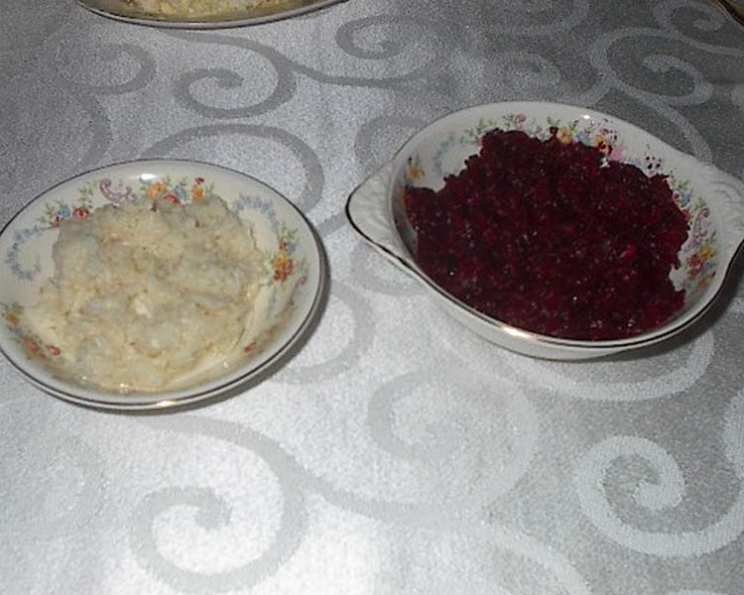
Easter Horseradish and Beets: A Culinary Celebration
Every Easter, my grandmother’s table groaned under the weight of holiday favorites: ham glistening with a brown sugar glaze, fluffy potato salad, and, nestled amongst them all, a vibrant bowl of horseradish and beets. It wasn’t the prettiest dish, perhaps, but it was the one that always sparked conversation – and a healthy dose of sniffles. That potent horseradish kick, tempered by the earthy sweetness of the beets, was her signature. It was a love-it-or-hate-it kind of deal, but for me, it’s Easter on a plate, a spicy, colorful reminder of family and tradition.
Recipe Overview
- Prep Time: 20 minutes
- Cook Time: 30 minutes
- Total Time: 50 minutes
- Yields: 1 1/2 quarts
- Serves: 10
- Dietary Type: Vegetarian
Ingredients
- 1 whole root fresh horseradish
- 8 medium red beets
- Water, as needed
- 3 tablespoons vinegar, as needed
- 1 teaspoon salt
- 3 (14 ounce) jars pickled beets, Aunt Nellie’s Whole
- 1 (8 ounce) jar prepared horseradish, as needed
- 1 tablespoon white vinegar, to taste
Equipment Needed
- Large pot
- Large bowl
- Grater (large and small)
- Blender or food processor
- Gloves (optional)
Instructions
- Begin by preparing the fresh beets. Trim all but about 1 1/2 inches of the beet tops and wash them thoroughly. Leaving a portion of the tops intact helps prevent the beets from bleeding excessively during cooking.
- Place the trimmed and washed beets in a large pot and cover them with water.
- Bring the water to a boil and cook the beets for approximately 30 minutes, or until they are tender when pierced with a fork. You can prepare the beets a day in advance and store them in the refrigerator to cool off.
- Once the beets are cooked and cooled, cut off the remaining tops and peel the skins. Wearing gloves can prevent your hands from staining.
- Grate the cooked beets into a large bowl – large enough to hold the grated beets and the horseradish. The size of the grater used is personal preference; a larger grater will yield a coarser texture, while a smaller one will produce a finer result.
- Next, prepare the fresh horseradish. Peel the root and chop it into small pieces.
- Place a small amount of the chopped horseradish in a blender with a little water to aid in the blending process.
- Blend the horseradish at a fairly low speed until it’s chopped very fine. Transfer the blended horseradish to a bowl.
- Repeat steps 7 and 8 until all of the fresh horseradish is chopped up. If you don’t have a blender, a small grater can be used, but be cautious – the fumes from freshly grated horseradish can be quite strong. Work in a well-ventilated area and keep your face away from the bowl.
- Add the freshly prepared horseradish to the grated beets. Taste as you go, adjusting the amount of horseradish to achieve the desired level of heat. Remember, the potency of fresh horseradish can vary.
- Add about 2 tablespoons of vinegar and a teaspoon of salt to the mixture. Taste, and continue adding a little vinegar at a time, tasting as you go, until the flavors are balanced to your liking.
- For a finer consistency, use a food processor with the bottom blade to chop up the prepared and pickled beets, then mix everything together. Add the additional vinegar and salt as needed.
- Serve the remaining prepared horseradish on the side, allowing individuals to add more to their own servings of beets.
Expert Tips & Tricks
- Test Your Horseradish: The heat in horseradish comes from its oils. If the root has been out of the ground too long, it may dry out and lose its potency. When purchasing fresh horseradish root, scrape it with a fingernail to see if you can detect its characteristic smell. If there’s no smell, there’s likely no heat.
- Preserve the Heat: Keep both the fresh horseradish and the finished horseradish and beets mixture covered as much as possible. Exposure to air can cause the horseradish to lose its pungency.
- Plant Your Scraps: If you use fresh horseradish, don’t discard the tops! You can quarter them and plant them for the next year. It takes approximately two years to grow thick roots, but you can have some fresh horseradish as early as the following year.
Serving & Storage Suggestions
Serve the Easter Horseradish and Beets chilled as a side dish alongside your Easter ham, roast beef, or other traditional holiday fare. The vibrant color and bold flavor make it a welcome addition to any buffet table.
Store any leftovers in an airtight container in the refrigerator for up to a week. Note that the horseradish flavor may mellow slightly over time. It is not recommended to freeze this dish, as the beets can become watery upon thawing.
Nutritional Information
| Nutrient | Amount per Serving | % Daily Value |
|---|---|---|
| Calories | 117.7 kcal | N/A |
| Calories from Fat | 3 g | 3% |
| Total Fat | 0.4 g | 0% |
| Saturated Fat | 0.1 g | 0% |
| Cholesterol | 0 mg | 0% |
| Sodium | 670 mg | 27% |
| Total Carbohydrate | 28.2 g | 9% |
| Dietary Fiber | 5.7 g | 22% |
| Sugars | 6.3 g | 25% |
| Protein | 2.3 g | 4% |
Variations & Substitutions
- Sweetness Adjustment: If you prefer a sweeter dish, you can add a touch of sugar or honey to balance the heat of the horseradish. Start with a small amount and adjust to taste.
- Horseradish Alternative: If you can’t find fresh horseradish root, you can use prepared horseradish, but be aware that the flavor will be slightly different. Adjust the amount to your preference.
- Beet Variety: While red beets are traditional, you can experiment with golden or Chioggia beets for a different color and flavor profile.
- Spice It Up: For an extra kick, add a pinch of cayenne pepper or a dash of hot sauce to the mixture.
FAQs (Frequently Asked Questions)
Q: Can I make this dish ahead of time?
A: Yes, the horseradish and beets can be made a day or two in advance and stored in the refrigerator. The flavors will meld together, and the dish will be ready to serve when you are.
Q: How can I reduce the heat of the horseradish?
A: If you find the horseradish too strong, add more beets or a touch of sweetness to balance the flavor. Letting it sit uncovered in the fridge for a few hours can also reduce the heat.
Q: Can I use canned beets instead of pickled or fresh?
A: While fresh beets are ideal, canned beets can be used in a pinch. Drain them well and adjust the amount of vinegar and salt accordingly. Pickled beets work well with no extra prep besides chopping,
Q: Why is my horseradish not as potent as I expected?
A: The potency of fresh horseradish can vary depending on its freshness and growing conditions. Choose firm, heavy roots with a strong aroma.
Q: How long will this dish last in the refrigerator?
A: Properly stored in an airtight container, horseradish and beets will last for up to a week in the refrigerator.
Final Thoughts
I encourage you to embrace the bold flavors of this Easter Horseradish and Beets recipe. It’s more than just a dish; it’s a taste of tradition, a conversation starter, and a celebration of spring. Don’t be afraid to experiment with the flavors, adjust the heat to your liking, and make it your own. And if you happen to plant those horseradish tops, be sure to share the spicy bounty with friends and family next year!