
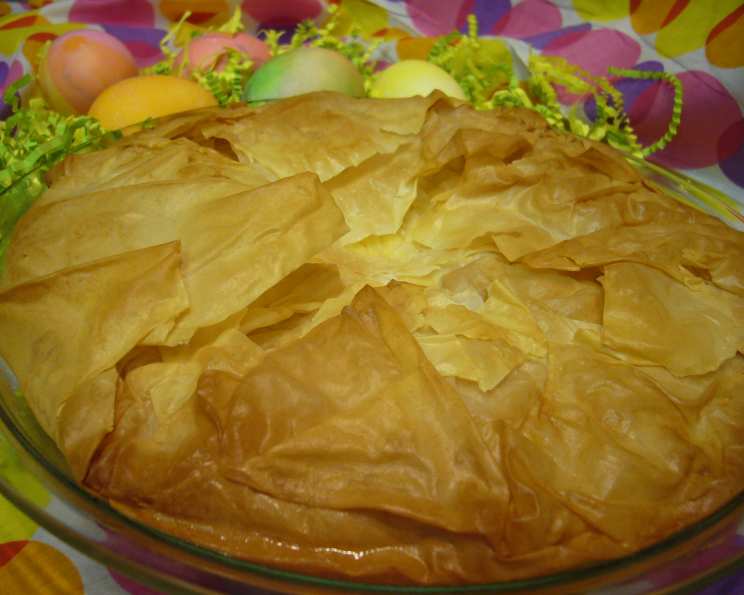
Easter Pie: A Taste of Italian Spring
The aroma of orange zest, mingling with the buttery scent of perfectly baked phyllo, instantly transports me back to my Nonna’s kitchen. Easter wasn’t Easter without her “Torta di Riso,” a rustic pie filled with creamy ricotta, sweet rice, and fragrant pine nuts. It wasn’t just a dessert; it was a symbol of family, tradition, and the joyous renewal of spring. Though I’ve adapted the recipe slightly over the years, Nonna’s spirit infuses every slice.
Recipe Overview
- Prep Time: 20 minutes
- Cook Time: 35 minutes
- Total Time: 55 minutes
- Servings: 8
- Yield: 1 pie
- Dietary Type: Vegetarian
Ingredients
- ¾ cup powdered sugar, plus extra for garnish
- 3 large eggs
- 2 teaspoons pure vanilla extract
- 1 tablespoon orange zest
- 1 (15 ounce) container whole milk ricotta cheese
- ½ cup cooked short-grain rice
- ⅓ cup toasted pine nuts
- 6 sheets fresh phyllo pastry sheets or 6 sheets thawed phyllo pastry sheets
- ⅜ cup unsalted butter, melted
Equipment Needed
- 9-inch glass pie dish
- Food processor
- Pastry brush
- Cooling rack
Instructions
-
Preheat your oven to 375 degrees F (190 degrees C).
-
In a food processor, combine the ¾ cup of powdered sugar, eggs, vanilla extract, orange zest, and ricotta cheese. Process until the mixture is completely smooth. This step is crucial for achieving a creamy, even texture in the filling. Scrape down the sides of the bowl as needed to ensure everything is well incorporated.
-
Transfer the ricotta mixture to a mixing bowl. Gently stir in the cooked short-grain rice and toasted pine nuts. Avoid overmixing, as this can make the rice mushy. Set the ricotta mixture aside while you prepare the phyllo crust.
-
Lightly butter a 9-inch glass pie dish. This will prevent the phyllo from sticking and ensure easy removal of the baked pie.
-
Lay 1 phyllo sheet over the bottom and up the sides of the prepared pie dish, allowing the phyllo to hang over the sides. Brush the phyllo generously with some of the melted butter. Make sure to coat the entire surface of the phyllo to create a crispy, golden crust.
-
Top with a second sheet of phyllo dough, laying it in the opposite direction as the first phyllo sheet. This crosswise layering will add strength and flakiness to the crust. Brush the second sheet with more of the melted butter.
-
Continue layering the remaining sheets of phyllo sheets, alternating the direction of each layer and buttering each sheet with the melted butter. Be sure to work quickly, as phyllo dough dries out rapidly. If the phyllo starts to tear, don’t worry; the layers will help hold it together.
-
Spoon the ricotta mixture into the phyllo-lined dish. Distribute the filling evenly to ensure uniform baking.
-
Fold the overhanging phyllo dough over the top of the filling to enclose it completely. Crimp the edges to create a decorative border and help seal in the filling.
-
Brush the entire top of the pie completely with the remaining melted butter. This final layer of butter will give the crust a beautiful golden-brown color and extra crispness.
-
Bake the pie until the phyllo is golden brown and the filling is set, about 35 minutes. The filling should be slightly firm to the touch and no longer jiggly. If the crust begins to brown too quickly, tent the pie loosely with aluminum foil to prevent burning.
-
Once baked, transfer the pie to a wire rack and cool completely. Cooling the pie allows the filling to set fully and makes it easier to slice.
-
Before serving, sift powdered sugar generously over the pie. This adds a touch of sweetness and a beautiful finishing touch.
Expert Tips & Tricks
- Toasting Pine Nuts: Toasting the pine nuts before adding them to the filling enhances their nutty flavor. Spread the pine nuts in a single layer on a baking sheet and toast in a preheated oven at 350°F (175°C) for 5-7 minutes, or until golden brown and fragrant. Watch them carefully, as they can burn quickly.
- Preventing a Soggy Crust: To prevent the bottom crust from becoming soggy, you can blind-bake the phyllo crust for 10-15 minutes before adding the filling. This will help crisp up the crust and create a barrier against the moisture from the filling.
- Make-Ahead Tip: The ricotta filling can be prepared a day ahead of time and stored in the refrigerator. This is a great way to break up the workload and save time on the day of serving.
- Rescuing Dry Phyllo: If your phyllo dough is dry and brittle, try covering it with a damp towel for a few minutes to rehydrate it. Work quickly to prevent it from becoming too soggy.
Serving & Storage Suggestions
Serve the Easter Pie at room temperature or slightly chilled. It’s delicious on its own or with a dollop of whipped cream or a scoop of vanilla ice cream. For a more elegant presentation, garnish with fresh berries or a sprig of mint.
Leftovers can be stored in an airtight container in the refrigerator for up to 3 days. To reheat, bake in a preheated oven at 350°F (175°C) for 10-15 minutes, or until warmed through. You can also reheat individual slices in the microwave, but the crust will lose some of its crispness. Freezing is not recommended, as it can alter the texture of the filling and crust.
Nutritional Information
| Nutrient | Amount per Serving | % Daily Value |
|---|---|---|
| Calories | 339 kcal | N/A |
| Total Fat | 22g | 33% |
| Saturated Fat | 11g | 54% |
| Cholesterol | 120mg | 39% |
| Sodium | 142mg | 5% |
| Total Carbohydrate | 25g | 8% |
| Dietary Fiber | 1g | 2% |
| Sugars | 12g | N/A |
| Protein | 11g | 21% |
Note: Nutritional information is an estimate and may vary depending on specific ingredients and portion sizes.
Variations & Substitutions
- Gluten-Free Easter Pie: Substitute the phyllo dough with a gluten-free pie crust or use layers of finely ground almond flour mixed with butter and spices.
- Citrus Variations: Experiment with different citrus zests, such as lemon or grapefruit, to create unique flavor profiles. You can also add a tablespoon of citrus juice to the filling for a brighter taste.
- Nutty Variations: Instead of pine nuts, try using slivered almonds, chopped walnuts, or pistachios. You can also add a teaspoon of almond extract to the filling for a more intense nutty flavor.
- Sweetness Adjustment: Adjust the amount of powdered sugar to your liking. If you prefer a less sweet pie, reduce the amount of sugar by a tablespoon or two. You can also substitute some of the powdered sugar with honey or maple syrup.
FAQs (Frequently Asked Questions)
Q: Can I use pre-cooked rice from the store?
A: Yes, you can use pre-cooked rice, but make sure it’s short-grain rice for the best texture. Avoid using instant rice, as it can become mushy.
Q: My phyllo dough is tearing. What should I do?
A: Don’t worry if the phyllo dough tears; the layers will help hold it together. Just try to handle it gently and brush each layer with butter to help it adhere to the others.
Q: Can I make this pie without a food processor?
A: Yes, you can mix the ricotta filling by hand using a whisk or a fork. Just make sure to break up the ricotta cheese well and combine all the ingredients thoroughly.
Q: How do I know when the pie is done?
A: The pie is done when the phyllo is golden brown and the filling is set. The filling should be slightly firm to the touch and no longer jiggly.
Q: Can I add other ingredients to the filling?
A: Absolutely! Feel free to add other ingredients to the filling, such as candied fruit, chocolate chips, or spices like cinnamon or nutmeg.
Final Thoughts
Easter Pie is more than just a dessert; it’s a celebration of spring, family, and tradition. I encourage you to try this recipe and create your own memories around this classic Italian treat. Whether you follow the recipe exactly or add your own personal touch, I hope this pie brings joy to your Easter celebration. Don’t hesitate to share your creations and feedback! Perhaps pair it with a crisp glass of Prosecco for a truly festive experience. Buon appetito!