
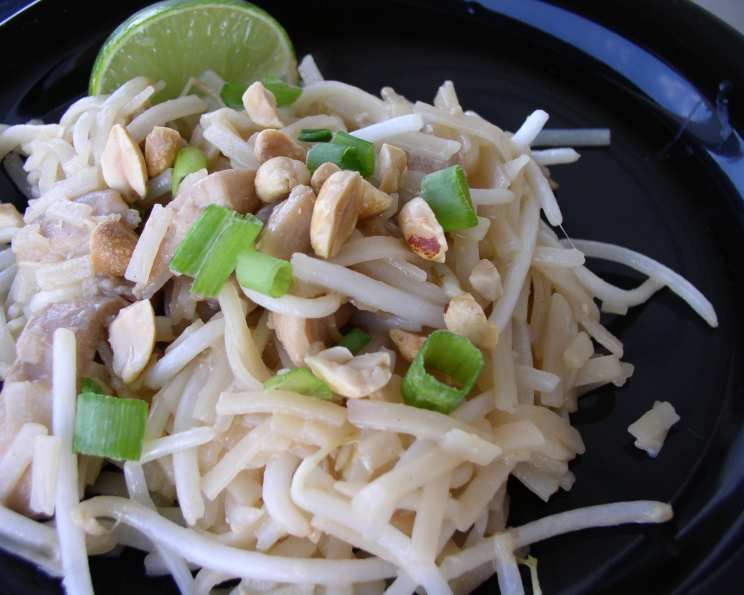
Easy Chicken Pad Thai (Without Tamarind)
The first time I tasted Pad Thai, I was a wide-eyed backpacker in Bangkok. The smoky aroma from a street vendor’s cart, the sizzling sounds of noodles dancing in a wok, and the explosion of sweet, sour, and savory flavors – it was pure magic. I remember thinking, “This is what culinary adventure is all about!” It became my daily ritual. I would always gravitate to this one particular street vendor, not just for the incredible taste, but for the warmth and welcoming smile I received each time. The vendor’s Pad Thai became my benchmark, a memory etched in flavors of lime, peanuts, and perfectly cooked noodles. It’s a taste I’ve chased ever since, and this recipe brings me right back.
Recipe Overview
- Prep Time: 20 minutes
- Cook Time: 20 minutes
- Total Time: 40 minutes
- Servings: 4
- Dietary Type: Gluten-Free (with wheat-free soy sauce)
Ingredients
- 9 ounces pad Thai rice noodles
- 3/4 lb boneless chicken thighs, cut into small strips (or breast)
- 1 1/2 tablespoons soy sauce
- 4 garlic cloves, minced
- Ginger, grated (thumb size)
- 4 green onions, sliced
- 1 egg
- 2-3 cups bean sprouts
- 1/3 cup dry-roasted unsalted peanuts, roughly chopped (or cashews)
- 1 fresh lime, sliced into wedges
- 2 tablespoons vegetable oil
For the Pad Thai Sauce:
- 1/3 cup chicken stock (good-tasting)
- 3 tablespoons rice vinegar (or substitute white vinegar)
- 1 tablespoon lime juice
- 3-4 tablespoons brown sugar
- 2 tablespoons fish sauce
- 1 tablespoon soy sauce
- 1/8 teaspoon white pepper
Equipment Needed
- Large pot
- Wok or large frying pan
- Measuring cups and spoons
- Mixing bowls
Instructions
-
Place the prepared chicken in a bowl and toss with 1.5 tablespoons of soy sauce. Set aside to marinate while you prepare the other ingredients. This allows the chicken to absorb flavor and stay moist during cooking.
-
Combine all ‘pad Thai sauce’ ingredients together in a cup. Stir well to dissolve the brown sugar. Taste the sauce – it needs to be predominantly sweet, followed by sour, then salty. Adjust the amounts of brown sugar, rice vinegar, and fish sauce to achieve this balance. Set aside.
-
Bring a large pot of water to a rolling boil. Add the rice noodles and immediately switch off the heat. Allow the noodles to soak for approximately 6 minutes, OR until they are soft enough to bend easily but still firm and “undercooked” by regular standards. This is crucial! Over-soaked or boiled noodles will become mushy. Drain the noodles in a colander and rinse briefly with cold water to prevent them from sticking together. Set aside. This step is vital to stop the cooking process.
-
Heat a wok or large frying pan over medium-high heat. Drizzle in the vegetable oil and swirl to coat the pan. Add the minced garlic, grated ginger, and half of the sliced green onion (or just the white parts, reserving the green parts for garnish later). Stir-fry for 1 minute, or until fragrant. Be careful not to burn the garlic, which can turn bitter quickly.
-
Add the marinated chicken to the wok and stir-fry for 3-4 minutes, or until cooked through. If the pan becomes dry, add 1-2 tablespoons of the prepared pad Thai sauce to keep the ingredients frying nicely and prevent sticking. Ensure the chicken reaches an internal temperature of 165°F (74°C).
-
Push the chicken and aromatics to one side of the wok and crack the egg into the center of the pan. Stir quickly to scramble the egg, then combine it with the other ingredients. This adds richness and body to the Pad Thai.
-
Add the prepared noodles to the wok along with 3-4 tablespoons of the pad Thai sauce. Using two utensils (tongs and a spatula work well), lift and turn the noodles to stir-fry and combine them with the other ingredients. Continue frying in this way, adding more of the sauce every minute or two, until all the sauce has been added and the noodles are chewy-delicious and a little bit sticky (approximately 8-10 minutes). The noodles should absorb the sauce and become slightly caramelized.
-
When the sauce has been absorbed and the noodles are cooked to your liking, fold in the bean sprouts. You want the bean sprouts to retain some of their crispness, so don’t overcook them.
-
Remove the wok from the heat and taste-test the Pad Thai. Add more fish sauce until the desired level of saltiness is achieved. The amount of fish sauce you need will depend on your personal preference.
-
Portion the Pad Thai onto individual plates and add a lime wedge on the side of each serving. Before eating, top with the remaining sliced green onion and squeeze the lime wedge over the dish. Finish with a generous sprinkling of the chopped peanuts (or cashews). For those who like it extra spicy, serve with Thai chili sauce on the side.
Expert Tips & Tricks
- Noodle Perfection: The key to great Pad Thai is perfectly cooked noodles. Don’t overcook them during the soaking process. They should be al dente, as they will continue to cook in the wok.
- Sauce Consistency: If the sauce is too thick, add a splash of chicken stock to thin it out. If it’s too thin, simmer it in a small saucepan until it reduces slightly.
- Make-Ahead Tip: You can prepare the pad Thai sauce and chop all the vegetables ahead of time. Store them separately in the refrigerator until ready to cook.
- Ingredient Swaps: If you don’t have chicken thighs, you can use chicken breast, shrimp, or tofu. For a vegetarian option, substitute the chicken with extra firm tofu.
Serving & Storage Suggestions
Serve the Pad Thai immediately while it’s hot and the noodles are still slightly sticky. Garnish with fresh green onions, lime wedges, and chopped peanuts for visual appeal and added flavor.
Leftover Pad Thai can be stored in an airtight container in the refrigerator for up to 2 days. Reheat it gently in a wok or frying pan over medium heat, adding a tablespoon or two of water or chicken stock to prevent it from drying out. Microwaving is also an option, but the texture of the noodles may be slightly altered.
Nutritional Information
| Nutrient | Amount per Serving | % Daily Value |
|---|---|---|
| Calories | 550 kcal | 28% |
| Total Fat | 20g | 31% |
| Saturated Fat | 4g | 20% |
| Cholesterol | 80mg | 27% |
| Sodium | 1200mg | 50% |
| Total Carbohydrate | 65g | 22% |
| Dietary Fiber | 5g | 20% |
| Sugars | 15g | – |
| Protein | 30g | 60% |
Note: Nutritional information is an estimate and may vary based on specific ingredients and portion sizes.
Variations & Substitutions
- Vegetarian Pad Thai: Substitute the chicken with extra-firm tofu, sliced and pan-fried until golden brown.
- Shrimp Pad Thai: Use 1 pound of peeled and deveined shrimp instead of chicken. Add the shrimp to the wok after the garlic and ginger, and cook until pink and opaque.
- Spicy Pad Thai: Add a pinch of red pepper flakes or a tablespoon of Thai chili paste to the pad Thai sauce for extra heat.
- Gluten-Free Pad Thai: Use wheat-free soy sauce to ensure the dish is gluten-free.
FAQs (Frequently Asked Questions)
Q: Can I use different types of noodles?
A: While pad Thai rice noodles are traditional, you can experiment with other rice noodles. Just be sure to adjust the soaking time accordingly.
Q: Can I make this ahead of time?
A: It’s best to eat Pad Thai fresh, but you can prep the ingredients (sauce, chopped vegetables) ahead of time.
Q: What if I don’t have fish sauce?
A: Fish sauce adds a unique umami flavor, but you can substitute it with soy sauce, although the flavor profile will be slightly different.
Q: My noodles are sticking together. What should I do?
A: Make sure to rinse the noodles briefly with cold water after soaking to prevent them from sticking.
Q: Can I freeze Pad Thai?
A: Freezing Pad Thai is not recommended, as the noodles can become mushy when thawed.
Final Thoughts
This easy chicken Pad Thai recipe, while a departure from the tamarind-heavy versions, offers a delicious and authentic taste of Thailand using readily available ingredients. The balance of sweet, sour, and savory flavors, combined with the satisfying chewiness of the noodles, makes it a truly unforgettable dish. So, gather your ingredients, fire up your wok, and prepare to be transported to the vibrant streets of Bangkok. I encourage you to try this recipe and let me know what you think! Pair it with a refreshing Thai iced tea for a truly authentic experience. Enjoy!