
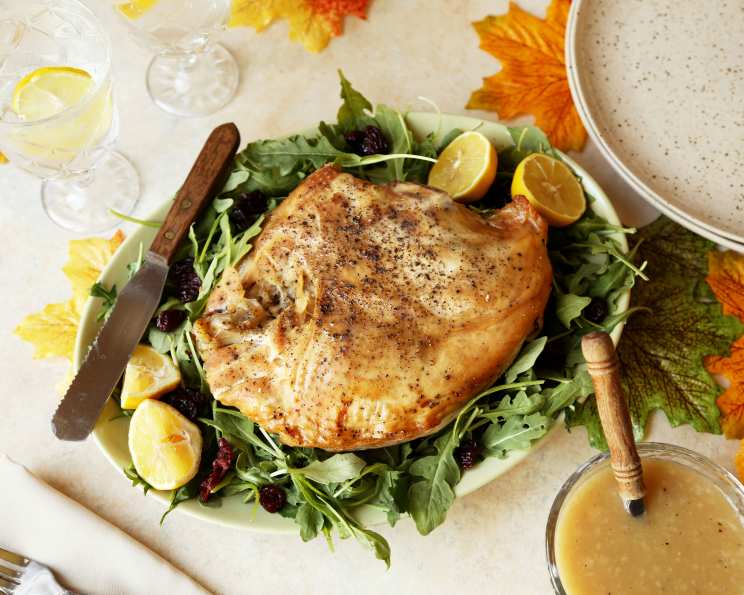
Easy Crock Pot Turkey Breast With Fail-Proof Gravy
I remember the first Thanksgiving I hosted, paralyzed by the daunting task of roasting a whole turkey. Visions of dry, flavorless meat haunted my dreams. Then, my grandmother, a culinary magician, whispered a secret: the crock pot. That year, the turkey was unbelievably moist and succulent, and the gravy, oh, the gravy, was a triumph. It wasn’t just a meal; it was a cherished memory, proof that Thanksgiving miracles could indeed come in slow-cooked form.
Recipe Overview
- Prep Time: 15 minutes
- Cook Time: 7-8 hours
- Total Time: 7 hours 15 minutes to 8 hours 15 minutes
- Servings: 10
Ingredients
- 6-7 lb turkey breast, thawed if frozen
- 1/2 cup chopped onion
- 1/2 cup chopped celery
- Salt
- Fresh coarse ground black pepper
- 1/2 cup chicken broth
For the Gravy:
- Turkey broth (from crock pot)
- 2 (14 ounce) cans chicken broth
- 3 tablespoons flour
Equipment Needed
- 5-6 quart slow cooker
- Saucepan
- Covered jar or whisk and bowl
- Strainer
Instructions
-
Begin by placing the chopped onion and chopped celery inside the cavity of the turkey breast. This aromatic stuffing will infuse the turkey with a subtle, savory flavor throughout the cooking process.
-
Generously sprinkle the entire turkey breast with salt and fresh coarse ground black pepper. This simple seasoning is crucial for enhancing the natural flavors of the turkey.
-
Place the seasoned turkey breast into a 5 to 6 quart slow cooker. Ensure the turkey fits comfortably without being overly crowded.
-
Pour 1/2 cup of chicken broth over the turkey in the slow cooker. This will help to keep the turkey moist during the long cooking time.
-
Cover the slow cooker and cook on low heat for 7 to 8 hours. The exact cooking time will depend on the size of your turkey breast and the specific slow cooker. It’s crucial to check for doneness before proceeding.
-
To check for doneness, use a meat thermometer to ensure the turkey breast reaches an internal temperature of 165°F (74°C). Insert the thermometer into the thickest part of the breast, avoiding the bone.
-
Once the turkey is cooked through, carefully remove it from the slow cooker and transfer it to a serving platter. Cover it loosely with foil to keep it warm while you prepare the gravy.
-
Strain the liquid from the slow cooker, discarding the onion and celery. This strained liquid will serve as the base for your gravy.
-
Pour the strained turkey broth into a saucepan. Add 1 to 2 cans of chicken broth, depending on how much gravy you want to make. Start with one can and add more as needed to reach your desired quantity.
-
In a covered jar, combine the 3 tablespoons of flour with about 1/2 to 1 cup of water. Shake vigorously until the mixture is completely smooth, ensuring there are no lumps. Alternatively, you can whisk the flour and water together in a bowl until smooth. This slurry will be used to thicken the gravy.
-
Bring the liquid in the saucepan to a boil over medium-high heat.
-
Once the liquid is boiling, slowly stir in the flour mixture, adding just enough to thicken the gravy to your liking. It’s important to add the slurry gradually to prevent lumps from forming.
-
Continue to cook the gravy until it bubbles and thickens, stirring often to prevent sticking. This process usually takes about 5-10 minutes.
Expert Tips & Tricks
-
Browning the Turkey: While the crock pot excels at keeping the turkey moist, it doesn’t typically brown the skin. For a more visually appealing presentation, consider placing the cooked turkey breast under the broiler for a few minutes after it comes out of the crock pot. Watch it carefully to prevent burning!
-
Adding Flavor: Experiment with adding other herbs and spices to the turkey. Dried thyme, rosemary, or sage can add depth and complexity to the flavor profile. You can also rub the turkey with a mixture of softened butter and herbs before placing it in the slow cooker.
-
Making Gravy Ahead: The gravy can be made ahead of time and reheated. Store it in an airtight container in the refrigerator for up to 3 days. When reheating, add a little extra broth if needed to thin it out.
-
Dealing with Lumpy Gravy: If your gravy becomes lumpy, don’t despair! Use an immersion blender to smooth it out. Alternatively, you can strain the gravy through a fine-mesh sieve to remove any lumps.
-
Thawing the Turkey Safely: Ensure the turkey is completely thawed before cooking. The safest way to thaw a turkey is in the refrigerator. Allow approximately 24 hours of thawing time for every 5 pounds of turkey.
Serving & Storage Suggestions
Serve the sliced turkey breast immediately with the warm gravy. It pairs perfectly with classic Thanksgiving sides such as mashed potatoes, stuffing, cranberry sauce, and green bean casserole.
Leftover turkey should be stored in an airtight container in the refrigerator. It will keep for 3-4 days. You can also freeze leftover turkey for longer storage. Wrap it tightly in plastic wrap and then place it in a freezer bag. Frozen turkey will keep for 2-3 months.
To reheat leftover turkey, you can microwave it, bake it in the oven, or sauté it in a pan. Add a little chicken broth or gravy to help keep it moist.
Nutritional Information
| Nutrient | Amount per Serving | % Daily Value |
|---|---|---|
| Calories | 455 kcal | N/A |
| Calories from Fat | 177 kcal | N/A |
| Total Fat | 19.7g | 30% |
| Saturated Fat | 5.4g | 26% |
| Cholesterol | 176.9mg | 58% |
| Sodium | 463.6mg | 19% |
| Total Carbohydrate | 3.1g | 1% |
| Dietary Fiber | 0.3g | 1% |
| Sugars | 0.7g | 2% |
| Protein | 61.9g | 123% |
Variations & Substitutions
-
Herb Butter: Rub the turkey breast with herb butter before slow cooking. Combine softened butter with minced garlic, chopped fresh herbs (such as rosemary, thyme, and sage), salt, and pepper.
-
Wine Infusion: Add 1/2 cup of dry white wine to the chicken broth for a richer flavor.
-
Spicy Turkey: Add a pinch of red pepper flakes to the salt and pepper mixture for a touch of heat.
-
Gluten-Free Gravy: Use cornstarch instead of flour to thicken the gravy. Mix the cornstarch with cold water before adding it to the boiling liquid.
-
Bone-In Turkey Breast: You can use a bone-in turkey breast for this recipe. It may require a slightly longer cooking time. Ensure the internal temperature reaches 165°F (74°C).
FAQs (Frequently Asked Questions)
Q: Can I use a frozen turkey breast for this recipe?
A: It’s best to use a fully thawed turkey breast for optimal results. Thawing ensures even cooking and prevents the outside from overcooking before the inside is done.
Q: How do I prevent the turkey from drying out in the slow cooker?
A: The slow cooker helps to keep the turkey moist, but adding broth to the bottom of the cooker is essential. Also, avoid overcooking the turkey. Check the internal temperature regularly.
Q: Can I cook this on high instead of low?
A: While you can cook it on high, low is recommended for a more tender and juicy result. Cooking on high might dry out the turkey. If you choose to cook on high, reduce the cooking time to 3-4 hours and monitor the internal temperature closely.
Q: My gravy is too thin. How can I thicken it?
A: If your gravy isn’t thick enough, you can add a bit more of the flour and water slurry. Make sure to mix it well to avoid lumps. Simmer the gravy for a few more minutes until it reaches your desired consistency.
Q: Can I add vegetables to the slow cooker with the turkey?
A: Yes, you can add other vegetables such as carrots, potatoes, or parsnips to the slow cooker. Place them around the turkey breast before cooking. Keep in mind that they may become very soft during the long cooking time.
Final Thoughts
This crock pot turkey breast recipe is more than just a convenient way to cook Thanksgiving dinner; it’s a testament to the power of simple ingredients and slow cooking. It’s a recipe that promises moist, flavorful turkey every single time, freeing you up to focus on enjoying the company of your loved ones. So, go ahead, embrace the ease of the crock pot, and create your own cherished Thanksgiving memories. And don’t forget to share your feedback – I’d love to hear how it turned out! This turkey pairs beautifully with a crisp Sauvignon Blanc or a rich, buttery Chardonnay.