
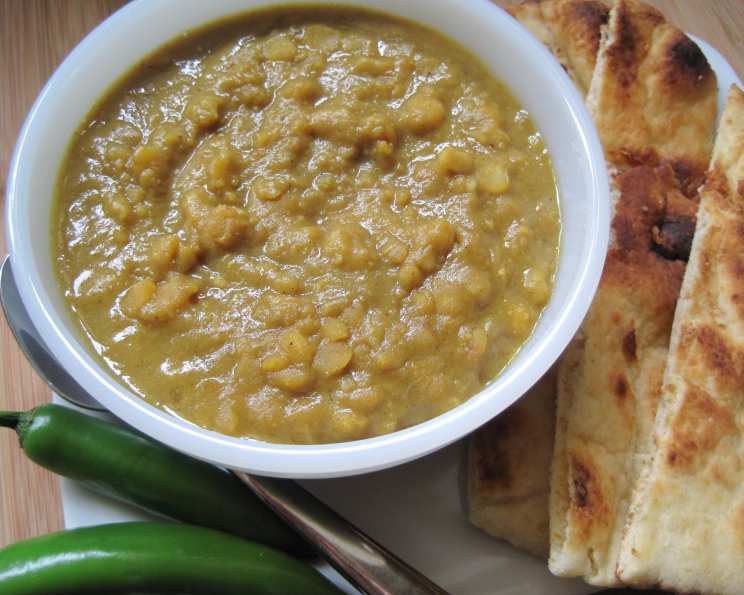
Easy Curried Yellow Dal (Yellow Split Peas)
The aroma of curry always takes me back to my college days. A tiny, hole-in-the-wall Indian restaurant near campus was my sanctuary, a place where I could escape the stress of exams and lectures with a warm bowl of dal and fluffy naan. The simple, earthy flavors of lentils simmered with spices always felt like a comforting hug, a reminder that even amidst chaos, there was always nourishment and warmth to be found. Recreating that simple comfort food is a joy, and this yellow dal recipe is my way of sharing that feeling.
Recipe Overview:
- Prep Time: 10 minutes
- Cook Time: 50 minutes
- Total Time: 1 hour
- Servings: 3-4
- Yield: About 6 cups
- Dietary Type: Vegetarian (easily vegan)
Ingredients:
- 1 cup dry yellow split peas
- 1 tablespoon butter (can use vegetable oil or margarine to make this vegan)
- ½ medium onion, chopped
- 2 garlic cloves, finely minced
- ½ teaspoon fresh gingerroot, finely minced
- 2 cups low sodium vegetable broth
- 1 cup water
- ½ teaspoon salt
- 1 tablespoon curry powder (I prefer a mild, yellow Indian variety)
- 1 tablespoon cumin
- ½ teaspoon coriander powder
- ½ teaspoon turmeric
- ½ teaspoon chili powder (optional)
- ½ teaspoon garam masala (optional)
- ½ cup fresh cilantro, chopped for garnish (optional)
Equipment Needed:
- Medium saucepan with lid
- Measuring cups and spoons
- Cutting board
- Knife
- Garlic press (optional)
Instructions:
- In a medium saucepan, melt the butter over medium heat. If making a vegan version, heat the vegetable oil or margarine.
- Add the chopped onion and salt. Sauté until the onion is soft and translucent, about 5 minutes.
- Add the finely minced garlic and ginger. Sauté until fragrant, about 30 seconds, being careful not to burn the garlic.
- Add the remaining spices: curry powder, cumin, coriander powder, turmeric, chili powder (if using), and garam masala (if using). Stir well to combine.
- Sauté the spices for about 1 minute, allowing them to bloom and release their aromas. If the spices start to stick to the pan, add a little water – about ¼ cup should be sufficient.
- Add the yellow split peas to the saucepan and stir to coat them with the butter, onion, and spice mixture.
- Pour in the vegetable broth and water. Bring the mixture to a boil over medium-high heat.
- Once boiling, cover the saucepan and reduce the heat to a simmer.
- Simmer for 40-50 minutes, or until the yellow split peas are tender and most of the liquid has been absorbed. Check the peas periodically during cooking. If they are absorbing the liquid too quickly and the mixture is becoming dry, add more water as needed. The final consistency should be thick but not dry.
- Before serving, garnish with chopped cilantro/coriander leaves (optional).
Expert Tips & Tricks:
- Spice Level Adjustment: Don’t be afraid to experiment with the spice levels! If you prefer a milder curry, reduce the amount of chili powder or omit it entirely. For a spicier kick, add a pinch of cayenne pepper or finely chopped jalapeño along with the garlic and ginger.
- Pea Tenderness: If you’re having trouble getting the split peas to soften, try soaking them in water for a couple of hours before cooking. You can also try cooking the onions without salt initially, adding the salt during the last 10 minutes of cooking. Some people believe that salt can interfere with lentils softening, and it might apply to split peas as well.
- Curry Powder Choice: The type of curry powder you use can significantly impact the flavor. A mild, yellow Indian curry powder, commonly found in most US supermarkets, works well in this recipe. However, feel free to experiment with other varieties like Madras curry powder for a spicier flavor.
- Spice Blooming: Sautéing the spices in butter or oil before adding the other ingredients is crucial for developing their flavor. This process, known as “blooming,” releases the essential oils and enhances the overall taste of the curry.
- Consistency Control: Adjust the amount of water or broth to achieve your desired consistency. For a thicker dal, use less liquid. For a thinner, soupier consistency, add more liquid.
- Ginger Preparation: Fresh ginger can be a bit stringy. To make it easier to mince, peel it with the edge of a spoon instead of a vegetable peeler. This helps to remove only the skin and not the flesh.
- Garlic Flavor: Don’t burn the garlic! Burnt garlic has a bitter taste that can ruin the entire dish. Sauté it quickly over medium heat until fragrant, and be ready to add the next ingredient promptly.
Serving & Storage Suggestions:
This Curried Yellow Dal is incredibly versatile. Serve it hot with freshly cooked basmati rice or brown rice for a complete and satisfying meal. It’s also delicious with naan bread or roti for scooping up every last bit of the flavorful sauce.
Storage: Leftover dal can be stored in an airtight container in the refrigerator for up to 3-4 days. It can also be frozen for longer storage, up to 2-3 months. Thaw it in the refrigerator overnight before reheating.
Reheating: Reheat the dal gently on the stovetop over medium heat, adding a splash of water or broth if needed to loosen it up. You can also reheat it in the microwave, stirring occasionally to ensure even heating.
Nutritional Information:
| Nutrient | Amount per Serving | % Daily Value |
|---|---|---|
| Calories | 350 kcal | 18% |
| Total Fat | 12g | 15% |
| Saturated Fat | 6g | 30% |
| Cholesterol | 15mg | 5% |
| Sodium | 500mg | 22% |
| Total Carbohydrate | 50g | 17% |
| Dietary Fiber | 20g | 71% |
| Sugars | 8g | – |
| Protein | 20g | 40% |
Note: Nutritional information is an estimate and may vary based on specific ingredients and preparation methods.
Variations & Substitutions:
- Vegan Dal: This recipe is easily made vegan by substituting the butter with vegetable oil, coconut oil, or margarine.
- Spice It Up: For a spicier version, add finely chopped jalapeño, serrano pepper, or chile pepper along with the garlic. You can also use a spicier curry powder like Madras curry.
- Coconut Milk Dal: Replace some of the water or vegetable broth with coconut milk for a richer, creamier dal with a subtle coconut flavor.
- Lentil Variety: While this recipe is specifically for yellow split peas, you can also use other types of lentils, such as red lentils or brown lentils. Keep in mind that the cooking time may vary depending on the type of lentil used.
- Vegetable Additions: Add extra vegetables to the dal for added flavor and nutrients. Some good options include spinach, kale, carrots, potatoes, or cauliflower. Add them during the last 20 minutes of cooking.
- Lemon/Lime Juice: Squeeze a bit of fresh lemon juice or lime juice over the dal before serving for a bright, tangy flavor.
FAQs (Frequently Asked Questions):
Q: Can I make this dal in a slow cooker?
A: Yes, you can adapt this recipe for a slow cooker. Sauté the onions, garlic, ginger, and spices in a skillet first, then transfer everything to the slow cooker. Cook on low for 6-8 hours, or on high for 3-4 hours, until the peas are tender.
Q: Do I need to soak the yellow split peas before cooking?
A: Soaking is not essential, but it can help to shorten the cooking time. If you have time, soak the peas in water for a couple of hours before cooking.
Q: How can I prevent the dal from sticking to the bottom of the pan?
A: Stir the dal occasionally during cooking, especially as it thickens. You can also use a heavy-bottomed saucepan to help distribute the heat more evenly.
Q: Can I use canned lentils instead of dry split peas?
A: While you can, the texture and flavor won’t be quite the same. Canned lentils are already cooked, so you would add them towards the end of the cooking process, just to heat them through. Reduce the amount of liquid accordingly.
Q: What if I don’t have vegetable broth?
A: You can substitute chicken broth or water with a bouillon cube if you don’t have vegetable broth on hand. The vegetable broth does add a depth of flavor, however, so use it if you have it.
Final Thoughts:
This Easy Curried Yellow Dal is a simple yet incredibly satisfying dish that’s perfect for a weeknight meal. It’s packed with flavor, protein, and fiber, and it’s easily customizable to suit your taste preferences. I hope this recipe inspires you to try making your own dal at home. Don’t be afraid to experiment with different spices and vegetables to create your own unique version. I’d love to hear your feedback and variations – share your creations! This dal pairs beautifully with a crisp cucumber raita or a simple green salad for a complete and balanced meal. Enjoy!