
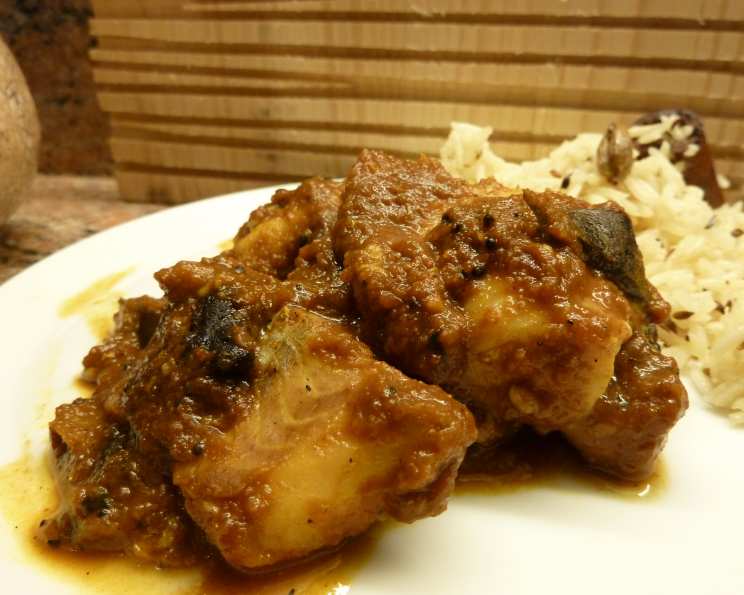
Easy Fish Curry: A Taste of Southern Comfort
The aroma of simmering spices mingled with the briny tang of the sea – that’s the scent that instantly transports me back to my grandmother’s kitchen in Kerala. Ammachi, as we affectionately called her, had a knack for turning simple ingredients into dishes bursting with flavor, and her fish curry was legendary. I remember perched on a stool, watching her expertly grind spices with a mortar and pestle, the rhythmic thud a comforting soundtrack to my childhood. This recipe, adapted from her teachings, brings that same comforting warmth to my own kitchen, a testament to the enduring power of family and food.
Recipe Overview
- Prep Time: 20 minutes
- Cook Time: 25 minutes
- Total Time: 45 minutes
- Servings: 3-4
- Dietary Type: Gluten-Free, Dairy-Free
Ingredients
For Seasoning:
- 2 teaspoons oil
- 1 teaspoon mustard seeds
- 2 dried red chilies
- ½ teaspoon fenugreek seeds
- 10 curry leaves
For the Curry Paste:
- 2 onions
- 3 medium tomatoes
- 2 inches fresh ginger
- 3 big garlic cloves
For the Curry:
- ¾ teaspoon turmeric powder
- 1 teaspoon chili powder
- 3 teaspoons coriander powder
- 1 teaspoon salt
- 2 teaspoons tamarind paste
- ¼ kg sliced fish
Equipment Needed
- Blender
- Pan with lid
Instructions
- First, prepare the curry paste. Combine the onions, tomatoes, ginger, and garlic cloves in a blender. Add a little water to help the mixture blend smoothly. Grind until you achieve a fine paste.
- Next, heat the oil in a pan over medium heat. Ensure the pan is large enough to accommodate the curry and fish.
- Add the mustard seeds to the hot oil. Once they begin to pop, add the dried red chilies, fenugreek seeds, and curry leaves. Fry for about 30 seconds, or until the curry leaves become fragrant. Be careful not to burn the spices; lower the heat if necessary.
- Pour the curry paste into the pan and mix well with the spices. Let the mixture boil until it begins to thicken, stirring occasionally to prevent sticking. This process should take approximately 5-7 minutes.
- Add the turmeric powder, chili powder, coriander powder, and salt to the curry. Mix thoroughly to ensure the spices are evenly distributed.
- Simmer the curry, covered, until the raw smell of the spices dissipates and the spices smell cooked. This usually takes around 8-10 minutes. The aroma should be rich and fragrant.
- Open the lid and check if the curry has thickened to your desired consistency. If it’s too thin, continue simmering uncovered for a few more minutes.
- Gently place the cleaned fish slices into the curry. Ensure the fish is submerged in the sauce.
- Add the tamarind paste to the curry. This will provide a tangy counterpoint to the spices.
- Simmer the curry, covered, for another 5 minutes, or until the fish is cooked through and flakes easily with a fork. Avoid overcooking the fish, as it can become dry and rubbery.
Expert Tips & Tricks
- For a richer flavor, try using coconut oil instead of regular oil. The subtle sweetness of coconut oil complements the spices beautifully.
- If you prefer a milder curry, reduce the amount of chili powder. Conversely, for a spicier version, add an extra dried red chili or a pinch of cayenne pepper.
- To prevent the curry from sticking to the pan, stir it frequently, especially during the initial stages of cooking.
- If you find that your curry is too acidic, add a small pinch of sugar to balance the flavors.
- The quality of your fish matters. Fresh, firm fish will hold its shape better during cooking and result in a more flavorful curry.
- If you don’t have fresh tamarind paste, you can substitute it with tamarind concentrate. Start with a smaller amount and adjust to taste.
- Make the curry paste a day ahead and store it in the refrigerator. This will save you time and allow the flavors to meld together even more.
Serving & Storage Suggestions
Serve the Easy Fish Curry hot with steamed rice or dosa. Garnish with fresh coriander leaves for a pop of color and flavor. A side of raita (yogurt dip) can also be a refreshing accompaniment.
Leftover fish curry can be stored in an airtight container in the refrigerator for up to 2 days. To reheat, gently warm the curry over low heat on the stovetop, stirring occasionally. Avoid microwaving, as it can make the fish tough. While freezing is possible, the texture of the fish may change upon thawing, so it’s best consumed fresh or within a couple of days.
Nutritional Information
| Nutrient | Amount per Serving | % Daily Value |
|---|---|---|
| Calories | 250 kcal | 13% |
| Total Fat | 12g | 18% |
| Saturated Fat | 3g | 15% |
| Cholesterol | 75mg | 25% |
| Sodium | 600mg | 26% |
| Total Carbohydrate | 15g | 5% |
| Dietary Fiber | 4g | 16% |
| Sugars | 8g | N/A |
| Protein | 20g | 40% |
Variations & Substitutions
- Vegan Fish Curry: Substitute the fish with firm tofu or jackfruit.
- Coconut Milk Curry: Replace some of the water with coconut milk for a richer, creamier curry.
- Vegetable Curry: Add your favorite vegetables, such as potatoes, cauliflower, or eggplant, along with the fish.
- Spicy Curry: Add a few green chilies to the curry paste for an extra kick.
- Regional Variations: Experiment with different spice blends to create your own unique flavor profile. You could try using garam masala for a North Indian twist or sambar powder for a South Indian flair.
FAQs (Frequently Asked Questions)
Q: Can I use frozen fish for this recipe?
A: Yes, you can use frozen fish, but make sure to thaw it completely before cooking. Pat it dry with paper towels to remove any excess moisture.
Q: How do I know when the fish is cooked?
A: The fish is cooked when it flakes easily with a fork and is opaque throughout. Avoid overcooking it, as it can become dry and rubbery.
Q: Can I make this curry ahead of time?
A: The curry can be made ahead of time, but it’s best to add the fish just before serving to prevent it from becoming overcooked.
Q: Can I freeze this fish curry?
A: Freezing is not recommended, as the texture of the fish may change upon thawing.
Q: What kind of fish is best for this curry?
A: Firm, white-fleshed fish such as cod, tilapia, or snapper work well in this curry. You can also use salmon or tuna for a richer flavor.
Final Thoughts
This Easy Fish Curry is more than just a recipe; it’s a taste of home, a connection to my roots, and a reminder of the simple joys of cooking and sharing food with loved ones. I encourage you to try this recipe and experience the vibrant flavors of South India in your own kitchen. Don’t be afraid to experiment with different spices and ingredients to create your own unique version. And most importantly, remember to enjoy the process and share your culinary creations with those you cherish. I would love to hear your feedback and see your creations!