
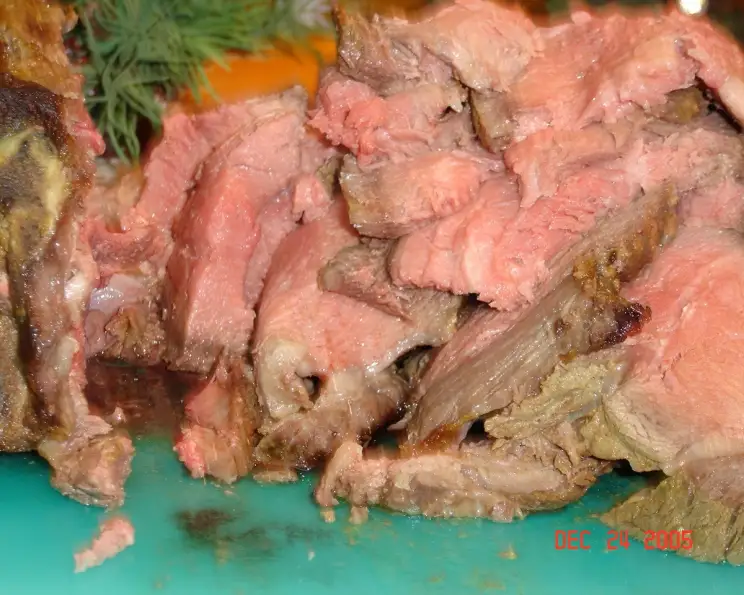
Easy “No Peek” Prime Rib: The Foolproof Holiday Feast
I’ll never forget the first time I attempted a prime rib. It was Christmas Eve, and I was determined to impress my family. Armed with a cookbook and a healthy dose of overconfidence, I dove in. Hours later, after constant oven door peeking and thermometer prodding, I presented a grey, dry roast that resembled shoe leather more than a celebratory centerpiece. That night taught me a valuable lesson: sometimes, less is more. This “No Peek” Prime Rib recipe is the result of years of seeking a simpler, more reliable method. It delivers a perfectly medium-rare, melt-in-your-mouth prime rib with minimal effort and zero anxiety.
Recipe Overview
- Prep Time: 10 minutes
- Cook Time: 2 hours 30 minutes (including resting time in the oven)
- Total Time: 2 hours 40 minutes
- Servings: 6
- Yield: Approximately 6 slices
- Dietary Type: Gluten-Free, Dairy-Free
Ingredients
- 1 rib roast (5-6 lbs)
- 2 tablespoons onion salt
- 2 tablespoons seasoning salt
- 2 tablespoons garlic powder
Equipment Needed
- Dutch oven (large enough to accommodate the roast with a lid)
- Small rack (optional, to lift the roast off the bottom of the pot)
- Meat thermometer
Instructions
-
Preheat your oven to 500ºF (260°C). This initial high heat is crucial for developing a beautiful crust.
-
In a small bowl, mix together the onion salt, seasoning salt, and garlic powder. This simple spice blend provides all the flavor you need for a truly delicious prime rib.
-
Pat the spice mixture all over the rib roast. Don’t worry if it doesn’t adhere perfectly to the fat cap; the heat will help it bind during cooking.
-
Place the roast in a Dutch oven. Ideally, use a small rack to elevate the roast slightly above the bottom of the pot. This promotes even cooking. Position the roast bone-side up (fat-side down). The melting fat will baste the meat as it cooks.
-
Insert a meat thermometer into the thickest part of the roast, being careful not to touch the bone. Accurate temperature monitoring is key to achieving the desired level of doneness.
-
Cover the Dutch oven with its lid. Ensure the lid fits snugly to create a sealed environment.
-
Cook the roast in the preheated oven for 5-6 minutes per pound. This is the initial searing phase.
-
Turn off the oven completely. This is the most important step! DO NOT OPEN THE OVEN DOOR FOR TWO HOURS. This “no peek” method relies on the retained heat to gently cook the roast to perfection. Resist the urge to peek! Seriously.
-
After two hours, carefully remove the Dutch oven from the oven.
-
Check the internal temperature of the roast with the meat thermometer. For a perfect medium-rare, you’re aiming for 140ºF (60°C).
-
If the temperature is cooler than 140ºF (60°C), return the roast to the oven, now set to 375ºF (190°C), and continue cooking until it reaches the desired temperature. Check the temperature every 15 minutes.
-
Once the roast reaches 140ºF (60°C), remove it from the oven and let it rest for at least 15 minutes before carving. This allows the juices to redistribute, resulting in a more tender and flavorful roast.
Expert Tips & Tricks
- Dry Brining: For an even more flavorful roast, try dry brining. Pat the roast dry with paper towels, then generously salt it (about 1 teaspoon of kosher salt per pound) 24-48 hours before cooking. Leave it uncovered in the refrigerator. This will draw out moisture and concentrate the flavors. Reduce the amount of seasoning salt in the recipe if you dry brine.
- Thermometer Placement: Accurate thermometer placement is crucial. Aim for the center of the roast, avoiding contact with bone or large pockets of fat. An instant-read thermometer is helpful for quick temperature checks.
- Altitude Adjustments: Cooking times may need slight adjustments based on altitude. At higher altitudes, food may cook faster. Check the internal temperature sooner than the recipe suggests.
- Doneness Levels: While this recipe is designed for medium-rare, you can adjust the final temperature to your preference. Medium is around 145°F (63°C), and medium-well is around 150°F (66°C). Be cautious not to overcook, as prime rib dries out easily.
Serving & Storage Suggestions
- Serving: Carve the prime rib against the grain into thin slices. Serve immediately with your favorite sides, such as roasted potatoes, Yorkshire pudding, creamed spinach, or horseradish sauce.
- Storage: Leftover prime rib can be stored in an airtight container in the refrigerator for up to 3-4 days.
- Reheating: To reheat, wrap the slices in foil with a little beef broth or au jus to prevent drying out. Warm in a low oven (around 300°F/150°C) until heated through. You can also reheat individual slices in a skillet over medium-low heat.
- Freezing: Cooked prime rib can be frozen for up to 2-3 months. Wrap tightly in plastic wrap and then foil. Thaw overnight in the refrigerator before reheating.
Nutritional Information
| Nutrient | Amount per Serving | % Daily Value |
|---|---|---|
| Calories | 650 kcal | 33% |
| Total Fat | 45g | 69% |
| Saturated Fat | 20g | 100% |
| Cholesterol | 200mg | 67% |
| Sodium | 1200mg | 50% |
| Total Carbohydrate | 5g | 2% |
| Dietary Fiber | 0g | 0% |
| Sugars | 0g | 0% |
| Protein | 50g | 100% |
| Note: Nutritional information is an estimate and may vary based on specific ingredients and portion sizes. |
Variations & Substitutions
- Herb Crust: For a more aromatic roast, add fresh herbs like rosemary, thyme, and parsley to the spice mixture.
- Garlic Infusion: Insert slivers of garlic into small slits in the roast before applying the spice rub.
- Red Wine Reduction: Create a flavorful sauce by deglazing the Dutch oven with red wine after cooking the roast. Reduce the wine over medium heat until thickened.
- Spice Variations: Experiment with different spices like smoked paprika, chili powder, or cayenne pepper for a spicier kick.
- Bone-In vs. Boneless: This recipe works well with both bone-in and boneless rib roasts. Bone-in roasts tend to be more flavorful, but boneless roasts are easier to carve.
FAQs (Frequently Asked Questions)
Q: What if I don’t have a Dutch oven?
A: You can use a roasting pan with a tight-fitting lid. If you don’t have a lid, cover the pan tightly with heavy-duty aluminum foil.
Q: Can I use a different type of salt?
A: Yes, but be mindful of the saltiness. If using kosher salt, you may need to adjust the amount to match the saltiness of onion salt and seasoning salt.
Q: What if my roast is larger or smaller than 5-6 lbs?
A: Adjust the initial cooking time accordingly, using the 5-6 minutes per pound guideline. Always rely on a meat thermometer to ensure the roast reaches the desired internal temperature.
Q: Can I add vegetables to the Dutch oven?
A: Yes, you can add root vegetables like carrots, potatoes, and onions to the bottom of the Dutch oven. They will roast in the drippings and add flavor to the roast.
Q: What’s the best way to carve a prime rib?
A: Use a sharp carving knife and slice against the grain. This will make the meat more tender and easier to chew.
Final Thoughts
This “No Peek” Prime Rib recipe is a game-changer for anyone who wants to impress without the stress. The simple method and foolproof results make it a perfect choice for holidays, special occasions, or even a well-deserved weekend treat. Don’t be intimidated by the size and cost of the roast; this recipe demystifies the process and delivers a restaurant-quality prime rib every time. Gather your ingredients, trust the process, and prepare to be amazed by the deliciousness. Pair it with a bold Cabernet Sauvignon for an unforgettable dining experience. I can’t wait to hear about your success – please share your pictures and feedback after you’ve tried it!