
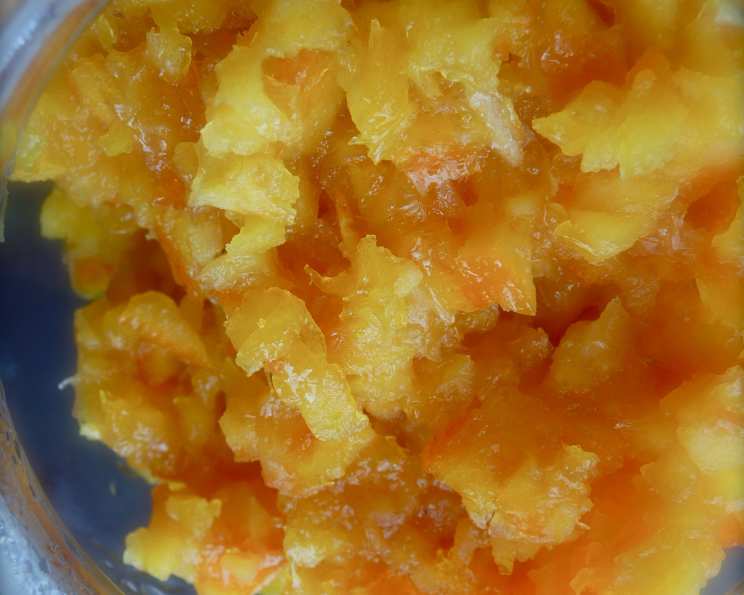
Easy Orange Marmalade: A Taste of Sunshine in Every Bite
The scent of oranges always transports me back to my grandmother’s kitchen. She had a small citrus tree just outside her window, and during the winter months, it would burst with fragrant, sun-kissed fruit. One of my fondest memories is standing on a stool beside her, carefully watching as she transformed those vibrant oranges into jars of shimmering marmalade. The bright, sweet, and slightly bitter flavor was the perfect antidote to the winter blues, and I’m thrilled to share this easy version that captures that same warmth and joy.
Recipe Overview
- Prep Time: 10 minutes
- Cook Time: 15 minutes
- Total Time: 25 minutes
- Yields: 1 jar
- Dietary Type: Vegan, Gluten-Free, Dairy-Free
Ingredients
- 1 medium navel orange
- 2 tablespoons water
- ½ cup sugar
Equipment Needed
- Cutting board
- Knife
- Food processor
- Medium saucepan
- Spoon
- Glass jar with a tight-fitting lid
Instructions
-
Start by selecting a navel orange with a thin peel, as this will contribute to a more delicate marmalade. If your orange is particularly large, you may want to double the amount of water and sugar to ensure proper consistency and flavor balance.
-
Thoroughly wash the orange under cool water to remove any dirt or residue from the peel. This is an important step, as the entire orange, including the peel, will be used.
-
Using a sharp knife, carefully cut off both ends of the orange. This will create a flat surface for easier handling and prevent the orange from rolling around while you’re cutting it.
-
Next, cut the orange in half from top to bottom. Then, cut each half into approximately eight sections. The size of these sections doesn’t have to be exact, but aim for relatively uniform pieces to ensure even processing in the next step.
-
Place the orange sections into a food processor. Pulse the food processor until the peel is broken down into very tiny pieces. Avoid over-processing, as you want the peel to be finely chopped but not completely pureed. A slightly chunky texture adds character to the marmalade.
-
In a medium saucepan, combine the processed orange, water, and sugar. Stir well to ensure the sugar is evenly distributed.
-
Place the saucepan over medium heat and bring the mixture to a gentle boil. Once boiling, reduce the heat slightly to maintain a simmer, and continue to boil for 15 minutes, stirring frequently to prevent sticking and burning. The mixture will thicken slightly as it cooks. Keep an eye on it, especially towards the end of the cooking time, as the sugar can easily burn if left unattended.
-
After 15 minutes, remove the saucepan from the heat and let the marmalade cool completely. As it cools, it will thicken further to its final consistency.
-
Once cooled, transfer the marmalade to a clean glass jar with a tight-fitting lid. Ensure the lid is securely fastened to maintain freshness.
-
Refrigerate the jar of marmalade for storage. The marmalade is best enjoyed when it is completely cold, as this allows the flavors to meld together and the texture to fully set.
-
A note on sugar alternatives: while the recipe calls for granulated sugar, you can experiment with using a blend of ½ sugar and ½ Splenda, as I sometimes do. This will reduce the overall sugar content without significantly compromising the flavor or texture.
Expert Tips & Tricks
- Pectin Power: Navel oranges aren’t naturally high in pectin, which is essential for setting marmalade. This recipe relies on the natural pectin in the peel and pulp, but for a firmer set, you could add a small amount of commercial pectin. Follow the manufacturer’s instructions for dosage.
- Bitterness Control: If you prefer a less bitter marmalade, you can blanch the orange peel before processing it. To do this, boil the orange sections in water for 5 minutes, then drain and rinse with cold water before proceeding with the recipe. This will help to mellow the bitterness of the peel.
- Flavor Boost: For an extra layer of flavor, consider adding a pinch of ground ginger or a splash of orange liqueur (like Cointreau or Grand Marnier) to the marmalade during the last few minutes of cooking.
- Jar Sterilization: While this recipe doesn’t produce enough marmalade to warrant a full canning process, sterilizing your jar beforehand is always a good practice. Simply boil the jar and lid in water for 10 minutes, then let them air dry completely before filling.
Serving & Storage Suggestions
This Easy Orange Marmalade is delightful spread on toast, scones, or English muffins. It also makes a wonderful glaze for baked ham or chicken, or a delicious filling for thumbprint cookies.
Store the marmalade in the refrigerator for up to 2 weeks. While it can be frozen, the texture may change slightly upon thawing.
Nutritional Information
| Nutrient | Amount per Serving | % Daily Value |
|---|---|---|
| Calories | 228 kcal | 11% |
| Total Fat | 0g | 0% |
| Saturated Fat | 0g | 0% |
| Cholesterol | 0mg | 0% |
| Sodium | 1mg | 0% |
| Total Carbohydrate | 59g | 20% |
| Dietary Fiber | 2g | 7% |
| Sugars | 55g | – |
| Protein | 0g | 0% |
Note: Nutritional information is an estimate and may vary based on specific ingredients used.
Variations & Substitutions
- Lemon-Orange Marmalade: Substitute half of the navel orange with a lemon for a brighter, tangier flavor.
- Spiced Marmalade: Add a cinnamon stick or a star anise to the saucepan while the marmalade simmers for a warm, aromatic twist. Remember to remove them before jarring.
- Grapefruit Marmalade: Use a grapefruit instead of an orange for a more intensely bitter and complex flavor profile. You may need to adjust the amount of sugar to balance the bitterness.
FAQs (Frequently Asked Questions)
Q: Can I use a different type of orange?
A: While navel oranges are recommended for their relatively thin peel and good flavor, you can experiment with other varieties like Seville oranges (which are traditionally used for marmalade but can be harder to find) or blood oranges for a beautiful color and unique taste.
Q: My marmalade isn’t setting. What did I do wrong?
A: Insufficient cooking time or a lack of pectin are the most common reasons for marmalade that doesn’t set. Try returning the mixture to the saucepan and simmering for a few more minutes, or adding a small amount of commercial pectin.
Q: Can I make a larger batch of this marmalade?
A: Yes, you can easily scale up this recipe by doubling or tripling the ingredients, but be sure to use a larger saucepan to prevent boiling over. You may also need to increase the cooking time slightly.
Q: How do I know when the marmalade is done?
A: The marmalade is done when it has thickened and reaches a gel-like consistency. A good way to test for doneness is to place a small spoonful of the hot marmalade on a chilled plate. Let it cool for a minute, then push it with your finger. If it wrinkles, it’s ready.
Q: Why is my marmalade bitter?
A: Oranges naturally contain bitter compounds in their peel. Using a thin-skinned orange and blanching the peel before processing can help reduce bitterness. You can also balance the bitterness with a bit more sugar, to your taste.
Final Thoughts
This Easy Orange Marmalade recipe is a testament to the fact that homemade goodness doesn’t have to be complicated. With just a handful of ingredients and a few simple steps, you can create a jar of sunshine that will brighten your mornings and add a touch of homemade charm to your table. Don’t be afraid to experiment with different variations and find your own signature marmalade flavor. And most importantly, enjoy the process of creating something delicious and special! Let me know in the comments how your marmalade turns out. Happy cooking!