
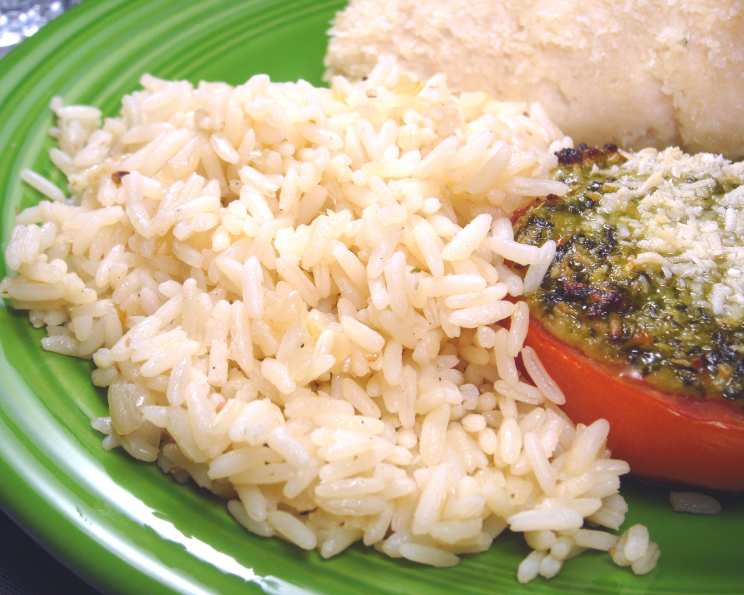
Easy Rice Pilaf: A Taste of Home
I can still remember the distinct aroma that wafted from my grandmother’s kitchen every Sunday. It wasn’t the fancy roasts or elaborate desserts that truly captivated me; it was the simple, humble rice pilaf. The nutty fragrance of perfectly toasted rice mingling with the savory scent of caramelized onions created an irresistible symphony, a culinary hug that instantly transported me to a place of warmth and comfort. This dish, more than any other, embodies the essence of home-cooked goodness. It’s a reminder that the most cherished meals are often the simplest, made with love and shared with family.
Recipe Overview
- Prep Time: 5 minutes
- Cook Time: 30 minutes
- Total Time: 35 minutes
- Servings: Variable, depends on rice quantity
- Dietary Type: Vegetarian (easily adaptable to vegan)
Ingredients
- 1 cup rice (long grain recommended)
- 2 tablespoons oil (vegetable, olive, or canola)
- 1 chicken bouillon cube (or vegetable bouillon cube for vegetarian option)
- 1 large onion, finely chopped
- Pepper, to taste
- Water
Equipment Needed
- Medium-sized pot with a lid
Instructions
-
Begin by rinsing the rice under cold water two or three times. This step removes excess starch, resulting in a fluffier pilaf. Drain the rice thoroughly after rinsing.
-
Place the pot over medium heat. Add the oil and let it heat up for a minute or two. The oil should shimmer but not smoke.
-
Add the finely chopped onion to the pot. Sauté the onion until it softens and turns a light golden brown color. This step is crucial as the caramelized onions infuse the entire dish with a rich, savory flavor. Stir frequently to prevent burning. This should take about 5-7 minutes.
-
Once the onions are lightly browned, add the rinsed rice to the pot. Stir the rice constantly for about 1-2 minutes, ensuring that each grain is coated with oil. This helps to toast the rice, enhancing its nutty flavor and preventing it from becoming mushy during cooking.
-
Add water to the pot, ensuring it just covers the top of the rice. A general guideline is to use a 2:1 water-to-rice ratio, but this can vary slightly depending on the type of rice used.
-
Crumble the chicken bouillon cube (or vegetable bouillon cube) over the rice and water. Add pepper to taste. Remember that bouillon cubes are quite salty, so you likely won’t need to add any additional salt.
-
Bring the mixture to a boil, then immediately reduce the heat to low. Cover the pot tightly with a lid and let the rice simmer undisturbed for 30 minutes. It’s crucial not to lift the lid during this time, as this will release steam and affect the cooking process.
-
After 30 minutes, check the rice to ensure the water has been absorbed. If the water has boiled off and the rice is still not fully cooked, add a small amount of additional water (about 1/4 cup) and continue simmering for a few more minutes.
-
If, after 30 minutes, there is still too much water in the pot, remove the lid and continue cooking over low heat for a few more minutes, allowing the excess water to evaporate. Stir gently to prevent the rice from sticking to the bottom of the pot.
-
Once the rice is cooked through and the water has been absorbed, remove the pot from the heat and let it sit, covered, for about 5-10 minutes. This allows the rice to steam and become even more fluffy.
-
Before serving, fluff the rice gently with a fork to separate the grains.
Expert Tips & Tricks
- Toasting the rice is key to preventing a mushy pilaf. Don’t skip this step!
- Use a heavy-bottomed pot to ensure even heat distribution and prevent scorching.
- If you’re using brown rice, you’ll need to increase the cooking time and the amount of water.
- For extra flavor, consider adding a bay leaf or a sprig of thyme to the pot while the rice is cooking. Remember to remove it before serving.
- If you accidentally add too much water, don’t panic! Simply continue cooking the rice uncovered over low heat, stirring occasionally, until the excess water has evaporated.
- Don’t lift the lid frequently during the simmering process. This will let steam escape, and the rice won’t cook evenly.
Serving & Storage Suggestions
Rice pilaf is a versatile side dish that pairs well with a variety of main courses. Serve it alongside roasted chicken, grilled fish, or vegetable skewers. It’s also a delicious addition to soups and stews.
Leftover rice pilaf can be stored in an airtight container in the refrigerator for up to 3-4 days. To reheat, simply microwave it for a few minutes, adding a tablespoon or two of water to prevent it from drying out. You can also reheat it in a skillet over low heat, stirring occasionally. Rice pilaf can also be frozen for up to 2 months. Thaw it overnight in the refrigerator before reheating.
Nutritional Information
| Nutrient | Amount per Serving | % Daily Value* |
|---|---|---|
| Calories | ~250 kcal | ~13% |
| Total Fat | ~8g | ~10% |
| Saturated Fat | ~1g | ~5% |
| Cholesterol | ~0mg | ~0% |
| Sodium | ~300mg | ~13% |
| Total Carbohydrate | ~40g | ~15% |
| Dietary Fiber | ~1g | ~4% |
| Sugars | ~1g | N/A |
| Protein | ~4g | ~8% |
- Percent Daily Values are based on a 2000 calorie diet. Note: Nutritional information is an estimate and may vary based on specific ingredients and portion sizes. Values calculated using online estimators and average values.
Variations & Substitutions
- Vegetarian/Vegan: Replace the chicken bouillon cube with a vegetable bouillon cube or vegetable broth. Ensure the oil used is plant-based.
- Herbed Pilaf: Add fresh herbs like parsley, dill, or chives to the rice during the last few minutes of cooking.
- Nutty Pilaf: Toast chopped almonds or pecans in the oil along with the onions for added flavor and texture.
- Saffron Pilaf: Add a pinch of saffron threads to the water for a vibrant color and delicate flavor.
- Mushroom Pilaf: Sauté sliced mushrooms with the onions for an earthy twist.
- Lemon Pilaf: Add a squeeze of lemon juice to the rice after it’s cooked for a bright, zesty flavor.
FAQs (Frequently Asked Questions)
Q: Can I use brown rice instead of white rice?
A: Yes, you can, but you’ll need to adjust the cooking time and the amount of water. Brown rice typically requires more water and a longer cooking time than white rice. Use about 2.5 cups of water per cup of brown rice and cook for approximately 45-50 minutes.
Q: What if my rice is still crunchy after 30 minutes?
A: This means it needs more water and time to cook. Add another 1/4 cup of water, cover the pot, and continue simmering for another 5-10 minutes, checking periodically until the rice is tender.
Q: Can I make this recipe ahead of time?
A: Yes, you can make the rice pilaf a day or two in advance. Store it in an airtight container in the refrigerator and reheat it before serving.
Q: The bouillon cube makes the rice too salty. What can I do?
A: Try using a low-sodium bouillon cube or reduce the amount you use. You can also use unsalted chicken or vegetable broth instead of water and bouillon.
Q: Can I add vegetables to the rice pilaf?
A: Absolutely! Peas, carrots, and corn are all great additions. Add them to the pot during the last 10 minutes of cooking.
Final Thoughts
This Easy Rice Pilaf recipe is a testament to the fact that simple ingredients, combined with a little bit of technique and a whole lot of love, can create something truly extraordinary. I encourage you to give this recipe a try and make it your own. Feel free to experiment with different variations and substitutions to suit your taste. Don’t hesitate to share your feedback and creations – I’d love to hear how it turns out for you. Serve it with your favorite protein or vegetable dish, and enjoy the comforting flavors of this classic side dish! Perhaps alongside some grilled chicken or roasted vegetables? The possibilities are endless!