
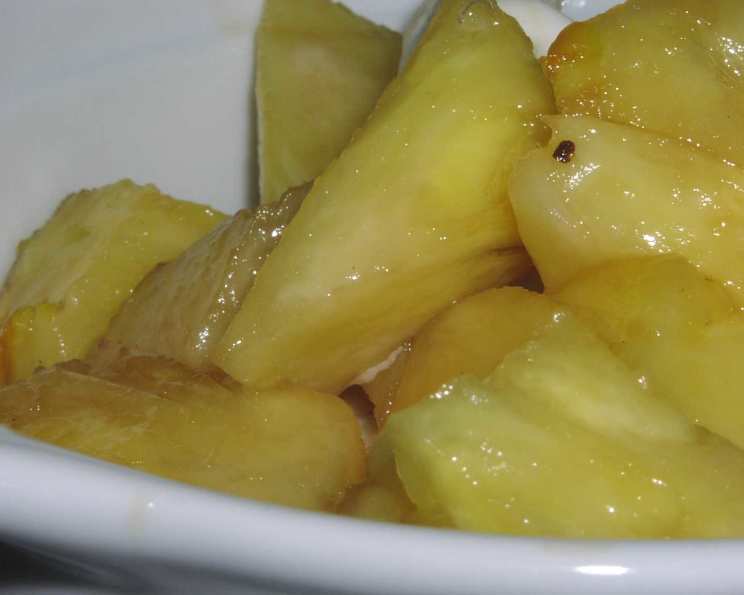
Easy Sautéed Pineapple: A Tropical Treat in Minutes
The first time I tasted sautéed pineapple, I was backpacking through Southeast Asia. A street vendor in Thailand, with a wok blazing hotter than the midday sun, transformed humble chunks of pineapple into a glistening, caramelized delight. The scent alone – a heady mix of tropical fruit and toasted sugar – was enough to make my mouth water. That single bite, bursting with both sweetness and smoky char, forever changed my perception of pineapple, and I’ve been recreating my own version of that simple magic ever since.
Recipe Overview
- Prep Time: 2 minutes
- Cook Time: 5 minutes
- Total Time: 7 minutes
- Servings: 2
- Dietary Type: Vegetarian, Gluten-Free
Ingredients
- 1 1/2 cups fresh pineapple, cut into chunks
- 1 tablespoon butter
- 2 tablespoons brown sugar
Equipment Needed
- Sauté pan
- Spatula
Instructions
- In a sauté pan, combine the butter and brown sugar over medium heat. Allow the butter to melt completely and the brown sugar to start dissolving, creating a glistening syrup. Stir constantly to prevent burning.
- Add the pineapple chunks to the pan.
- Cook for 5 minutes, stirring frequently, until the pineapple is heated through and slightly softened. The brown sugar will caramelize, coating the pineapple in a rich, flavorful glaze. Be careful not to overcook, as the pineapple can become mushy. You want it to be tender, but still hold its shape. The edges should be nicely browned and slightly caramelized.
- Remove from heat and serve immediately.
Expert Tips & Tricks
- Choose ripe, but firm pineapple: A perfectly ripe pineapple will have a fragrant aroma and a slightly yielding texture when gently squeezed. Avoid pineapples that are overly soft or have bruises. Firmness ensures the pineapple holds its shape during the sautéing process.
- Uniform Chunk Size: Cutting the pineapple into similarly sized chunks ensures even cooking. Aim for approximately 1-inch pieces.
- Brown Sugar Boost: For an even deeper caramel flavor, try using dark brown sugar. The higher molasses content will result in a richer, more intense taste.
- Don’t overcrowd the pan: If your sauté pan is too small, cook the pineapple in batches. Overcrowding the pan lowers the temperature and prevents the pineapple from browning properly.
- Add a touch of spice: For a more complex flavor profile, consider adding a pinch of cinnamon, ginger, or even a tiny pinch of cayenne pepper to the pan along with the brown sugar.
- Deglazing for extra flavor: After removing the pineapple, deglaze the pan with a splash of pineapple juice, rum or even a little water. Scrape up the browned bits from the bottom of the pan and cook for a minute or two until the sauce thickens slightly. Drizzle over the pineapple for an extra layer of flavor.
- Butter Alternatives: While butter provides a rich flavor, you can substitute with coconut oil for a vegan option. This will also impart a subtle coconut flavor that complements the pineapple beautifully.
Serving & Storage Suggestions
Sautéed pineapple is incredibly versatile. It’s delicious served warm on its own as a simple dessert or snack. For a more decadent treat, spoon it over vanilla ice cream or pound cake. It also makes a fantastic topping for yogurt, oatmeal, or even grilled meats. Consider adding it to tacos for a sweet and savory twist.
Leftovers can be stored in an airtight container in the refrigerator for up to 3 days. To reheat, gently warm in a sauté pan over low heat until heated through, or microwave in short bursts, stirring occasionally, to prevent it from becoming mushy. It is best enjoyed fresh for optimal texture and flavor. Due to the caramelized sugar, it is not recommended to freeze this dish as it can become watery upon thawing.
Nutritional Information
| Nutrient | Amount per Serving | % Daily Value |
|---|---|---|
| Calories | 180 kcal | 9% |
| Total Fat | 7g | 11% |
| Saturated Fat | 4.5g | 23% |
| Cholesterol | 20mg | 7% |
| Sodium | 25mg | 1% |
| Total Carbohydrate | 30g | 10% |
| Dietary Fiber | 2g | 8% |
| Sugars | 25g | – |
| Protein | 1g | 2% |
Nutritional information is an estimate and may vary based on specific ingredients and portion sizes.
Variations & Substitutions
- Spiced Pineapple: Add a pinch of ground cinnamon, nutmeg, or ginger to the pan for a warm, spiced flavor.
- Citrus Burst: Squeeze a wedge of lime or lemon juice over the pineapple during the last minute of cooking for a bright, tangy twist.
- Tropical Fusion: Incorporate other tropical fruits like mango or papaya for a vibrant fruit medley.
- Rum-Flavored: Add a tablespoon of dark rum to the pan during the last minute of cooking for a boozy kick. Exercise caution when adding alcohol to a hot pan.
- Maple Syrup Variation: Substitute brown sugar with maple syrup for a different depth of sweetness.
- Grilled Pineapple: For a smoky flavor, grill the pineapple slices before sautéing them. The grill marks add visual appeal and a hint of char.
- Pineapple Salsa: Chop the sautéed pineapple and combine it with diced red onion, jalapeno, cilantro, and lime juice for a delicious salsa to serve with grilled fish or chicken.
FAQs (Frequently Asked Questions)
Q: Can I use canned pineapple?
A: Fresh pineapple is recommended for the best texture and flavor, but canned pineapple (in juice, not syrup) can be used in a pinch. Be sure to drain it thoroughly and pat it dry before sautéing. Canned pineapple tends to be softer and may not caramelize as well.
Q: How do I know when the pineapple is done?
A: The pineapple is done when it is heated through, slightly softened, and the edges are caramelized. Avoid overcooking, as it can become mushy. Aim for a tender-crisp texture.
Q: Can I make this ahead of time?
A: While best served fresh, you can prepare the sautéed pineapple a few hours in advance and gently reheat it before serving. The caramelized sugar may soften slightly upon standing.
Q: Is this recipe vegan?
A: Not as written. This recipe can easily be made vegan by substituting the butter with coconut oil.
Q: Can I use a different type of sugar?
A: While brown sugar provides the best caramelization and flavor, you can experiment with other sugars like granulated sugar, coconut sugar, or maple syrup. Keep in mind that the flavor and texture may vary slightly.
Final Thoughts
I hope this recipe inspires you to discover the simple pleasure of sautéed pineapple. It’s a quick, easy, and utterly delicious way to enjoy this tropical fruit. Don’t be afraid to experiment with different flavor combinations and find your perfect version. Whether you serve it as a simple dessert, a topping for your favorite treats, or a component of a more elaborate dish, I’m confident that this sautéed pineapple will become a staple in your kitchen. Please let me know what you think, and happy cooking!