
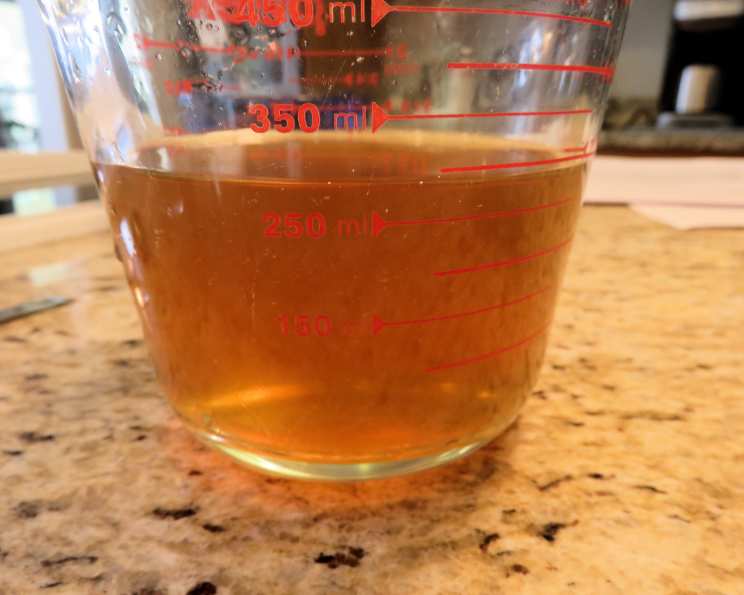
Transforming Cloudy Stock: The Magic of the Egg Raft
I’ll never forget my early days in the kitchen, slaving over what I thought was a masterpiece of chicken stock, only to be met with a murky, unappetizing broth. My mentor, a gruff but brilliant old chef, chuckled and said, “Looks like you need an egg raft, kiddo!” That day, he taught me the ancient secret of clarifying stock, transforming it from cloudy to crystal clear. It felt like a bit of culinary alchemy, and the results were nothing short of stunning. Since then, this technique has been a staple in my kitchen, a reliable trick for achieving the purest, most flavorful stocks imaginable.
Recipe Overview
- Prep Time: 10 minutes
- Cook Time: 20 minutes
- Total Time: 30 minutes
- Servings: 8
- Yields: 1 quart
- Dietary Type: Generally fits into most diets, but depends on the original stock ingredients. Dairy-free, Gluten-free.
Ingredients
- 1 quart stock, cloudy
- 2 eggs
- 2 teaspoons water
- ½ teaspoon lemon juice or ½ teaspoon vinegar
Equipment Needed
- Large saucepan
- Whisk
- Fine-mesh sieve
- Cheesecloth
- Ladle (optional, but helpful)
Instructions
-
Begin by filtering your stock as much as possible. The goal is to remove any large solid residues, such as small pieces of meat, spices, or skin. A preliminary straining will make the clarification process more efficient.
-
Gently warm the filtered stock in a thick-bottomed saucepan over medium-low heat. Avoid bringing it to a boil at this stage. We just want to gently warm it up.
-
In a separate bowl, prepare the egg raft. Separate the eggs, reserving the whites and discarding the yolks (or saving them for another use, like a rich hollandaise!). In a clean bowl, beat the egg whites with the water and lemon juice (or vinegar) until they are frothy but not stiff.
-
Crush the eggshells into very small pieces. This is a crucial step! The eggshells act as tiny sponges, helping to trap impurities in the stock. Whisk the crushed eggshells into the egg white mixture.
-
Slowly and carefully mix the egg white mixture into the warmed stock. Stir gently to evenly distribute the egg whites throughout the stock.
-
Increase the heat to medium-high and bring the stock to a gentle boil. As the stock heats, the egg whites will begin to coagulate and form a “raft” on the surface, trapping any remaining impurities.
-
Once the stock reaches a gentle boil, immediately reduce the heat to low and allow it to simmer gently for 5 minutes. Resist the urge to stir or disturb the raft.
-
After 5 minutes of simmering, remove the saucepan from the heat and let it cool undisturbed for about 15 minutes. This allows the egg raft to fully solidify and trap all the impurities.
-
Line a fine-mesh sieve with several layers of damp cheesecloth. This will provide an extra layer of filtration to ensure a perfectly clear stock.
-
Carefully ladle the stock through the prepared sieve. If possible, use a ladle to gently scoop the stock from under the egg raft, avoiding any disturbance of the raft itself. Be careful not to let any of the egg white raft spill over the edge of the sieve.
-
Discard the solids caught in the cheesecloth, or compost them. The remaining stock should now be beautifully clear.
Expert Tips & Tricks
- For the clearest possible stock, start with the highest quality ingredients. Use bones and scraps from raw or lightly cooked meats.
- Avoid cracking the bones too much when making the initial stock. Small bone fragments can contribute to cloudiness.
- Never let your stock boil vigorously during the initial preparation. A gentle simmer is all that’s needed. Boiling emulsifies the fat from the meat and binds it to the water, resulting in a cloudy stock.
- Add vegetables only during the last hour of the initial stock-making process. Overcooked vegetables can break down and cloud the stock.
- If you don’t have cheesecloth, a very fine-mesh sieve can be used alone, but the cheesecloth provides an extra layer of filtration.
- If your stock is still not clear after the first egg raft clarification, you can repeat the process with a fresh egg raft for even more clarity.
- You can also add aromatic vegetables like chopped celery, carrots, and onion to the egg raft mixture for added flavor. This is especially useful if your stock is lacking in depth of flavor.
Serving & Storage Suggestions
Serve your clarified stock as a consommé, the base for a delicate soup, or as a flavorful cooking liquid for rice, vegetables, or meats. It can also be used to create clear sauces and jellies.
To store, let the stock cool completely before transferring it to airtight containers. Store in the refrigerator for up to 3-4 days or freeze for up to 3 months. When freezing, leave some headspace in the container to allow for expansion. Reheat gently on the stovetop or in the microwave until heated through.
Nutritional Information
| Nutrient | Amount per Serving | % Daily Value |
|---|---|---|
| Calories | 20 kcal | 1% |
| Total Fat | 0.5g | 1% |
| Saturated Fat | 0.1g | 1% |
| Cholesterol | 47mg | 16% |
| Sodium | 20mg | 1% |
| Total Carbohydrate | 0g | 0% |
| Dietary Fiber | 0g | 0% |
| Sugars | 0g | 0% |
| Protein | 2g | 4% |
Note: Nutritional information is an estimate and will vary depending on the ingredients and preparation methods used.
Variations & Substitutions
- Vegetarian Stock Clarification: For vegetable stock, you can use the same egg raft method. If you want to avoid using eggs entirely, you can try using agar-agar as a clarifying agent, although the results may not be as consistently clear.
- Flavor Infusions: Experiment with adding different herbs and spices to the egg raft mixture for an extra layer of flavor. For example, add thyme sprigs and bay leaves to chicken stock, or star anise and ginger to Asian-inspired stock.
- Acid Alternatives: Instead of lemon juice or vinegar, you can use other acidic ingredients like white wine or a splash of dry sherry.
- Lower Cholesterol: Use only the egg whites. The yolks are optional and not needed for clarifying.
FAQs (Frequently Asked Questions)
Q: Why is my stock still cloudy after using the egg raft?
A: Several factors can contribute to cloudiness. Make sure you’ve removed all solids before beginning, simmer the stock gently (avoiding a boil), and use enough cheesecloth to filter thoroughly. You may need to repeat the egg raft process.
Q: Can I use pasteurized egg whites instead of fresh eggs?
A: Fresh egg whites work best because they coagulate more effectively. Pasteurized egg whites may not form as strong of a raft.
Q: What can I do with the leftover egg raft?
A: Unfortunately, the egg raft is not very palatable after it has been used to clarify stock. It is best to discard it.
Q: Can I use this method for bone broth?
A: Yes, this method works well for clarifying bone broth, as bone broth often contains a lot of sediment and fat.
Q: How important is the acid (lemon juice or vinegar) in the egg raft?
A: The acid helps to denature the egg whites, allowing them to coagulate more effectively and trap impurities. Don’t skip it!
Final Thoughts
Mastering the egg raft technique is a game-changer for any cook who values a truly exceptional stock. Beyond the technical benefits, it’s a connection to culinary traditions, a reminder that even the simplest ingredients can work magic in the kitchen. I encourage you to try this method yourself and witness the transformation firsthand. The flavor and clarity you achieve will elevate your soups, sauces, and so much more. Let me know how it goes, and what delicious creations you’ve made with your newly clarified stock!