
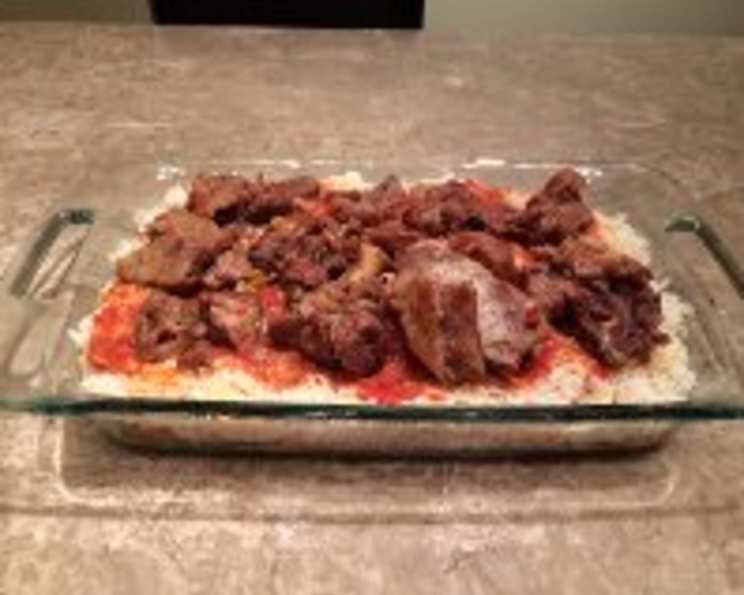
Egyptian Faatah: A Culinary Journey to the Land of the Pharaohs
The aroma of garlic simmering in butter, mingled with the savory scent of cumin, instantly transports me back to my Aunt Fatima’s kitchen in Cairo. As a child, I would sit mesmerized, watching her deftly layer crispy pita, fragrant rice, and tender meat, each step a practiced dance passed down through generations. This dish, Faatah, was more than just food; it was a celebration, a connection to our heritage, and a warm embrace of family love.
Recipe Overview
- Prep Time: 1 hour 10 minutes
- Cook Time: 2 hours
- Total Time: 3 hours 10 minutes
- Servings: 6
- Dietary Type: Varies (can be made gluten-free with gluten-free pita)
Ingredients
- 1 lb stew meat
- 1 onion
- 1 chicken bouillon cube
- 2 fresh tomatoes, blended into a smooth puree
- 4 fresh garlic cloves, crushed
- 1 tablespoon tomato paste
- 2 cups short-grain white rice (Egyptian rice)
- ¼ cup fideos (small, thin noodles)
- ¼ cup butter
- 2 cups oil, some for frying bread
- 1 white pita bread
- 1 tablespoon cumin
- Salt and pepper to taste
- 3 tablespoons white vinegar
Equipment Needed
- Large pot
- Frying pan
- Blender
- Glass baking dish (preferably square)
- Wooden spoon
Instructions
- Prepare the Crispy Bread Base: Begin by tearing the pita bread into bite-sized pieces. Heat approximately ¼ cup of butter in a large frying pan over medium heat. Add the bread pieces and fry until they are golden brown and crispy, stirring frequently to ensure even browning. Transfer the fried bread to a glass baking dish, preferably a square one. Set aside.
- Infuse the Bread with Flavor: In the same pan, add a little more butter. Add salt to taste, about 2 cloves of crushed fresh garlic, and a teaspoon or so of cumin. Stir continuously until you can smell the fragrant aroma of the spices. Add the fried bread pieces back to the pan and stir to coat them evenly with the garlic-cumin mixture. Return the coated bread to the glass baking dish and set aside.
- Cook the Meat to Perfection: In a large pot, melt some butter over medium-high heat. Add the stew meat and stir-fry until it is browned on all sides. Add 1 onion, quartered, along with salt and pepper to taste, and 1 chicken bouillon cube. Pour in enough water to cover the meat. Bring the mixture to a boil, then reduce the heat to low, cover the pot, and simmer for approximately 2 hours, or until the meat is very tender. Once the meat has cooled slightly, remove the chunks of meat from the pot and place them in a bowl. Set the meat aside and reserve the soup from the meat separately.
- Prepare the Fragrant Rice: In another pot, melt some butter over medium heat. Add the fideos (small, thin noodles) – about a handful or so. Keep stirring continuously until the fideos turn a beautiful golden brown color, being careful not to burn them. Add 2 cups of rice and stir for a few minutes until some of the rice grains turn an opaque white color. Add 2 ¼ cups of water and salt to taste. Bring the mixture to a boil, then cover the pot and reduce the heat to low. Simmer for about 35 minutes, or until the rice is tender and the water has been absorbed. Test the rice for tenderness before removing from heat.
- Layer the Faatah: Now, take some of the reserved soup from the meat and pour it over the bread pieces in the baking dish to saturate them. Next, carefully spoon the cooked rice on top of the bread pieces. Slowly spoon the remaining soup onto the rice, observing the liquid level on the sides of the glass dish. The soup should reach just to the top of the rice, but don’t worry about being perfectly precise.
- Create the Red Sauce: In a pan, add a little oil or butter over medium heat. Add the crushed tomato puree, ½ teaspoon of tomato paste, salt and pepper to taste, 2 cloves of fresh crushed garlic, and cumin. Add approximately 3 tablespoons of vinegar. Stir the mixture continuously until you can smell the aromatic spices and the sauce becomes a bit smoother. The sauce should be slightly thick, not watery. If it is too thick, you can add a little water. Spread the red sauce evenly over the rice in the baking dish using a wooden spoon.
- Fry the Meat to Golden Perfection: In a pan, add a bit of butter or oil over medium-high heat. Add the cooked meat, a touch of tomato paste, about a tablespoon of fresh crushed garlic, salt and pepper to taste, and a teaspoon of cumin. Cook, stirring frequently, until the meat is golden fried and heated through.
- Assemble and Serve: Spoon the fried meat evenly over the red sauce on top of the rice. Serve the Faatah immediately and enjoy!
Expert Tips & Tricks
- Bread Crispness: For extra crispy bread, you can toast the pita bread in the oven before frying it in butter. This helps remove excess moisture.
- Meat Tenderness: The key to truly tender stew meat is low and slow cooking. Don’t rush the simmering process. If you’re short on time, a pressure cooker can significantly reduce the cooking time.
- Flavor Infusion: Don’t be afraid to adjust the spices to your personal preference. A pinch of cinnamon or a dash of hot pepper flakes can add an interesting twist.
- Rice Consistency: Ensure the rice doesn’t become mushy by carefully monitoring the water level and cooking time.
- Vinegar Balance: The vinegar in the red sauce adds a crucial tang. Taste and adjust the amount to balance the flavors according to your liking.
Serving & Storage Suggestions
Serve Faatah hot, straight from the pan. Garnish with a sprinkle of fresh parsley or cilantro for added freshness and visual appeal. Leftovers can be stored in an airtight container in the refrigerator for up to 3 days. To reheat, gently warm in a microwave or oven. You may need to add a splash of water or broth to prevent the rice from drying out. Freezing is not recommended as the bread can become soggy upon thawing.
Nutritional Information
| Nutrient | Amount per Serving | % Daily Value |
|---|---|---|
| Calories | 1100 kcal | N/A |
| Total Fat | 84.6g | 130% |
| Saturated Fat | 15.9g | 79% |
| Cholesterol | 68.8mg | 22% |
| Sodium | 367.8mg | 15% |
| Total Carbohydrate | 63.6g | 21% |
| Dietary Fiber | 3.1g | 12% |
| Sugars | 2.5g | N/A |
| Protein | 22.9g | 45% |
Variations & Substitutions
- Gluten-Free Faatah: Use gluten-free pita bread and ensure the bouillon cube is also gluten-free.
- Vegetarian Faatah: Substitute the stew meat with lentils or chickpeas for a hearty vegetarian option. Increase the quantity of bouillon cubes or vegetable broth to enhance the flavor.
- Spicy Faatah: Add a pinch of red pepper flakes or a dash of hot sauce to the red sauce for a spicy kick.
- Lamb Faatah: Substitute the stew meat with lamb for a richer, more flavorful dish.
- Tomato Sauce: Use high quality strained tomatoes rather than blended fresh tomatoes for a richer tomato sauce.
FAQs (Frequently Asked Questions)
Q: Can I make this dish ahead of time?
A: Yes, you can prepare the meat and rice ahead of time and store them separately in the refrigerator. Assemble the dish just before serving.
Q: What kind of rice is best for Faatah?
A: Short-grain white rice, specifically Egyptian rice, is traditionally used. Its starchiness helps to absorb the flavorful broth.
Q: Can I use dried garlic instead of fresh?
A: While fresh garlic is recommended for the best flavor, you can substitute with dried garlic powder in a pinch. Use about 1/2 teaspoon of garlic powder for every clove of fresh garlic.
Q: How do I prevent the bread from becoming too soggy?
A: Toasting the bread before frying helps to remove moisture. Also, don’t add too much broth when layering the dish. The broth should moisten the bread without completely saturating it.
Q: Can I use vegetable broth instead of meat broth?
A: Yes, you can use vegetable broth, especially if you’re making a vegetarian version. The flavor will be slightly different, but still delicious.
Final Thoughts
Faatah is more than just a recipe; it’s a culinary journey that connects you to the heart of Egyptian cuisine. Don’t be intimidated by the number of steps – each one is simple and contributes to the overall symphony of flavors. I urge you to try this recipe, experiment with variations, and most importantly, share it with loved ones. This dish is best enjoyed with good company and warm conversation. And as they say in Egypt, bil hana wal shifa – enjoy in good health!