
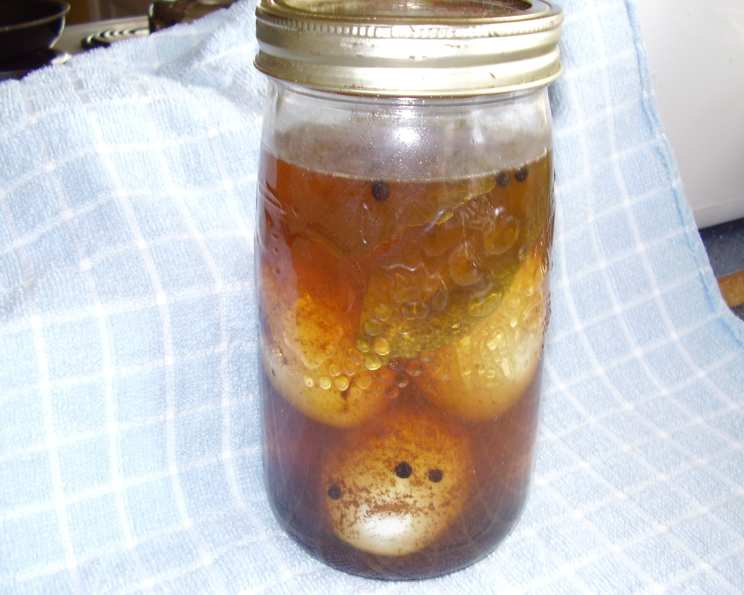
English Pub Style Pickled Eggs: A Tangy Tradition
There’s something about walking into a cozy pub, the air thick with the aroma of malt and roasted barley, and spotting a jar of glistening pickled eggs on the counter. For me, it’s a memory trigger – a flash back to a small pub in the Cotswolds, England, where I spent a blustery autumn afternoon. The eggs, served with a crusty hunk of bread and a generous dollop of mustard, were a revelation. Tangy, savory, and surprisingly satisfying, they were the perfect antidote to the chilly weather and a wonderful complement to the robust ale. That day sparked a love affair with these brined beauties, and I’ve been tinkering with my own version ever since.
Recipe Overview
- Prep Time: 20 minutes
- Cook Time: 10 minutes
- Total Time: 30 minutes (plus 3 days pickling)
- Servings: Varies depending on egg size
- Yields: 1 quart jar
- Dietary Type: Varies (see note about vinegar)
Ingredients
- 12 hard-boiled eggs, shelled
- 1 1⁄2 cups ginger and spice vinegar (see notes below)
- 6 allspice berries
- 2 bay leaves
- 1 teaspoon whole black peppercorn
Ingredient Notes:
- Ginger and Spice Vinegar: This recipe calls for a specific type of vinegar, “Ginger and Spice Vinegar”. You can often find this in specialty stores or online. If you cannot find it, you can try to create a similar flavor by using a good quality cider vinegar and adding a small piece of fresh ginger, a cinnamon stick, and a pinch of ground cloves to the brine. Taste as you go to adjust the spices to your liking.
- Eggs: Fresh eggs are harder to peel when hard-boiled. Eggs that are a week or two old will peel much easier.
Equipment Needed
- 1 quart wide-mouthed jar
- Non-aluminum saucepan
- Ladle
Instructions
-
Begin by carefully packing the shelled hard-boiled eggs into a clean, 1-quart wide-mouthed jar. Make sure to arrange them so that they are snug but not overly crowded. You want the pickling liquid to circulate properly.
-
Next, pour the ginger and spice vinegar into a non-aluminum saucepan. It’s important to use a non-reactive pan like stainless steel or enameled cast iron, as the vinegar can react with aluminum and impart a metallic taste to the eggs.
-
Bring the vinegar to a boil over medium-high heat. Once boiling, reduce the heat slightly and let it boil for about 10 minutes. This step is crucial, as it helps to concentrate the flavors of the vinegar and sterilize the brine, ensuring a longer shelf life for your pickled eggs.
-
While the vinegar is simmering, prepare the jar by adding the allspice berries, bay leaves, and whole black peppercorns. Distribute them evenly around the eggs to ensure that each egg gets a good infusion of flavor.
-
After the vinegar has boiled for 10 minutes, carefully ladle the hot vinegar over the eggs in the jar. Make sure that the eggs are completely submerged in the liquid. If necessary, gently press down on the eggs to release any trapped air bubbles.
-
Cap the jar tightly with a lid. Ensure that the lid is properly sealed to prevent any contamination and to maintain the freshness of the pickled eggs.
-
Let the jar cool completely at room temperature. Once cooled, refrigerate the jar for at least 3 days before serving. This allows the eggs to fully absorb the flavors of the brine and develop their signature tangy taste.
-
The pickled eggs can be refrigerated for up to 2 weeks. After this time, the quality and texture of the eggs may start to deteriorate.
Expert Tips & Tricks
- Peeling Eggs Easily: To ensure easy peeling, try adding a teaspoon of baking soda to the water when boiling the eggs. This helps to loosen the membrane between the egg white and the shell. Also, immediately after boiling, plunge the eggs into an ice bath to stop the cooking process and further aid in peeling.
- Preventing Discoloration: Sometimes, you might notice a dark ring forming around the yolk of hard-boiled eggs. This is a harmless reaction between the sulfur in the egg white and the iron in the yolk. To minimize this, avoid overcooking the eggs and cool them quickly after boiling.
- Spice Variations: Feel free to experiment with different spices to customize the flavor of your pickled eggs. Try adding a pinch of red pepper flakes for a touch of heat, a few cloves for a warm, aromatic note, or a sprig of fresh dill for a herbaceous twist.
Serving & Storage Suggestions
English pub style pickled eggs are a versatile snack or appetizer that can be enjoyed in a variety of ways. Serve them whole as a tangy bite, or slice them and add them to salads or sandwiches for a burst of flavor. They also make a great addition to a ploughman’s lunch or a charcuterie board.
For serving, I like to halve or quarter them and sprinkle them with a bit of fresh parsley or chives. A dollop of Dijon mustard or a sprinkle of smoked paprika can also elevate the presentation.
Store the pickled eggs in the refrigerator in the original jar with the brine. Ensure that the eggs remain submerged in the liquid to prevent them from drying out. They will keep well for up to 2 weeks. Do not leave them at room temperature for more than 2 hours, as this can promote bacterial growth.
Nutritional Information
Note: Nutritional information is an estimate and can vary based on specific ingredients and portion sizes.
| Nutrient | Amount per Serving | % Daily Value |
|---|---|---|
| Calories | 83 kcal | 4% |
| Total Fat | 6g | 8% |
| Saturated Fat | 2g | 10% |
| Cholesterol | 164mg | 55% |
| Sodium | 63mg | 3% |
| Total Carbohydrate | 1g | 0% |
| Dietary Fiber | 0g | 0% |
| Sugars | 0g | 0% |
| Protein | 6g | 12% |
Variations & Substitutions
- Spicy Pickled Eggs: Add a few sliced jalapeños or a pinch of cayenne pepper to the brine for a spicy kick.
- Beet Pickled Eggs: Add a few slices of cooked beets to the jar for a beautiful pink hue and a slightly sweet flavor.
- Dill Pickled Eggs: Add a generous amount of fresh dill to the brine for a refreshing, herbaceous flavor.
- Sweet Pickled Eggs: Increase the sweetness by adding a tablespoon of brown sugar or honey to the brine.
- Different Vinegars: While the recipe calls for Ginger and Spice Vinegar, you can experiment with White Wine Vinegar or Apple Cider Vinegar, adjusting the spice profile as needed.
FAQs (Frequently Asked Questions)
Q: How long do I need to pickle the eggs before eating them?
A: For the best flavor, allow the eggs to pickle for at least 3 days in the refrigerator. This allows the brine to fully penetrate the eggs and develop their tangy taste.
Q: Can I reuse the pickling brine?
A: It is not recommended to reuse the pickling brine. The brine has been in contact with the eggs and may contain bacteria, which could compromise the safety and quality of future batches.
Q: Why did my pickled eggs turn rubbery?
A: Overcooking the eggs before pickling can result in a rubbery texture. Be sure to cook the eggs just until they are firm but not overcooked.
Q: Can I use brown eggs for pickling?
A: Yes, you can use brown eggs for pickling. The color of the eggshell does not affect the flavor or texture of the pickled eggs.
Q: How can I tell if my pickled eggs have gone bad?
A: Look for signs of spoilage, such as a foul odor, a slimy texture, or discoloration. If you notice any of these signs, discard the eggs immediately.
Final Thoughts
Pickled eggs, a simple yet satisfying pleasure, deserve a place in your culinary repertoire. Don’t be intimidated – this recipe is easy to master, and the results are incredibly rewarding. Whether you’re looking for a quick and easy snack, a unique appetizer for your next gathering, or simply a taste of nostalgia, give these English pub style pickled eggs a try. I encourage you to experiment with different spices and flavors to create your own signature version. And if you do, please share your creations – I’d love to hear about them! Perhaps enjoy them with a hearty Scotch ale or a crisp dry cider for the full pub experience. Cheers!