
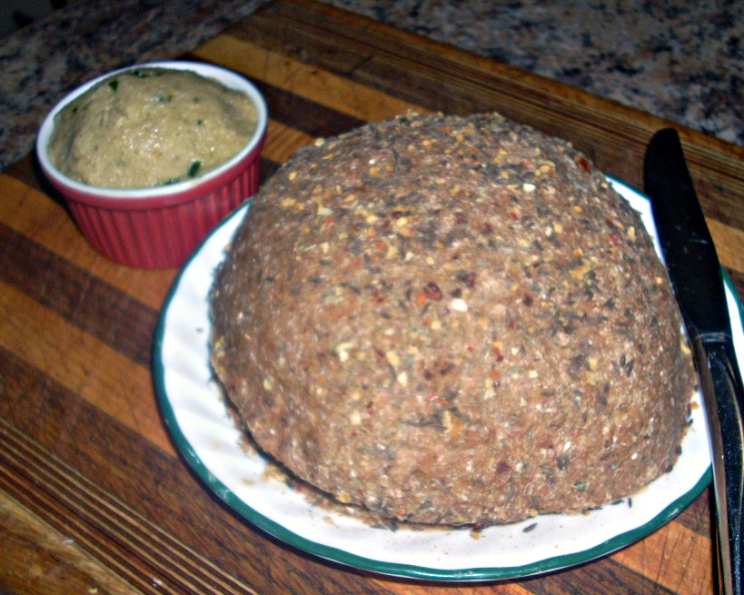
Essene Bread: A Living Loaf of Ancient Goodness
My first encounter with Essene bread was at a small health food store nestled in the heart of Sedona, Arizona. The earthy aroma, so unlike the yeasty scent of conventional bread, drew me in. I remember the owner, a woman with kind eyes and a gentle smile, describing it as “living food,” a concept that both intrigued and mystified me. One bite of that slightly sweet, incredibly dense slice, spread with homemade almond butter, and I was hooked. It was a revelation – bread that tasted wholesome, vital, and somehow… ancient. This recipe allows you to recreate that experience in your own kitchen, transforming simple grains into a nutritional powerhouse.
Recipe Overview
- Prep Time: 15 minutes (excluding sprouting time)
- Cook Time: 8-10 hours
- Total Time: 8-10 hours 15 minutes (excluding sprouting time)
- Servings: 6
- Yield: 1 loaf
- Dietary Type: Vegan, Raw
Ingredients
- 1 cup kamut berries (sprouted – you can use soft wheat berries if you wish)
- 1 cup spelt berries (sprouted – you can use oat groats or rye berries if you wish)
- 1 teaspoon rock sea salt (you can also use kelp flakes or Bragg’s Liquid Aminos)
- 1/4 cup flax seed (soaked for 15 minutes)
Equipment Needed
- Large-mouth 6-cup glass mason jar with a mesh lid
- Powerful food processor
- Flat plate
- Oiled parchment paper
- Dehydrator (or convection toaster oven, oven, or crock pot – see instructions)
- Mesh cover (if using the sun)
Instructions
-
Begin by soaking your chosen berries in filtered water for approximately two days. Do not use tap water, as the chemicals can inhibit sprouting and spoil the water.
-
To soak, use a large-mouth 6-cup glass mason jar fitted with a mesh lid. The mesh allows the berries to breathe and prevents the water from becoming rancid.
-
Place the two cups of berries into the jar and cover with filtered water. Rinse the berries to remove any dust or debris.
-
Add more filtered water to the jar, ensuring the berries are completely submerged. Soak until evening.
-
In the evening, drain the water from the berries through the mesh lid. Remove the lid and refill the jar with fresh filtered water, again covering the berries completely.
-
Position the jar at a 45-degree angle, ensuring the berries remain submerged but the water and berries do not touch the lid of the jar.
-
Allow the berries to soak overnight. In the morning, repeat the rinsing process, draining the old water and adding fresh filtered water.
-
Continue this rinsing and soaking process until you observe small white tails appearing at the ends of the berries. This indicates that they have sprouted, which typically occurs on the second day.
-
Once the berries have sprouted, drain the water and set them aside.
-
Soak the flax seeds in a small bowl with a little filtered water for 15 minutes.
-
Using a powerful food processor, grind the sprouted berries until a thick, doughy mixture forms.
-
Add the soaked flax seeds and rock sea salt to the food processor. Pulse slowly to combine. Be careful not to over-process; you want to maintain some texture. If adding dried fruit or herbs, incorporate them at this stage, pulsing gently to distribute them evenly.
-
Shape the mixture into a loaf, ensuring it is no more than 1 1/2 inches high.
-
Place the loaf on a flat plate lined with a piece of oiled parchment paper.
-
Now, dehydrate the bread. Several methods can be used:
- Dehydrator: Place the loaf on a dehydrator sheet and dehydrate for 8-10 hours at 80°F (27°C).
- Convection Toaster Oven: Use the lowest heat setting.
- Oven: Set the oven to its lowest setting, leaving the oven door ajar for 8-10 hours.
- Sun: Place the loaf in direct sunlight for approximately 12 hours, covering it with a mesh cover to protect it from insects.
- Crock Pot: Use the low setting only if you know the temperature remains below 100°F (38°C). If the setting is too hot, the enzymes will be destroyed.
-
During the last few hours of dehydration, flip the bread over to ensure even drying.
-
The bread is done when it has formed a crust on the outside but remains soft on the inside, not mushy. The texture is key; you are aiming for a pliable, not rock-hard, loaf.
Expert Tips & Tricks
- Sprouting is Key: Don’t rush the sprouting process! Properly sprouted grains are easier to digest and offer a more nutrient-dense bread. Look for those tell-tale white tails.
- Low and Slow: The key to Essene bread is low-temperature drying. Remember, enzymes start to degrade at 106°F (41°C), so keep the temperature below 100°F (38°C) to preserve the bread’s “living” quality.
- Add-ins: Get creative! Consider adding soaked and chopped dried apricots, raisins, cranberries, or even fresh herbs like rosemary or thyme for a burst of flavor.
- Texture is Everything: Monitor the bread carefully during dehydration. The ideal texture is soft and pliable inside with a slightly firm crust. Adjust the drying time as needed based on your chosen method and desired consistency.
- Flavor Boost: For a deeper, more complex flavor, try adding a tablespoon of nutritional yeast to the dough. It adds a cheesy, umami note.
Serving & Storage Suggestions
Serve Essene bread with your favorite spreads, such as raw nut butter, avocado, hummus, or homemade cashew cheese. It’s also delicious topped with sliced vegetables or sprouts for a vibrant and healthy open-faced sandwich.
Store Essene bread in a brown paper bag at room temperature. Do not refrigerate, as this can alter the texture. It is perishable due to its high moisture content, so consume it within a few days. If you don’t plan to eat it immediately, freeze it to prevent mold growth. To freeze, slice the loaf and wrap individual slices in parchment paper before placing them in a freezer bag. Thaw at room temperature when ready to eat.
Nutritional Information
| Nutrient | Amount per Serving | % Daily Value |
|---|---|---|
| Calories | 135.4 kcal | – |
| Calories from Fat | 32 g | 24% |
| Total Fat | 3.7 g | 5% |
| Saturated Fat | 0.4 g | 1% |
| Cholesterol | 0 mg | 0% |
| Sodium | 392 mg | 16% |
| Total Carbohydrate | 22.4 g | 7% |
| Dietary Fiber | 5 g | 20% |
| Sugars | 2.1 g | 8% |
| Protein | 5.5 g | 11% |
Variations & Substitutions
- Gluten-Free: While this recipe traditionally uses kamut and spelt, you can experiment with gluten-free grains like quinoa or brown rice, but be aware that the texture will change.
- Seed Power: Swap out some of the berries for other sprouted seeds like sunflower, pumpkin, or chia seeds for added nutrients and texture. Just remember to soak any seeds overnight before adding them to the mixture.
- Sweet & Savory: Adjust the flavor profile to your liking. Add dried herbs and garlic powder for a savory loaf, or a touch of maple syrup and cinnamon for a sweeter treat.
- Nut-Free: If you have nut allergies, omit any nut-based toppings and consider using sunflower seed butter or tahini instead.
FAQs (Frequently Asked Questions)
Q: Why do I need to sprout the grains?
A: Sprouting increases the bioavailability of nutrients, making them easier to digest and absorb. It also reduces phytic acid, an anti-nutrient that can inhibit mineral absorption.
Q: Can I use a regular oven instead of a dehydrator?
A: Yes, but you must use the lowest possible setting and leave the oven door ajar to allow moisture to escape. Monitor the bread closely to prevent it from baking instead of dehydrating.
Q: How do I know if my crock pot is suitable for dehydrating this bread?
A: The low setting on your crock pot should maintain a temperature below 100°F (38°C). Use a thermometer to check the temperature before placing the bread inside. If it’s too hot, avoid this method.
Q: My bread is too sticky after dehydrating. What did I do wrong?
A: The bread may not have been dehydrated for long enough. Continue dehydrating until it reaches the desired consistency – a firm crust with a soft, pliable interior.
Q: Can I freeze Essene bread?
A: Yes, freezing is a great way to preserve Essene bread. Slice the loaf before freezing and wrap individual slices in parchment paper to prevent sticking.
Final Thoughts
Essene bread is more than just a recipe; it’s a journey back to simpler, more wholesome ways of eating. Embracing this ancient method of preparing grains allows you to create a truly “living” food, packed with nutrients and bursting with flavor. Don’t be afraid to experiment with different grains, seeds, and seasonings to create your own unique version of this extraordinary bread. I encourage you to give this recipe a try and experience the incredible vitality of Essene bread for yourself. Share your creations and feedback – I’d love to hear about your adventures in sprouting and dehydrating!