
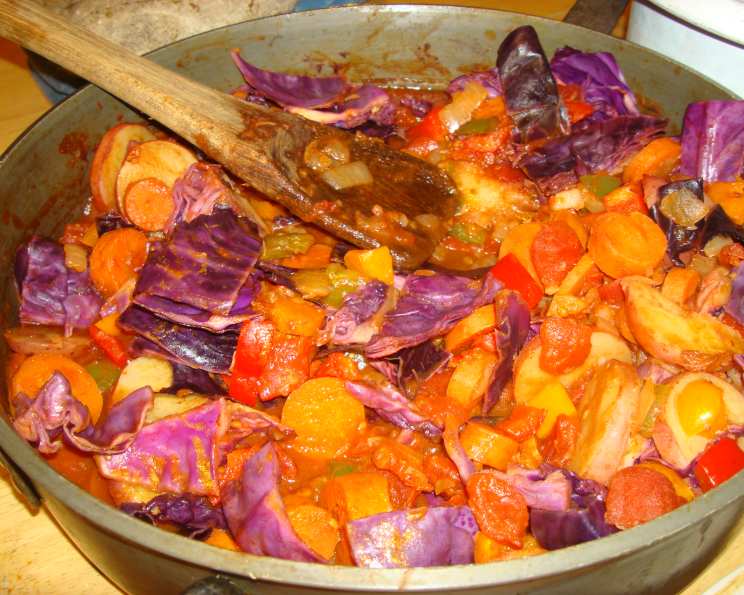
Delving into Delight: Crafting the Perfect Ethiopian Alecha Wat
The aroma of Ethiopian food instantly transports me back to a small, bustling restaurant in Washington, D.C. during my college years. The savory spices, the vibrant colors, and the communal experience of sharing a large injera platter with friends – it was a culinary awakening. Among the various stews and flavorful dishes, the Alecha Wat, with its gentle warmth and comforting vegetables, always held a special place. It was a dish that felt like a hug, and attempting to recreate that feeling in my own kitchen became a cherished mission.
Recipe Overview
- Prep Time: 20 minutes
- Cook Time: 50 minutes
- Total Time: 1 hour 10 minutes
- Servings: 4
- Yield: About 8 cups
- Dietary Type: Vegan
Ingredients
- 200 g onions, chopped
- 4 tablespoons oil
- 3 teaspoons berbere, spice
- 4 carrots, peeled and cut into 3cm slices
- 4 green bell peppers, de-seeded and quartered
- 700 ml water
- 180 ml passata (tomato sauce)
- 2 teaspoons salt
- 1/2 teaspoon ground ginger
- 4 potatoes, cut into thick slices
- 2 tomatoes, blanched, skinned and cut into 8 wedges each
- 8 cabbage, wedges 3cm at the widest part
- Salt and pepper to taste
Equipment Needed
- Large saucepan or Dutch oven
- Knife
- Cutting board
- Vegetable peeler
Instructions
-
Begin by prepping your vegetables. Chop the onions. Peel and slice the carrots into 3cm thick rounds. De-seed and quarter the green bell peppers. Cut the potatoes into thick slices. Blanch, skin, and wedge the tomatoes, and cut the cabbage into wedges that are approximately 3cm at their widest part. Having all the vegetables ready to go ensures a smooth cooking process.
-
In a large saucepan or Dutch oven, heat the oil over medium heat. Add the chopped onions and fry until they have softened and become translucent. This usually takes about 5-7 minutes. Stir frequently to prevent burning.
-
Once the onions are softened, add the berbere spice. Fry for about a minute, stirring constantly, to release its fragrance and allow the flavors to bloom. Be careful not to burn the spice, as this will impart a bitter taste to the dish.
-
Add the sliced carrots and quartered green bell peppers to the saucepan. Stir well to combine them with the onion and berbere mixture.
-
Pour in the water and passata (tomato sauce). Add the salt and ground ginger. Stir everything together to ensure the ingredients are well combined.
-
Bring the mixture to a simmer. Once it is simmering gently, cook for 10 minutes. This allows the flavors to meld and the carrots to begin to soften.
-
After 10 minutes, add the potatoes and tomatoes to the saucepan. Stir gently to incorporate them into the stew.
-
Cover the saucepan and cook for another 10 minutes. This allows the potatoes to start cooking through.
-
After the second 10-minute cooking period, add the cabbage wedges to the stew. Gently stir to distribute the cabbage evenly.
-
Season the stew to taste with additional salt and pepper. Adjust the seasoning as needed to suit your preference.
-
Cook the stew until all the vegetables are completely tender. This will typically take about 20-25 minutes, but the exact time may vary depending on the size of the vegetable pieces and the heat of your stove. Check the potatoes, carrots, and cabbage for tenderness with a fork. They should be easily pierced without resistance.
-
Once the vegetables are tender, portion the Alecha Wat into bowls and serve hot.
Expert Tips & Tricks
- Spice Level Customization: The amount of berbere can be adjusted to control the heat. Start with the recommended amount and add more to taste if you prefer a spicier dish. If you don’t have berbere, a mixture of paprika, chili powder, garlic powder, ginger, and a pinch of cayenne pepper can be used as a substitute.
- Vegetable Doneness: The key to a perfect Alecha Wat is perfectly cooked vegetables. Avoid overcooking, as the vegetables will become mushy. Check for doneness by piercing with a fork; they should be tender but still hold their shape.
- Make-Ahead Tip: This stew is even more flavorful the next day. The flavors meld and deepen as it sits. It can be made a day ahead of time and reheated before serving.
- Thickening the Stew: If you prefer a thicker stew, you can mash a few of the potatoes against the side of the pot while cooking. This will release their starch and naturally thicken the sauce.
Serving & Storage Suggestions
Serve the Alecha Wat hot in individual bowls. Traditionally, it’s served with injera, a spongy flatbread used to scoop up the stew. However, it’s also delicious served with rice, quinoa, or couscous.
Leftovers can be stored in an airtight container in the refrigerator for up to 3-4 days. To reheat, gently warm the stew on the stovetop over medium-low heat, stirring occasionally, until heated through. You can also reheat it in the microwave, but be careful not to overheat, as this can dry out the vegetables.
For longer storage, the Alecha Wat can be frozen for up to 2-3 months. Thaw it in the refrigerator overnight before reheating.
Nutritional Information
| Nutrient | Amount per Serving | % Daily Value |
|---|---|---|
| Calories | 819.5 kcal | N/A |
| Calories from Fat | 149 g | 18% |
| Total Fat | 16.6 g | 25% |
| Saturated Fat | 2.2 g | 11% |
| Cholesterol | 0 mg | 0% |
| Sodium | 1743.2 mg | 72% |
| Total Carbohydrate | 161.7 g | 53% |
| Dietary Fiber | 52.5 g | 210% |
| Sugars | 78.3 g | 313% |
| Protein | 33.8 g | 67% |
Variations & Substitutions
- Spice Level: As mentioned before, adjust the amount of berbere to your liking. If you are sensitive to spice, start with a smaller amount and add more gradually.
- Vegetable Variations: Feel free to add other vegetables to the stew, such as zucchini, eggplant, or spinach. Adjust the cooking time accordingly, adding vegetables that cook more quickly towards the end.
- Legumes: For added protein and heartiness, add lentils or chickpeas to the stew. Add them along with the potatoes and tomatoes, allowing them to cook until tender.
- Herb Infusion: Add fresh herbs like parsley or cilantro during the last few minutes of cooking for a brighter flavor.
- Tomato Paste: For a richer tomato flavor, add a tablespoon of tomato paste along with the passata. Cook for a minute or two to caramelize the paste before adding the water.
FAQs (Frequently Asked Questions)
Q: Can I make this without berbere spice?
A: Yes, you can substitute berbere with a blend of paprika, chili powder, garlic powder, ginger, and a pinch of cayenne pepper, adjusting the ratios to your desired level of heat.
Q: How do I prevent the vegetables from becoming mushy?
A: Avoid overcooking the vegetables by checking for doneness frequently with a fork; they should be tender but still retain their shape.
Q: Can I add meat to this recipe?
A: While this is a vegetarian version, you can certainly add meat. Chicken or beef cubes can be browned before adding the onions and then cooked along with the vegetables. Adjust the cooking time accordingly.
Q: What is the best way to reheat leftovers?
A: Gently reheat the Alecha Wat on the stovetop over medium-low heat, stirring occasionally, or in the microwave, being careful not to overheat.
Q: Can I use canned tomatoes instead of fresh tomatoes and passata?
A: Yes, canned diced tomatoes can be used as a substitute. Use about 2 cups of canned diced tomatoes and reduce the amount of passata accordingly.
Final Thoughts
This Ethiopian Alecha Wat is more than just a recipe; it’s a journey of flavors, a celebration of textures, and a heartwarming experience that you can create in your own kitchen. Don’t be afraid to experiment with the spices and vegetables to create your own unique version. I encourage you to gather your ingredients, embrace the process, and share this delightful dish with friends and family. It’s a dish that will surely bring warmth and comfort to any table. Enjoy!