
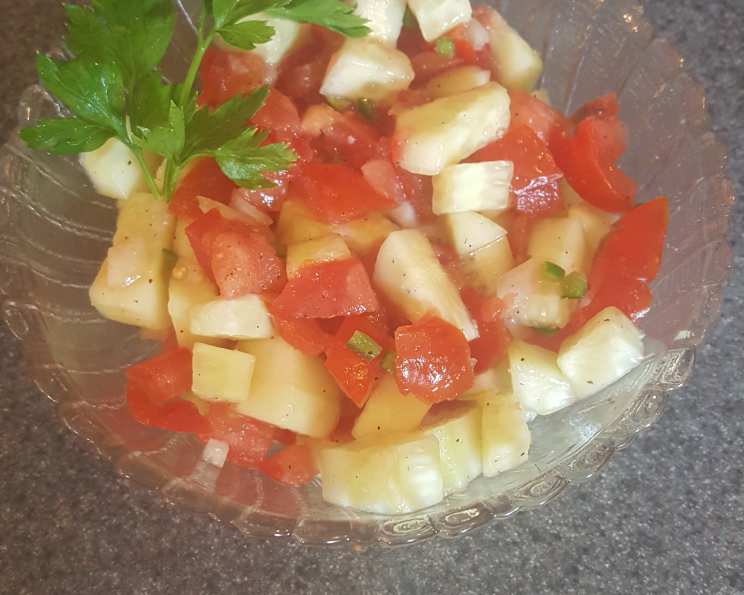
Ethiopian Tomato & Cucumber Salad: A Burst of Freshness
The first time I tasted this salad, I was at a small Ethiopian restaurant tucked away on a side street in my college town. The aroma of berbere spice hung heavy in the air, mingling with the comforting scent of simmering stews. Then, this vibrant salad arrived—a kaleidoscope of colors and textures that cut through the richness of the meat dishes. The juicy tomatoes, crisp cucumbers, and fiery green pepper, all brought together by the tangy lemon dressing, offered a refreshing counterpoint that instantly won me over. It was a simple dish, yet it spoke volumes about the beauty of fresh ingredients and the power of balance in Ethiopian cuisine.
Recipe Overview
- Prep Time: 15 minutes
- Cook Time: 0 minutes
- Total Time: 15 minutes
- Servings: 4
- Dietary Type: Vegan, Gluten-Free
Ingredients
- 2 cups ripe tomatoes, seeded & diced (or 2 cups cherry tomatoes, diced)
- 1 1/2 cups cucumbers, diced
- 1/4 cup sweet onion, diced
- 1 green hot pepper, seeded and finely diced
- 4 teaspoons lemon juice
- 2 teaspoons balsamic vinegar (or 2 teaspoons red wine vinegar)
- 1/4 teaspoon salt
- 1/4 teaspoon pepper
- 2 teaspoons extra virgin olive oil
Equipment Needed
- Cutting board
- Knife
- Mixing bowl
Instructions
- In a mixing bowl, toss together the diced tomatoes, diced cucumbers, diced sweet onion, and finely diced green hot pepper. Make sure the vegetables are evenly distributed throughout the bowl.
- In a separate small bowl, whisk together the lemon juice, balsamic vinegar (or red wine vinegar), salt, and pepper to create a simple vinaigrette. Taste and adjust the seasonings as needed, adding a pinch more salt or pepper to your liking.
- Pour the prepared vinaigrette over the vegetable mixture. Gently toss to ensure all the vegetables are evenly coated with the dressing.
- Finally, sprinkle the extra virgin olive oil over the salad. Give it a final gentle toss to distribute the oil.
- Serve immediately or chill for later.
Expert Tips & Tricks
- Seeding the tomatoes is crucial for preventing a watery salad. Gently squeeze out the seeds and excess liquid before dicing.
- If using cherry tomatoes, halve or quarter them for easier eating.
- The type of green hot pepper you use will determine the level of heat. Serrano peppers offer a good kick, while jalapeños are milder. Adjust the quantity according to your spice preference. If you are very sensitive to heat, you can substitute a mild bell pepper for some of the green hot pepper.
- For a more intense flavor, macerate the onions by soaking them in cold water for about 10 minutes before dicing. This will mellow their sharpness and make them more palatable.
- Don’t overdress the salad! A light coating of vinaigrette is all you need to enhance the natural flavors of the vegetables.
- To elevate the presentation, use a mandoline slicer to create uniformly thin slices of cucumber.
- If you’re making the salad ahead of time, wait to add the olive oil until just before serving to prevent the salad from becoming soggy.
Serving & Storage Suggestions
This Ethiopian tomato and cucumber salad is best served chilled or at room temperature. It makes a fantastic side dish to accompany grilled meats, fish, or vegetarian entrees. Its bright flavors pair particularly well with rich, savory dishes like Ethiopian stews (such as Ethiopian Sauteed Lamb or Beef). You can also serve it as a refreshing appetizer or a light lunch option.
To store leftovers, transfer the salad to an airtight container and refrigerate it for up to 2 days. Keep in mind that the vegetables may release some liquid over time, so you may need to drain off any excess moisture before serving. It’s not recommended to freeze this salad, as the vegetables will lose their texture. The salad should not sit at room temperature for more than 2 hours.
Nutritional Information
| Nutrient | Amount per Serving | % Daily Value |
|---|---|---|
| Calories | 54.2 kcal | N/A |
| Calories from Fat | 22 g | 42% |
| Total Fat | 2.5 g | 3% |
| Saturated Fat | 0.4 g | 1% |
| Cholesterol | 0 mg | 0% |
| Sodium | 152.5 mg | 6% |
| Total Carbohydrate | 7.8 g | 2% |
| Dietary Fiber | 1.7 g | 6% |
| Sugars | 4.5 g | 18% |
| Protein | 1.4 g | 2% |
Variations & Substitutions
- For a creamier variation, add a dollop of plain yogurt or a plant-based yogurt alternative.
- To add a nutty flavor and crunch, sprinkle with toasted sesame seeds or chopped peanuts.
- Experiment with different herbs, such as fresh mint, cilantro, or parsley, for a unique twist.
- If you don’t have balsamic vinegar, you can substitute it with apple cider vinegar or white wine vinegar.
- For a sweeter salad, add a handful of dried cranberries or raisins.
- If you can’t find sweet onions, yellow onions can be used instead. Soak them in cold water for 10 minutes to mellow their sharpness.
- For a richer flavor, use infused olive oil.
FAQs (Frequently Asked Questions)
Q: Can I make this salad ahead of time?
A: Yes, you can prepare the vegetables and vinaigrette separately and combine them just before serving to prevent the salad from becoming soggy.
Q: How spicy is this salad?
A: The spiciness depends on the type and amount of green hot pepper you use. Adjust the quantity to suit your taste preference.
Q: Can I use dried herbs instead of fresh?
A: While fresh herbs are preferred for their vibrant flavor, you can use dried herbs in a pinch. Use about 1/3 of the amount called for in the recipe.
Q: What other vegetables can I add to this salad?
A: Feel free to add other vegetables like bell peppers, radishes, or carrots for added flavor and texture.
Q: Can I omit the onion?
A: Yes, if you don’t like onions, you can omit them altogether or substitute them with another vegetable like scallions.
Final Thoughts
This Ethiopian tomato and cucumber salad is a celebration of simple, fresh ingredients and vibrant flavors. Its refreshing qualities make it the perfect accompaniment to a variety of dishes, from hearty stews to grilled meats. Don’t be afraid to experiment with different variations and substitutions to create your own unique version of this classic Ethiopian salad. I encourage you to try this recipe and share your feedback—I’m confident it will become a staple in your kitchen, bringing a taste of Ethiopian sunshine to your table. And if you are looking for a complete Ethiopian meal, consider pairing this salad with Ethiopian Sauteed Lamb or Beef. Enjoy!