
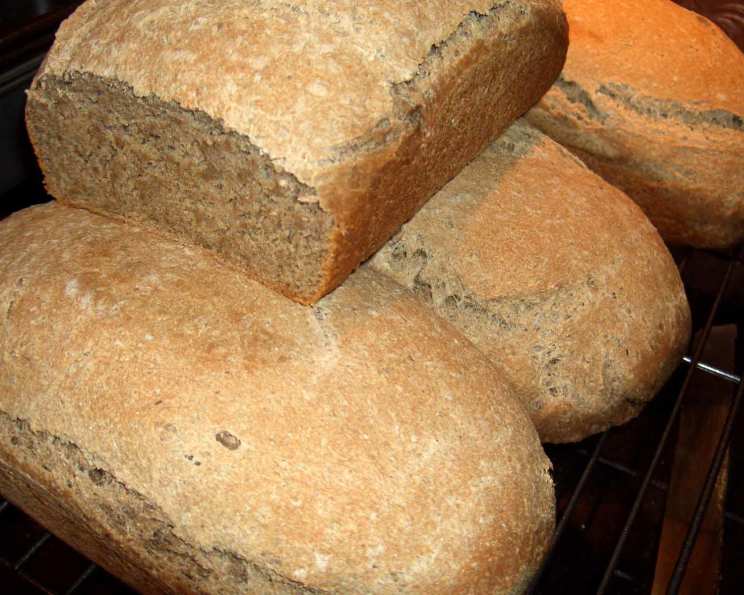
The Staff of Life: Baking Authentic Ezekiel Bread
The scent of freshly baked bread is a powerful time machine. One whiff, and I’m transported back to my grandmother’s kitchen, a whirlwind of flour dust and gentle humming. While she favored simple white loaves, I remember the day she experimented with a dense, multi-grain bread she called “Bible Bread.” The aroma was earthy and robust, a far cry from her usual fare, and the taste… well, it was an acquired taste for a child. But the memory of her curiosity, her willingness to try something new, remains a powerful influence in my own baking adventures. Today, I share with you my version of that wholesome loaf, a journey into the heart of Ezekiel bread.
Recipe Overview
- Prep Time: 45 minutes (including yeast activation and lentil preparation)
- Cook Time: 1 hour
- Total Time: 1 hour 45 minutes (plus rising time)
- Yields: 4 loaves
- Serves: 48
- Dietary Type: Vegetarian (can be vegan with appropriate honey substitute)
Ingredients
- 8 cups wheat flour
- 4 cups barley flour
- 2 cups soybean flour
- 1 cup cooked and mashed lentils
- ½ cup millet flour
- ¼ cup rye flour
- 1 ½ cups water
- 1 tablespoon salt
- 5 tablespoons olive oil
- 2 (¼ ounce) packages yeast,
- ½ cup warm water
- 1 tablespoon honey
Ingredient Notes:
- If you can’t find all the flours, health food stores are a good place to start. You can also order online.
- For a vegan version, substitute the honey with maple syrup or agave nectar.
- Ensure the water for activating the yeast is warm (around 105-115°F/40-46°C) – too hot and it will kill the yeast; too cold and it won’t activate.
- Use pre-cooked lentils or cook them yourself. Be sure to thoroughly mash them before adding to the dough.
Equipment Needed
- Large mixing bowl
- Measuring cups and spoons
- Small bowl for yeast activation
- Baking sheets or loaf pans (greased)
- Clean kitchen towel
- Wire rack for cooling
Instructions
-
Activate the Yeast: In a small bowl, dissolve the yeast in ½ cup of warm water. Let it sit for 10 minutes, until it becomes foamy. This indicates the yeast is alive and active.
-
Combine Dry Ingredients: In a separate, large mixing bowl, whisk together the wheat flour, barley flour, soybean flour, millet flour, and rye flour. This ensures the flours are evenly distributed.
-
Prepare Wet Ingredients: In another bowl, blend the cooked and mashed lentils, olive oil, honey, and a small amount of the 1 ½ cups of water. This mixture will add moisture and flavor to the dough.
-
Combine Wet and Dry: Pour the lentil mixture into the large mixing bowl with the remaining water. Stir in 2 cups of the mixed flour.
-
Add Yeast Mixture: Add the yeast mixture to the bowl. Stir well to combine.
-
Incorporate Remaining Flour: Gradually stir in the remaining salt and flour, mixing until a shaggy dough forms. You may need to add a little more water or flour, a tablespoon at a time, until the dough comes together.
-
Knead the Dough: Turn the dough out onto a lightly floured surface. Knead for 8-10 minutes, until the dough is smooth and elastic. The dough will still be somewhat sticky, but it should hold its shape.
-
First Rise: Place the dough in a lightly oiled bowl, turning to coat all sides. Cover the bowl with a clean kitchen towel and let it rise in a warm place for 1-1.5 hours, or until it has doubled in bulk.
-
Punch Down and Divide: Gently punch down the dough to release the air. Turn it out onto a lightly floured surface and divide it into 4 equal portions.
-
Shape and Place in Pans: Shape each portion into a loaf and place it in a greased loaf pan.
-
Second Rise: Cover the loaf pans with a clean kitchen towel and let them rise again for about 30-45 minutes, or until the dough has almost doubled in size.
-
Bake: Preheat your oven to 375°F (190°C).
-
Bake the Bread: Bake for 1 hour, or until the loaves are golden brown and sound hollow when tapped on the bottom.
-
Cool: Remove the loaves from the pans and let them cool completely on a wire rack before slicing and serving.
Expert Tips & Tricks
- The Right Flour Balance: The ratio of flours is crucial for Ezekiel bread. While you can experiment slightly, maintaining the overall proportion is important for the bread’s structure and texture.
- Warm Environment for Rising: Providing a warm, draft-free environment is key for the dough to rise properly. A slightly warm oven (turned off!) or a sunny spot in your kitchen can work wonders.
- Adjusting Baking Time: Every oven is different. If the bread is browning too quickly, tent it with foil for the last 15-20 minutes of baking.
- Kneading Technique: Proper kneading develops the gluten, which gives the bread its structure. If you’re new to kneading, watch some videos online for a visual guide.
- Adding Seeds: Consider adding seeds like sesame, flax, or sunflower to the dough for added texture and nutritional value. Incorporate them during the kneading process.
- Make Ahead: This dough can be made ahead of time. After the first rise, punch it down, wrap it tightly in plastic wrap, and refrigerate for up to 24 hours. Let it come to room temperature before shaping and baking.
- Dealing with Sticky Dough: Ezekiel bread dough tends to be sticky. Don’t be tempted to add too much flour, as this can result in a dry loaf. Instead, keep your hands and work surface lightly floured.
Serving & Storage Suggestions
Ezekiel bread is incredibly versatile. Serve it toasted with avocado and a sprinkle of salt, use it for hearty sandwiches, or enjoy it simply with a pat of butter or a drizzle of olive oil. It pairs well with soups, stews, and salads.
- Room Temperature: Store the cooled bread in an airtight container at room temperature for up to 3 days.
- Refrigeration: For longer storage, wrap the bread tightly and refrigerate for up to a week.
- Freezing: To freeze, slice the bread and wrap it tightly in plastic wrap, then place it in a freezer bag. It will keep in the freezer for up to 3 months. Thaw at room temperature or toast directly from frozen.
- Reheating: To reheat, wrap the bread in foil and bake at 350°F (175°C) for 10-15 minutes, or until warmed through.
Nutritional Information
Please note that these values are estimates and may vary based on specific ingredients and serving size.
| Nutrient | Amount per Serving | % Daily Value |
|---|---|---|
| Calories | 151.4 kcal | N/A |
| Calories from Fat | 26 g | 17% |
| Total Fat | 2.9 g | 4% |
| Saturated Fat | 0.4 g | 2% |
| Cholesterol | 0 mg | 0% |
| Sodium | 147.3 mg | 6% |
| Total Carbohydrate | 27.4 g | 9% |
| Dietary Fiber | 4.3 g | 17% |
| Sugars | 0.9 g | 3% |
| Protein | 5.9 g | 11% |
Variations & Substitutions
- Gluten-Free: While true Ezekiel bread cannot be gluten-free due to the wheat and barley, you can create a similar multi-grain loaf using a blend of gluten-free flours like brown rice flour, tapioca starch, and sorghum flour. You’ll also need a binder like xanthan gum.
- Sweetener Alternatives: Instead of honey, try maple syrup, agave nectar, or even molasses for a deeper flavor.
- Nut and Seed Additions: Incorporate chopped nuts like walnuts or pecans, or seeds like sunflower or pumpkin seeds for added texture and nutrition.
- Spice it Up: Add a teaspoon of your favorite spice blend, such as cinnamon, cardamom, or mixed spice, for a warm and aromatic flavor.
- Different Legumes: Experiment with different cooked and mashed legumes in place of lentils, such as chickpeas or black beans.
FAQs (Frequently Asked Questions)
Q: Why is it called Ezekiel bread?
A: The recipe is inspired by a verse in the Book of Ezekiel (4:9), which lists several grains and legumes to be used for making bread.
Q: Can I use all-purpose flour instead of the other flours?
A: While you can, it will significantly change the texture and nutritional profile of the bread. The combination of flours contributes to the bread’s unique density and flavor.
Q: My dough is very sticky. What should I do?
A: Ezekiel bread dough is naturally sticky. Resist the urge to add too much flour. Keep your hands and work surface lightly floured, and work with the dough gently.
Q: How do I know when the bread is done baking?
A: The bread is done when it’s golden brown and sounds hollow when tapped on the bottom. You can also use a thermometer; the internal temperature should be around 200-210°F (93-99°C).
Q: Can I bake this bread in a bread machine?
A: While possible, the results may vary depending on your bread machine. Follow your machine’s instructions for multi-grain breads. You may need to adjust the liquid and flour amounts.
Final Thoughts
Baking Ezekiel bread is a rewarding experience. It requires a bit more effort than a simple white loaf, but the result is a deeply flavorful and nutritious bread that’s well worth the effort. Don’t be intimidated by the list of ingredients; once you gather them, the process is straightforward. Embrace the earthy aromas, the satisfying texture, and the knowledge that you’re creating something wholesome and nourishing. Share a slice with someone you love, and let the simple goodness of this ancient grain inspire connection and conversation. Happy baking!