
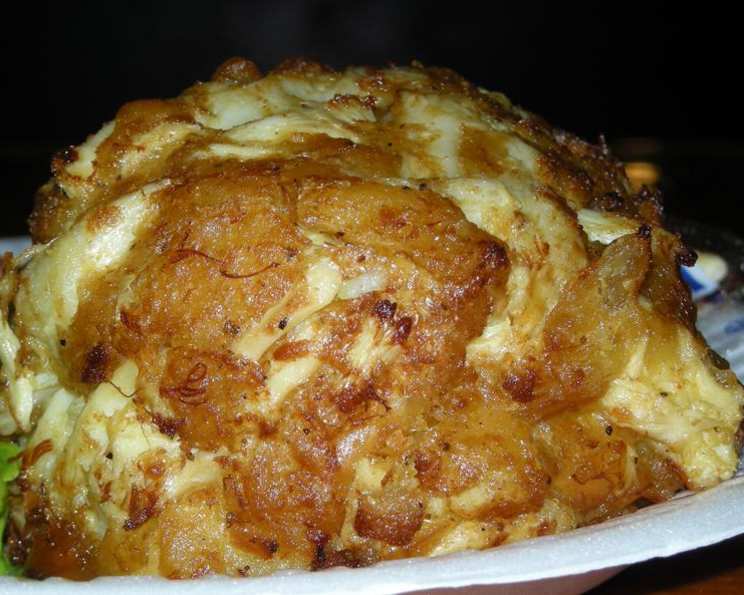
Faidley’s World Famous Crab Cakes: A Taste of Baltimore
My first encounter with Faidley’s crab cakes wasn’t in a fancy restaurant, but amidst the vibrant chaos of Lexington Market in Baltimore. The air buzzed with a symphony of sounds: vendors hawking their wares, the cheerful banter of locals, and the sizzle of crab cakes being expertly cooked. Holding that warm, golden-brown patty, practically overflowing with sweet, succulent crab, was a revelation – a moment etched in my memory as the epitome of simple, honest Maryland cuisine. The taste? Unforgettable. It’s a flavor I’ve been chasing ever since, and this recipe gets remarkably close to capturing that authentic Faidley’s experience.
Recipe Overview
- Prep Time: 15 minutes
- Cook Time: 4-8 minutes (depending on cooking method)
- Total Time: Approximately 1 hour 15 minutes (includes chilling)
- Servings: 4
- Yield: 8 crab cakes
- Dietary Type: Pescatarian
Ingredients
Crab Cakes:
- 1 lb large lump crabmeat, picked over
- 1 cup crushed saltine crackers
- ½ cup mayonnaise
- 1 egg
- 1 tablespoon Dijon mustard
- 1 tablespoon Worcestershire sauce
- 1 dash Tabasco sauce
- Vegetable oil (for frying, optional)
- Clarified butter or olive oil (for sautéing, optional)
Tartar Sauce:
- 1 cup mayonnaise
- ½ cup finely chopped dill pickle
- ¼ cup minced onion
- 2 tablespoons chopped parsley
- 1 tablespoon pickle juice
Equipment Needed
- Large flat pan or baking sheet
- Small mixing bowl
- Measuring cups and spoons
- Ice cream scoop (optional, for forming cakes)
- Tray or platter
- Wax paper
- Heavy skillet (for frying or sautéing)
- Slotted utensil
- Paper towels
- Broiler (optional)
Instructions
-
Prepare the Crab Mixture: Gently spread the crabmeat out in a large flat pan or on a baking sheet. This helps to evenly distribute the other ingredients without over-mixing.
-
Sprinkle with Cracker Crumbs: Evenly sprinkle the crushed saltine crackers over the top of the crabmeat. The saltines act as a binder and add a subtle salty flavor that complements the sweetness of the crab.
-
Make the Binding Sauce: In a small bowl, whisk together the mayonnaise, egg, Dijon mustard, Worcestershire sauce, and Tabasco sauce until well combined. This mixture provides moisture and flavor while helping the crab cakes hold their shape.
-
Combine Ingredients Gently: Pour the mayonnaise mixture over the crabmeat and cracker crumbs. Very gently toss or fold the ingredients together, being extremely careful not to break up the precious lumps of crabmeat. This is crucial for maintaining the texture of the crab cakes. The goal is to incorporate everything without turning the mixture into a paste.
-
Rest the Mixture: Let the crab mixture sit for 2-3 minutes. This allows the crackers to absorb some of the moisture and helps the crab cakes bind together better.
-
Form the Cakes: Using your hands or an ice cream scoop (for uniform size), form the crab mixture into 8 mounds, each about 3 inches in diameter and ¾ inch thick. Remember, do NOT pack the mixture too firmly. The cakes should be as loose as possible while still holding their shape. The looser the cake, the more tender it will be.
-
Chill Thoroughly: Place the formed crab cakes on a tray or platter lined with wax paper. Cover the tray and refrigerate for at least 1 hour before cooking. This chilling time is essential for the cakes to firm up and prevent them from falling apart during cooking.
-
Prepare the Tartar Sauce: While the crab cakes are chilling, prepare the tartar sauce. In a bowl, combine the mayonnaise, finely chopped dill pickle, minced onion, chopped parsley, and pickle juice. Mix well and chill for at least 1 hour to allow the flavors to meld together.
-
Choose Your Cooking Method: You have three options for cooking the crab cakes: frying, broiling, or sautéing. Each method yields a slightly different result.
- To Fry: Pour vegetable oil into a heavy skillet to a depth of about 1 ½ inches. Heat the oil over medium-high heat until it reaches a temperature of around 350°F (175°C). Carefully place the crab cakes, a few at a time, into the hot oil. Fry until golden brown, about 4 minutes on each side. Remove with a slotted utensil to a paper towel-lined plate to drain excess oil.
- To Broil: Preheat your broiler. Place the crab cakes on a baking sheet and slip them under the preheated broiler. Broil until nicely browned, turning to cook evenly, about 4-5 minutes on each side. Watch them carefully to prevent burning.
- To Sauté: Heat a small amount of clarified butter or olive oil (or a combination) in a skillet over medium heat. Gently place the crab cakes in the skillet and sauté, turning several times, until golden brown and heated through, about 8 minutes total cooking time.
-
Serve Immediately: Serve the cooked crab cakes immediately with the chilled tartar sauce on the side.
Expert Tips & Tricks
- Don’t overmix: I cannot stress this enough. Overmixing the crab cake mixture will result in tough, rubbery crab cakes. Handle the crabmeat with the utmost care.
- Use high-quality crabmeat: The quality of the crabmeat is paramount. Look for large lump crabmeat that is fresh and free of shell fragments.
- Saltine Cracker Substitute: If you don’t have saltines, Ritz crackers can be used, though the flavor will be slightly sweeter.
- Make Ahead: The crab cake mixture can be prepared a day in advance and stored in the refrigerator. Form the cakes just before cooking.
- Prevent Sticking: When sautéing, make sure your skillet is properly preheated and use enough butter or oil to prevent the crab cakes from sticking.
- Broiling Technique: For even browning under the broiler, rotate the baking sheet halfway through cooking.
Serving & Storage Suggestions
Serve Faidley’s crab cakes immediately while they are hot and crispy. They are delicious on their own, or served on a toasted brioche bun with lettuce and tomato. The chilled tartar sauce is the perfect accompaniment.
Leftover crab cakes can be stored in an airtight container in the refrigerator for up to 2 days. Reheat gently in a skillet or oven to maintain their texture. Freezing is not recommended as it can affect the quality of the crabmeat.
Nutritional Information
Note: Nutritional information is an estimate and may vary based on specific ingredients and cooking methods.
| Nutrient | Amount per Serving | % Daily Value |
|---|---|---|
| Calories | 572.5 kcal | N/A |
| Calories from Fat | 304 g | 53% |
| Total Fat | 33.8 g | 51% |
| Saturated Fat | 5.3 g | 26% |
| Cholesterol | 155.5 mg | 51% |
| Sodium | 1510.3 mg | 62% |
| Total Carbohydrate | 37.8 g | 12% |
| Dietary Fiber | 1.1 g | 4% |
| Sugars | 7.2 g | 28% |
| Protein | 29.7 g | 59% |
Variations & Substitutions
- Spicy Crab Cakes: Add a pinch of cayenne pepper or a dash of hot sauce to the crab cake mixture for a spicy kick.
- Herbaceous Crab Cakes: Mix in some finely chopped fresh herbs like chives, dill, or parsley for added flavor.
- Gluten-Free: Substitute gluten-free crackers or breadcrumbs for the saltines.
- Tartar Sauce Twist: Add a squeeze of lemon juice or a pinch of capers to the tartar sauce for a different flavor profile.
- Vegetable Boost: Finely diced red bell pepper or celery can be added to the crab cake mixture for added texture and nutrients.
FAQs (Frequently Asked Questions)
Q: Can I use imitation crab meat for this recipe?
A: While you can, I strongly recommend using real lump crabmeat for the best flavor and texture. Imitation crab meat lacks the delicate sweetness and succulence of the real thing.
Q: Why are my crab cakes falling apart?
A: This is likely due to overmixing the ingredients or not chilling the cakes for long enough. Be gentle when mixing and ensure the cakes are well-chilled before cooking.
Q: Can I bake these crab cakes instead of frying, broiling, or sautéing?
A: Yes, you can bake them. Preheat your oven to 375°F (190°C). Place the crab cakes on a baking sheet lined with parchment paper and bake for 20-25 minutes, or until golden brown and cooked through.
Q: What is clarified butter and why use it for sautéing?
A: Clarified butter is butter that has had the milk solids and water removed. It has a higher smoke point than regular butter, making it ideal for sautéing without burning. You can find it in most grocery stores, or make it yourself at home.
Q: Can I add breadcrumbs to the crab cake mixture?
A: While this recipe calls for crushed saltines, you can certainly use breadcrumbs as a substitute or addition. However, be mindful of the texture, as breadcrumbs can make the cakes denser.
Final Thoughts
There’s something truly special about recreating a dish that holds so much history and personal connection. Faidley’s crab cakes are more than just a recipe; they’re a taste of Baltimore, a reminder of bustling markets and the joy of simple, perfectly executed food. I encourage you to try this recipe, to experiment with variations, and to share the experience with your loved ones. Don’t be afraid to get your hands messy, to be gentle with the crabmeat, and to savor every delicious bite. And please, let me know how your crab cakes turn out! I’d love to hear your feedback and any personal twists you add to this classic recipe.