
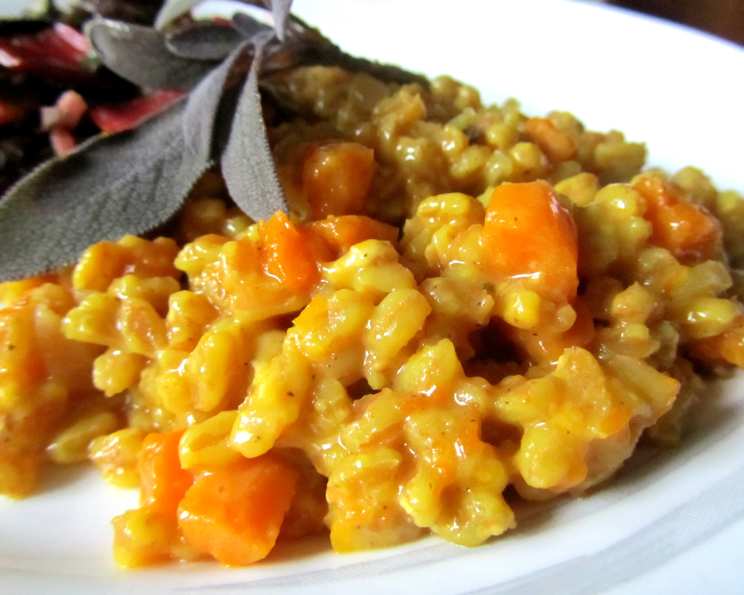
Farro Risotto with Butternut Squash: An Autumnal Embrace
The first time I tasted farro risotto was on a crisp October evening at a small trattoria nestled in the hills of Tuscany. The air was filled with the scent of woodsmoke and ripe grapes, and the golden light of the setting sun seemed to infuse every dish with warmth. This particular dish, a farro risotto with butternut squash, was a revelation. The nutty, slightly chewy texture of the farro paired perfectly with the sweet, earthy squash, creating a symphony of flavors that instantly evoked the essence of fall. From that moment on, I knew I had to recreate this taste of autumn in my own kitchen.
Recipe Overview
- Prep Time: 15 minutes
- Cook Time: 40 minutes
- Total Time: 55 minutes
- Servings: 4-6
- Yield: Variable, depends on serving size
- Dietary Type: Vegetarian (can be made vegan by omitting Parmesan cheese or substituting with nutritional yeast)
Ingredients
- 1 cup diced butternut squash
- 6 cups chicken stock, preferably homemade, or 6 cups water
- 2 tablespoons unsalted butter
- 1/2 cup minced red onion
- 2 garlic cloves, minced, or 4 roasted garlic cloves
- 3 fresh sage leaves, minced
- 1 1/2 cups cracked farro (10 ounces)
- 1/2 cup dry white wine
- 1 generous pinch saffron threads
- 1/2 teaspoon black pepper
- 1 cup freshly grated Parmesan cheese
- Salt to taste
Equipment Needed
- Small saucepan
- Heavy-bottomed pot or Dutch oven
- Ladle
- Cutting board
- Chef’s knife
- Measuring cups and spoons
Instructions
-
Begin by preparing the chicken stock. In a small, covered saucepan, heat the stock over low heat and maintain a gentle simmer. This will keep the stock hot and ready to add to the farro, which helps to maintain the cooking temperature and promotes even cooking.
-
In a heavy-bottomed pot or Dutch oven, melt the butter over medium-low heat. Add the minced red onion and diced butternut squash. Sauté the onion and squash for about 5 minutes, until the onion becomes translucent and the squash begins to soften slightly.
-
Add the minced garlic (or roasted garlic) and minced fresh sage leaves to the pot. Cook for an additional minute, stirring constantly, until the garlic is fragrant but not browned. This step infuses the butter and vegetables with the aromatic flavors of garlic and sage.
-
Add the cracked farro to the pot. Stir to coat the farro grains with the buttery vegetable mixture. Toasting the farro lightly helps to enhance its nutty flavor and prevent it from becoming mushy during cooking.
-
Pour the dry white wine into the pot and cook for about 2 minutes, stirring constantly, until the wine is almost completely absorbed. This process, known as deglazing, adds depth of flavor to the risotto. Be sure to scrape up any browned bits from the bottom of the pot as you stir.
-
Now, begin adding the hot chicken stock to the farro, 2 ladles at a time. Add a generous pinch of saffron threads to the first addition of stock, along with the black pepper. The saffron will infuse the dish with its vibrant color and subtle, floral aroma.
-
Stir the farro mixture gently but consistently. Simmer until the stock is absorbed, usually about 5 to 10 minutes. The farro should be slightly dry before you add the next ladelful of stock.
-
Continue adding the stock, 2 ladles at a time, stirring every few minutes. Each time, cook until the mixture seems a little dry before adding more stock. This gradual addition of liquid is what creates the creamy texture characteristic of risotto.
-
Continue this process until the farro is cooked through but still al dente – that is, firm to the bite – about 30-45 minutes in total. The exact cooking time will depend on the type of farro you use.
-
Once the farro is cooked to your liking, remove the pot from the heat. Stir in the freshly grated Parmesan cheese until it is melted and fully incorporated. The Parmesan will add richness and a salty, savory flavor to the risotto.
-
Taste the farro risotto and season with salt to your liking. You can add a knob of butter at this stage for extra richness, if desired.
-
Mix well, garnish with additional fresh sage leaves, and serve immediately.
Expert Tips & Tricks
- Roasting the squash: For an even deeper flavor, consider roasting the butternut squash before adding it to the risotto. Toss the diced squash with olive oil, salt, and pepper, and roast at 400°F (200°C) for 20-25 minutes, or until tender and slightly caramelized.
- Warming the Parmesan: Grate the Parmesan cheese fresh and let it come to room temperature before adding it to the risotto. This will help it melt more easily and evenly.
- Deglazing with Apple Cider: Substitute the white wine with Apple Cider.
- Prepping Ahead: Dice the butternut squash and mince the onion, garlic, and sage ahead of time to save time during cooking. You can also cook the farro ahead of time, but slightly undercook it, then finish cooking it in the risotto just before serving.
Serving & Storage Suggestions
Serve the farro risotto immediately after cooking for the best texture and flavor. Garnish with a drizzle of olive oil, a sprinkle of Parmesan cheese, and a few fresh sage leaves.
Leftover farro risotto can be stored in an airtight container in the refrigerator for up to 3 days. To reheat, add a splash of stock or water to the risotto and heat gently over low heat, stirring frequently, until heated through. You can also reheat it in the microwave.
Nutritional Information
Please note that these values are estimates and may vary based on specific ingredients and portion sizes.
| Nutrient | Amount per Serving | % Daily Value |
|---|---|---|
| Calories | 380 kcal | 19% |
| Total Fat | 18g | 28% |
| Saturated Fat | 10g | 50% |
| Cholesterol | 45mg | 15% |
| Sodium | 450mg | 19% |
| Total Carbohydrate | 45g | 15% |
| Dietary Fiber | 5g | 20% |
| Sugars | 8g | – |
| Protein | 12g | 24% |
Variations & Substitutions
- Vegan Farro Risotto: Omit the Parmesan cheese or substitute it with nutritional yeast for a cheesy flavor. Use vegetable broth instead of chicken stock and olive oil instead of butter.
- Add Protein: Add cooked chicken, shrimp, or tofu to the risotto for a more substantial meal.
- Seasonal Variations: Use other seasonal vegetables like mushrooms, asparagus, or peas instead of butternut squash.
- Cheese Varieties: Try different types of cheese, such as Pecorino Romano, Asiago, or fontina, in place of the Parmesan.
FAQs (Frequently Asked Questions)
Q: Can I use pearled farro instead of cracked farro?
A: Pearled farro will cook faster than cracked farro, so you’ll need to adjust the cooking time accordingly. It may also result in a slightly less chewy texture.
Q: Can I make this risotto in a slow cooker or Instant Pot?
A: Yes, you can adapt this recipe for a slow cooker or Instant Pot, but the texture may be slightly different. Refer to specific slow cooker or Instant Pot risotto recipes for best results.
Q: How do I know when the farro is cooked properly?
A: The farro should be tender but still slightly firm to the bite (al dente), similar to pasta.
Q: Can I use a different type of wine?
A: Yes, you can use any dry white wine you enjoy. Pinot Grigio, Sauvignon Blanc, or even a dry rosé would work well.
Q: Can I freeze leftover farro risotto?
A: Yes, you can freeze leftover farro risotto, but the texture may change slightly upon thawing. Store it in an airtight container and thaw it completely before reheating.
Final Thoughts
I urge you to try this recipe for Farro Risotto with Butternut Squash. It’s a wonderfully comforting dish that is perfect for a cozy night in. Experiment with different variations and substitutions to make it your own. And most importantly, share it with those you love. Happy cooking!