
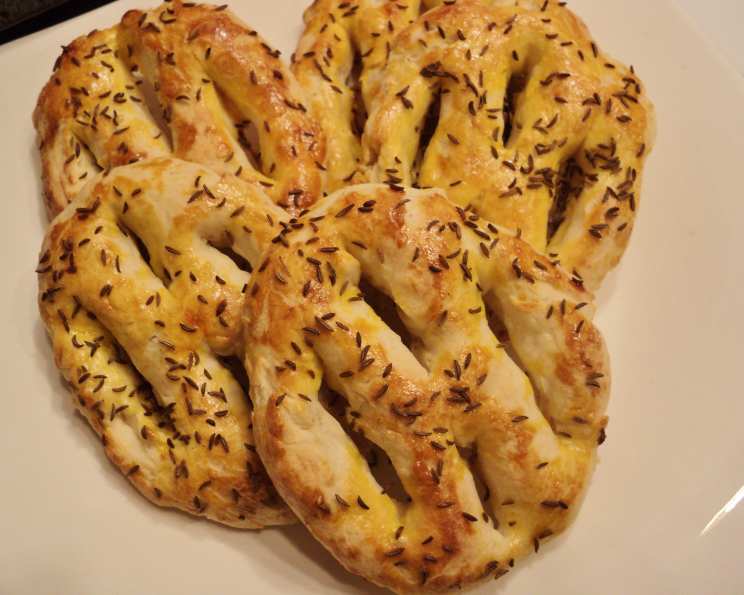
Fastenwähe: A Taste of Basel Carnival
The scent of caraway and warm, yeasty dough always brings me back to my semester abroad in Basel. Every February, the city would erupt in a riot of color and sound for Fasnacht, Basel’s legendary Carnival. While the Guggenmusik bands and masked revelers were certainly memorable, it was the Fastenwähe, these unique caraway-seed pretzels, that truly captured the spirit of the season for me. The first bite, a slightly sweet and savory combination, was an instant connection to the city’s culture and history, a tradition as ingrained in Basel as the Rhine itself.
Recipe Overview
- Prep Time: 30 minutes
- Cook Time: 15-20 minutes per batch
- Total Time: 3 hours (includes rising time)
- Yields: 12 pieces
- Dietary Type: Vegetarian
Ingredients
Dough:
- 250 ml milk, lukewarm
- 1 tablespoon sugar
- 100 g butter, melted and lukewarm
- 500 g white flour
- 15 g fresh yeast
- 1 teaspoon salt
Coating:
- 1 egg yolk
- 1 teaspoon water
- 1-2 tablespoons caraway seeds (not cumin!)
Equipment Needed
- Large mixing bowl
- Baking trays (2)
- Pastry brush
- Sharp knife or pizza cutter
- Oven
- Cooling rack
- Fireproof bowl
Instructions
- In a large mixing bowl, combine the lukewarm milk, sugar, melted lukewarm butter, and half of the flour.
- Add the fresh yeast to the mixture. Mix well to combine, ensuring the yeast is evenly distributed. Let the mixture stand for 5 minutes to allow the yeast to activate. This step is crucial for a good rise.
- Add the remaining flour and the salt to the bowl. Begin to mix all ingredients together, either by hand or with a stand mixer using a dough hook.
- Continue mixing until a soft, pliable dough forms. The dough should be smooth and slightly sticky but not overly wet.
- Turn the dough out onto a lightly floured surface. Gently knead the dough for a few minutes until it becomes even smoother and more elastic. This develops the gluten, which gives the Fastenwähe their characteristic chewiness.
- Divide the dough into 12 equal portions. This can be done with a scale for precision or by eye.
- Shape each portion into a 15 cm (approximately 6-inch) long oval roll. Roll them gently on a lightly floured surface to maintain their shape.
- Flatten each roll slightly with the palm of your hand. This creates a wider surface for the characteristic cuts.
- Using a sharp knife or pizza cutter, make four 5 cm (approximately 2-inch) long cuts on each side of the flattened roll, opposite each other. These cuts are what create the distinctive “pretzel” shape of the Fastenwähe.
- Gently toss the cut dough with your hands to open up the cuts and create a more defined shape.
- Place the shaped Fastenwähe onto two baking trays lined with parchment paper, leaving some space between each one to allow for expansion during rising.
- In a small bowl, whisk together the egg yolk and water to create an egg wash.
- Brush the tops of each Fastenwähe generously with the egg wash. This gives them a beautiful golden-brown color during baking.
- Sprinkle the tops of each Fastenwähe generously with caraway seeds. Ensure the seeds are evenly distributed for a consistent flavor in every bite.
- Cover the baking trays loosely with plastic wrap or a clean kitchen towel.
- Place the trays in a cold oven. To create a warm and humid environment for rising, place a fireproof bowl filled with warm water on the bottom rack of the oven. This helps the dough rise more effectively.
- Let the Fastenwähe rise for approximately 2 hours, or until they have doubled in volume. The rising time can vary depending on the temperature of your kitchen, so check periodically.
- After the rising period, remove the trays and the bowl of water from the oven. Preheat the oven to 200°C (390°F). If using a convection oven, adjust the temperature slightly according to your oven’s instructions.
- Place a fireproof bowl with hot water back into the oven on the bottom rack. This will create steam, which helps to create a crispy crust on the Fastenwähe.
- Bake the first tray of Fastenwähe for 15-20 minutes, or until they are golden brown. Keep a close eye on them to prevent burning.
- Remove the first tray from the oven and place the second tray in. Bake for 15-20 minutes, or until golden brown.
- Once baked, transfer the Fastenwähe to a cooling rack to cool completely. This prevents them from becoming soggy.
Expert Tips & Tricks
- Yeast Activation: Ensure the milk is lukewarm, not hot, when activating the yeast. Hot milk can kill the yeast.
- Dough Consistency: The dough should be soft and slightly sticky. Avoid adding too much flour, as this can make the Fastenwähe tough.
- Rising Time: The rising time is crucial for a light and airy texture. Don’t rush this step.
- Caraway Seeds: Use fresh caraway seeds for the best flavor. Toasting them lightly before sprinkling can enhance their aroma.
- Oven Temperature: Oven temperatures can vary. Keep a close eye on the Fastenwähe while baking and adjust the baking time as needed.
- Shaping: Don’t worry too much about perfect shapes. The rustic appearance adds to their charm.
Serving & Storage Suggestions
Fastenwähe are best enjoyed fresh on the day they are baked, ideally still slightly warm. They are a perfect accompaniment to coffee, tea, or a glass of milk. In Basel, they are often enjoyed during Carnival celebrations.
To store leftovers, place them in an airtight container at room temperature. They will stay fresh for 1-2 days. To refresh day-old Fastenwähe, you can briefly warm them in a low oven (about 150°C or 300°F) for a few minutes.
They can also be frozen for longer storage. Wrap them individually in plastic wrap and place them in a freezer bag. To thaw, let them sit at room temperature for a few hours or warm them in a low oven.
Nutritional Information
Please note that these values are estimates and may vary depending on specific ingredients and portion sizes.
| Nutrient | Amount per Serving | % Daily Value |
|---|---|---|
| Calories | 237 kcal | 12% |
| Total Fat | 8g | 10% |
| Saturated Fat | 5g | 25% |
| Cholesterol | 35mg | 12% |
| Sodium | 265mg | 11% |
| Total Carbohydrate | 35g | 13% |
| Dietary Fiber | 2g | 7% |
| Sugars | 1g | 2% |
| Protein | 6g | 12% |
Variations & Substitutions
- Dairy-Free: Substitute the cow’s milk with almond milk or soy milk. Use a plant-based butter alternative.
- Gluten-Free: Use a gluten-free all-purpose flour blend. You may need to adjust the amount of liquid, as gluten-free flours can absorb differently. Add a teaspoon of xanthan gum to help bind the dough.
- Sweetness: Adjust the amount of sugar to your liking. You can also add a touch of honey or maple syrup for a different flavor.
- Spice Variations: Experiment with other spices like anise seed or fennel seed in addition to or instead of the caraway seeds.
- Citrus Zest: Add a teaspoon of lemon or orange zest to the dough for a bright, aromatic flavor.
FAQs (Frequently Asked Questions)
Q: Can I use dry yeast instead of fresh yeast?
A: Yes, you can substitute dry active yeast. Use about 7 grams of dry yeast in place of the 15 grams of fresh yeast. Activate it in lukewarm water with a pinch of sugar before adding it to the dough.
Q: My dough isn’t rising. What did I do wrong?
A: The most common reason for dough not rising is inactive yeast. Make sure your yeast is fresh and that the milk isn’t too hot when activating it. Also, ensure the rising environment is warm and humid.
Q: Can I make the dough ahead of time?
A: Yes, you can make the dough ahead of time. After kneading, place the dough in a lightly oiled bowl, cover it tightly, and refrigerate it for up to 24 hours. Let it come to room temperature before shaping and baking.
Q: The caraway seeds are burning during baking. What can I do?
A: If the caraway seeds are burning, try placing the baking tray on a lower rack in the oven or reducing the oven temperature slightly. You can also lightly brush the egg wash over the seeds after they are sprinkled to help them adhere better.
Q: Can I freeze the baked Fastenwähe?
A: Yes, you can freeze the baked Fastenwähe. Let them cool completely, then wrap them individually in plastic wrap and place them in a freezer bag. They can be frozen for up to 2 months.
Final Thoughts
Fastenwähe are more than just a delicious treat; they are a symbol of tradition and celebration. Making them at home allows you to connect with the culinary heritage of Basel and share a taste of Carnival with your loved ones, no matter where you are. Don’t be intimidated by the process; with a little patience and attention to detail, you can create these delightful caraway-seed pretzels and bring a touch of Swiss charm to your kitchen. Give it a try, and let the aroma of caraway transport you to the vibrant streets of Basel! Share your creations and feedback – I’d love to hear about your Fastenwähe adventures!