
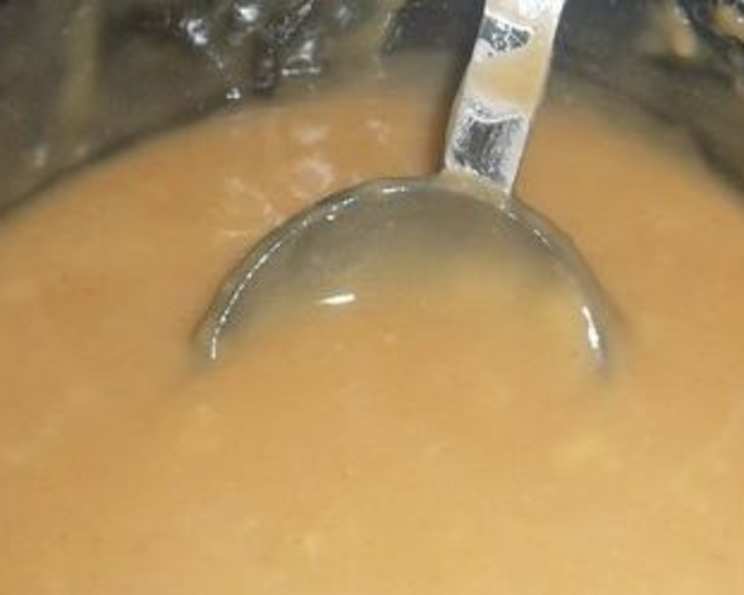
My Family’s Favorite Fried Chicken Gravy
Growing up, Sunday dinners were sacred, and they always featured my grandmother’s legendary fried chicken. But the star of the show, the unsung hero that elevated the crispy, golden bird to stratospheric heights, was her gravy. It wasn’t just any gravy; it was a rich, savory, peppery concoction, born from the glorious remnants of the frying pan, that transformed humble ingredients into liquid gold. To this day, the mere aroma of it simmering on the stove transports me back to those cherished family gatherings, filled with laughter, love, and the unparalleled comfort of home-cooked food.
Recipe Overview
- Prep Time: 5 minutes
- Cook Time: 15 minutes
- Total Time: 20 minutes
- Servings: 4-6
- Yields: 2 Cups
- Dietary Type: Varies (can be Gluten-Free with GF flour)
Ingredients
- 2-3 tablespoons pan drippings, from frying chicken, or 2-3 tablespoons cooking oil
- 1/4 cup flour, used for breading the chicken
- 1/4 cup all-purpose flour (or gluten-free all-purpose flour blend)
- 2 cups chicken broth or 2 cups water
- 1 chicken bouillon cube
- 1 – 1 1/2 teaspoons salt
- 1/4 – 1/2 teaspoon black pepper
- 1/4 teaspoon Accent seasoning (optional)
Equipment Needed
- Skillet
- Small bowl
- Whisk
Instructions
- Begin by crafting a roux. In an open skillet, heat the pan drippings (or cooking oil) over low heat. Add the flour that was used for breading the chicken. This is key for adding depth of flavor!
- Cook the flour and drippings mixture, stirring constantly, over low heat for 5 to 10 minutes. The goal is to achieve a slightly brown color. This careful browning process is crucial for developing the nutty, savory notes that define a great gravy. Be patient; don’t rush it, and watch carefully to prevent burning.
- While the roux is developing, prepare the liquid component. In a small bowl, combine the remaining all-purpose flour (or gluten-free blend) and the chicken broth (or water). Whisk until completely smooth, ensuring there are no lumps. A smooth slurry is essential for a silky, lump-free gravy.
- Crumble the chicken bouillon cube into the flour and broth mixture. Stir until the bouillon is dissolved. This adds an extra layer of savory richness to the gravy.
- Gradually pour the flour and broth mixture into the skillet with the roux. Using a whisk, stir vigorously to incorporate the liquids into the roux, creating a smooth paste. Whisk constantly to prevent lumps from forming. This step requires a bit of arm power, but the effort is well worth it.
- Bring the gravy to a boil over medium heat, stirring constantly. Once boiling, reduce the heat to low and continue to stir and cook for 3-5 minutes, or until the gravy thickens to your desired consistency. If the gravy becomes too thick, add a little more water or broth until it reaches the desired consistency.
- Season the gravy to taste with salt, black pepper, and Accent seasoning (if using). Start with the lesser amount of salt and pepper, then adjust to your preference. Remember, you can always add more seasoning, but you can’t take it away!
Expert Tips & Tricks
- Pan Drippings are King: While you can use cooking oil, the pan drippings from frying the chicken impart an unparalleled depth of flavor to the gravy. Don’t discard those precious remnants; they’re the secret ingredient!
- Temperature Control is Key: Keeping the heat low while making the roux prevents the flour from burning, which can result in a bitter gravy. Patience is key!
- Whisk, Whisk, Whisk: Constant whisking is essential for preventing lumps from forming in the gravy. A good whisk will be your best friend during this process.
- Make-Ahead Option: You can prepare the gravy ahead of time and store it in the refrigerator. When ready to serve, gently reheat it on the stovetop, adding a little extra broth or water if needed to thin it out.
- For extra depth of flavor, try adding a splash of hot sauce or Worcestershire sauce to the gravy during the last few minutes of cooking.
Serving & Storage Suggestions
Serve this delectable gravy immediately over freshly fried chicken, mashed potatoes, biscuits, or even a hearty slice of toast. The possibilities are endless!
Leftover gravy can be stored in an airtight container in the refrigerator for up to 3-4 days. To reheat, gently warm it on the stovetop over low heat, stirring occasionally. You may need to add a splash of broth or water to thin it out to your desired consistency. Avoid reheating gravy multiple times, as this can affect its texture and flavor.
Do not leave the gravy at room temperature for more than two hours.
Nutritional Information
(Estimated values per serving, based on using chicken broth and average ingredient quantities)
| Nutrient | Amount per Serving | % Daily Value |
|---|---|---|
| Calories | 120 kcal | 6% |
| Total Fat | 8g | 12% |
| Saturated Fat | 2g | 10% |
| Cholesterol | 5mg | 2% |
| Sodium | 800mg | 35% |
| Total Carbohydrate | 10g | 4% |
| Dietary Fiber | 1g | 4% |
| Sugars | 2g | N/A |
| Protein | 4g | 8% |
Variations & Substitutions
- Gluten-Free Gravy: Use a gluten-free all-purpose flour blend instead of all-purpose flour. Ensure the chicken broth is also gluten-free.
- Spicy Gravy: Add a pinch of cayenne pepper or a dash of your favorite hot sauce to the gravy for a spicy kick.
- Herb Gravy: Stir in some chopped fresh herbs, such as thyme, rosemary, or parsley, during the last few minutes of cooking.
- Mushroom Gravy: Sauté sliced mushrooms in the pan before making the roux for a flavorful mushroom gravy.
- Vegetarian Gravy: For a vegetarian option, skip the pan drippings and use olive oil or vegetable oil instead. Use vegetable broth in place of chicken broth.
FAQs (Frequently Asked Questions)
Q: Can I use water instead of chicken broth?
A: Yes, you can substitute water for chicken broth, but the gravy will be less flavorful. Consider adding an extra bouillon cube or a teaspoon of chicken bouillon powder to compensate.
Q: How do I prevent lumps in my gravy?
A: The key to preventing lumps is to whisk constantly while adding the liquid to the roux and to ensure the flour is fully incorporated into the liquid before adding it to the pan.
Q: Can I make this gravy ahead of time?
A: Yes, you can make the gravy ahead of time and store it in the refrigerator for up to 3-4 days. Reheat it gently on the stovetop, adding a little extra broth or water if needed to thin it out.
Q: What if my gravy is too thick?
A: If your gravy is too thick, simply add a little more chicken broth or water until it reaches your desired consistency.
Q: Can I freeze leftover gravy?
A: Yes, you can freeze leftover gravy in an airtight container for up to 2-3 months. Thaw it overnight in the refrigerator before reheating. The texture may change slightly after freezing, but it will still be delicious.
Final Thoughts
This fried chicken gravy is more than just a condiment; it’s a taste of home, a comforting reminder of family gatherings, and a testament to the magic that happens when simple ingredients are transformed with love and care. I encourage you to try this recipe and create your own cherished memories around the dinner table. Don’t be afraid to experiment with different seasonings and variations to make it your own. And, most importantly, enjoy the process of creating something truly special. This gravy pairs perfectly with crispy fried chicken, creamy mashed potatoes, and warm, fluffy biscuits. Let me know how yours turns out!