
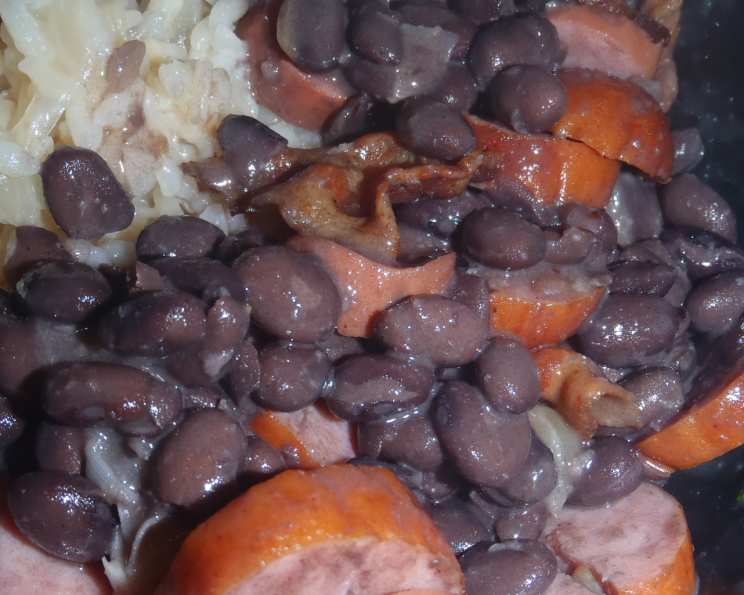
Feijoada: A Brazilian Celebration of Flavors
The memory is etched in my mind: the aroma of slow-cooked meats and earthy black beans filling my abuela’s tiny kitchen. It was her annual Feijoada feast, a tradition passed down through generations. As a child, I remember being mesmerized by the bubbling pot, a cauldron of culinary secrets. The rich, smoky smells would waft through the house, a fragrant promise of the joyous gathering to come. The warmth and laughter shared around that table, fueled by this hearty, soulful dish, cemented my love for Brazilian cuisine and the power of food to connect us.
Recipe Overview
- Prep Time: 12 hours (includes soaking)
- Cook Time: 3 hours
- Total Time: 15 hours
- Servings: 8-10
- Yield: Large pot of Feijoada
- Dietary Type: Not Gluten-Free, Not Dairy-Free
Ingredients
- 1 1⁄2 lbs small black turtle beans
- 1⁄2 lb Brazilian dried beef or 1/2 lb beef jerky
- 1 ham hock
- 1 lb pork ribs
- 1 lb smoked chorizo sausage or 1 lb other smoked sausage, spicy
- 1 lb beef sirloin or 1 lb smoked pork loin
- 1⁄2 lb slab smoked bacon
- 1⁄2 lb smoked pig (optional) or 1/2 lb beef tongue (optional)
- 1⁄4 cup vegetable oil
- 2 onions, finely chopped
- 3 garlic cloves, mashed
- 1⁄3 cup parsley, chopped
- 1 1⁄2 teaspoons cumin
- 1 bay leaf
- Salt and pepper, to taste
Equipment Needed
- Large pot
- Large bowl
- Skillet
- Cutting board
- Knife
- Masher or potato ricer
Instructions
- Begin the preparation the night before. Soak the beans overnight in a large bowl filled with cold water. This crucial step helps to soften the beans and reduce cooking time.
- In a separate bowl, soak the beef jerky (or Brazilian dried beef) overnight as well. Be sure to change the water 2 or 3 times during the soaking process. This will remove excess salt from the jerky.
- The next day, drain the soaked beans and transfer them to a large pot. Cover the beans with fresh water, ensuring they are submerged.
- Add the ham hock and the soaked beef jerky to the pot with the beans.
- Simmer the mixture over medium heat for approximately 2 hours, or until the beans are cooked through but still firm, not mushy. Periodically check the water level and add more hot water if necessary to keep the beans covered.
- Once the beans have simmered, carefully remove the ham hock from the pot. The ham hock has imparted its flavor and can now be discarded.
- Now it’s time to add the remaining meats. Add the pork ribs, smoked chorizo sausage (or other smoked sausage), beef sirloin (or smoked pork loin), slab smoked bacon, and the optional smoked pig (or beef tongue) to the pot with the beans. Don’t forget to add the bay leaf for additional aroma.
- Simmer the entire mixture for another 30 minutes, allowing the flavors of the different meats to meld together. Again, monitor the water level and add hot water as needed to maintain an inch of water above the beans.
- While the Feijoada is simmering, prepare the flavor base. Heat the vegetable oil in a skillet over medium heat.
- Add the finely chopped onions and mashed garlic cloves to the skillet. Cook them until they are soft and golden brown, releasing their aromatic oils. This will typically take about 5-7 minutes.
- Stir in the chopped parsley and season the mixture with cumin, salt, and pepper to taste.
- Once the onion and garlic mixture is fragrant, carefully add approximately 3/4 cup of the bean mixture from the large pot to the skillet.
- Using a masher or potato ricer, mash the beans in the skillet with the onions, garlic, and spices until you have a thick, flavorful paste.
- Add this mashed bean mixture back to the large pot containing the beans and the meats. This step will thicken the Feijoada and enhance its overall flavor.
- Simmer the entire mixture for another 30 minutes, allowing the flavors to fully combine and deepen. Stir occasionally to prevent sticking.
- After the final simmering period, remove the meats from the beans using tongs or a slotted spoon.
- Cut the meats into smaller pieces or thin slices, depending on your preference. The goal is to make them easier to serve and eat.
- Arrange the cut meats on a platter, grouping them by type for an appealing presentation.
- Serve the beans in a separate bowl, allowing guests to ladle them onto their plates.
- Feijoada is traditionally served with Brazilian-style rice, collard greens, pepper sauce, and orange slices. The rice provides a neutral base, the collard greens offer a touch of bitterness, the pepper sauce adds heat, and the orange slices provide a refreshing citrus contrast.
Expert Tips & Tricks
- For a richer, deeper flavor, consider using a combination of smoked and fresh meats.
- If you can’t find Brazilian dried beef, beef jerky is a suitable substitute. However, be sure to soak it thoroughly to remove excess salt.
- To save time, you can use canned black beans. However, the flavor will not be as complex as using dried beans. If using canned beans, reduce the initial simmering time to about 30 minutes.
- Don’t be afraid to experiment with different types of smoked sausages. Andouille sausage or Spanish chorizo can add a unique flavor dimension.
- If you find that your Feijoada is too thick, simply add more hot water to reach your desired consistency.
- For a spicier Feijoada, add a pinch of cayenne pepper or a few chopped chili peppers to the skillet with the onions and garlic.
- To intensify the smoky flavor, consider adding a few drops of liquid smoke to the Feijoada during the final simmering period.
Serving & Storage Suggestions
Serve Feijoada hot, directly from the pot or serving bowls. Present the meats attractively on a platter, alongside the rice, collard greens, pepper sauce, and orange slices.
Leftover Feijoada can be stored in an airtight container in the refrigerator for up to 3 days. It can also be frozen for up to 2 months. To reheat, thaw the Feijoada in the refrigerator overnight (if frozen) and then gently heat it in a pot over medium heat, stirring occasionally, until warmed through. You may need to add a little water if it has thickened during storage.
Nutritional Information
| Nutrient | Amount per Serving | % Daily Value |
|---|---|---|
| Calories | 2536.6 kcal | N/A |
| Calories from Fat | 1534 g | 61% |
| Total Fat | 170.5 g | 262% |
| Saturated Fat | 64.9 g | 324% |
| Cholesterol | 834.9 mg | 278% |
| Sodium | 2651 mg | 110% |
| Total Carbohydrate | 5.5 g | 1% |
| Dietary Fiber | 0.6 g | 2% |
| Sugars | 2 g | 7% |
| Protein | 230.6 g | 461% |
Note: Nutritional information is an estimate and may vary based on specific ingredients and preparation methods.
Variations & Substitutions
- Vegetarian Feijoada: Substitute the meats with smoked tofu, mushrooms, and other hearty vegetables. Use vegetable broth instead of water.
- Spicy Feijoada: Add more chili peppers or hot sauce to the skillet with the onions and garlic.
- Coastal Feijoada: Include seafood such as shrimp or mussels in addition to the meats.
- Regional Variations: Explore different regional variations of Feijoada, such as those from Bahia or Minas Gerais, which may include different types of beans, meats, and spices.
FAQs (Frequently Asked Questions)
Q: Can I make Feijoada in a slow cooker?
A: Yes, Feijoada can be made in a slow cooker. Simply combine all the ingredients in the slow cooker and cook on low for 8-10 hours, or on high for 4-6 hours.
Q: Is it necessary to soak the beans overnight?
A: Soaking the beans overnight is highly recommended as it helps to soften them and reduce cooking time. However, if you’re short on time, you can use the quick-soak method by boiling the beans for 2 minutes, then letting them sit for an hour before draining and cooking.
Q: Can I use different types of beans?
A: While small black turtle beans are traditional, you can experiment with other types of beans such as kidney beans or pinto beans. However, the flavor and texture will be slightly different.
Q: What is Brazilian dried beef, and where can I find it?
A: Brazilian dried beef, also known as carne seca or charque, is a type of sun-dried and salted beef. It can be found in Latin American grocery stores or online retailers. If you can’t find it, beef jerky is a suitable substitute.
Q: How do I know when the Feijoada is ready?
A: The Feijoada is ready when the beans are tender and the meats are cooked through and easily shredded. The liquid should be thick and flavorful.
Final Thoughts
Feijoada is more than just a dish; it’s a culinary experience that embodies the spirit of Brazil – vibrant, communal, and full of life. The symphony of flavors and textures, from the smoky meats to the earthy beans, creates a truly unforgettable meal. Gather your loved ones, embrace the slow cooking process, and savor the joy of sharing this Brazilian treasure. Don’t be afraid to experiment with variations and make it your own. And please, share your creations and experiences – I’d love to hear how your Feijoada journey unfolds!