
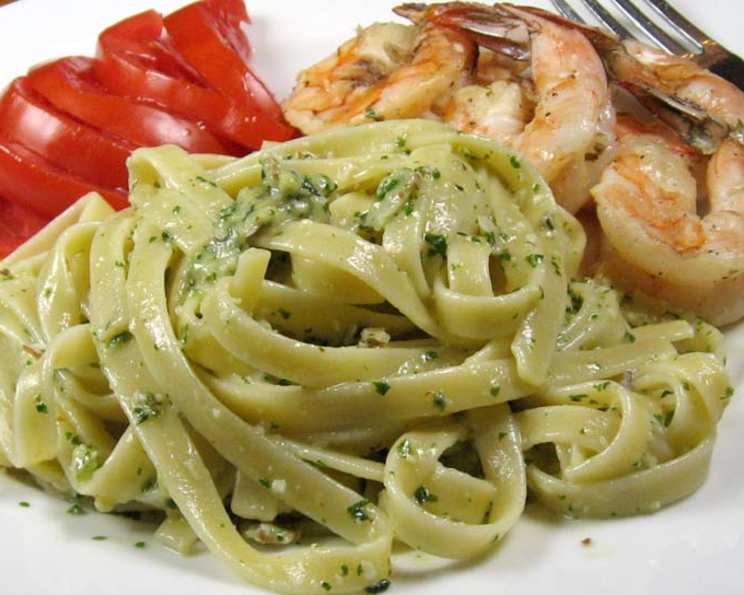
Fettuccine With Pesto Sauce: A Taste of Italian Sunshine
The first time I had authentic pesto, I was a wide-eyed culinary student backpacking through Italy. It wasn’t in a fancy restaurant, but at a tiny trattoria in Genoa, the birthplace of pesto. The aroma alone – fragrant basil mingling with garlic, pine nuts, and Parmesan – was intoxicating. Then came the taste: a vibrant explosion of fresh, herbaceous flavors that coated the perfectly cooked pasta. It was simple, rustic, and utterly divine. That experience forever changed my perception of pesto, and I’ve been striving to recreate that magic ever since. This recipe comes incredibly close.
Recipe Overview
- Prep Time: 10 minutes
- Cook Time: 10 minutes
- Total Time: 20 minutes
- Servings: 4-6
- Yield: 4-6 servings
- Dietary Type: Vegetarian
Ingredients
- 2 cups packed fresh basil leaves
- 2-3 garlic cloves, minced
- 1/2 cup pine nuts
- 1 1/4 cups extra virgin olive oil
- 1/2 cup grated Parmesan cheese
- 1/2 cup grated Pecorino Romano cheese
- 1 lb fettuccine
Equipment Needed
- Food processor
- Large pot
- Colander
Instructions
-
Begin by preparing the pesto. In a food processor, combine the basil, minced garlic, pine nuts, Parmesan cheese, and Pecorino Romano cheese. Process for about 15 seconds, until the ingredients are coarsely chopped and combined.
-
With the processor still running, slowly pour the extra virgin olive oil through the feed tube in a steady stream. Continue processing until the mixture is smooth and emulsified. This should take a few more seconds. Be patient and let the oil fully incorporate for the best texture.
-
Once the pesto is ready, set it aside. Now it’s time to cook the fettuccine. Fill a large pot with salted water and bring it to a rolling boil. The water should be generously salted – think “salty like the sea.”
-
Add the fettuccine to the boiling water and cook according to the package directions, or until al dente. “Al dente” means “to the tooth” in Italian, indicating that the pasta should be firm to the bite. This usually takes around 8-10 minutes. Check the pasta frequently during the last few minutes of cooking to ensure it doesn’t overcook.
-
Once the fettuccine is cooked to your liking, drain it well in a colander. Be sure to reserve about 1/2 cup of the pasta water before draining. This starchy water can be used to adjust the consistency of the sauce if needed.
-
Immediately transfer the drained fettuccine back to the pot. Add a portion of the freshly made pesto sauce to the pasta. Start with a small amount, about 1/2 cup, and gently toss to coat the pasta evenly.
-
Continue adding pesto, a little at a time, until the pasta is thoroughly coated and has reached your desired level of sauciness. Remember, you can always add more, but you can’t take it away! If the sauce seems too thick, add a splash or two of the reserved pasta water to loosen it up.
-
Serve the fettuccine with pesto sauce immediately. Garnish with extra grated Parmesan or Pecorino Romano cheese, if desired.
Expert Tips & Tricks
- Garlic Intensity: Be mindful of the amount of garlic you use. Adding more garlic will increase the heat and intensity of the pesto. Start with two cloves and taste, then add the third if you prefer a stronger flavor.
- Toasting Pine Nuts: Toasting the pine nuts before adding them to the food processor enhances their nutty flavor. Spread them on a baking sheet and toast in a 350°F (175°C) oven for 5-7 minutes, or until lightly golden. Watch them carefully, as they can burn quickly.
- Basil Quality: The quality of the basil directly impacts the flavor of the pesto. Use fresh, vibrant green basil leaves, and avoid any that are wilted or discolored.
- Blanching Basil: To preserve the vibrant green color of the pesto, blanch the basil leaves briefly in boiling water for a few seconds, then immediately plunge them into an ice bath. This stops the cooking process and helps maintain their color. Pat them dry before adding them to the food processor.
- Freezing Pesto: Pesto freezes beautifully. Portion it into ice cube trays, freeze until solid, then transfer the cubes to a freezer bag. This allows you to thaw only the amount you need.
- Pesto Consistency: Some people prefer a chunkier pesto, while others prefer a smoother consistency. Adjust the processing time in the food processor to achieve your desired texture.
Serving & Storage Suggestions
Serve the fettuccine with pesto sauce hot, as soon as it’s prepared. A simple green salad and crusty bread make a perfect accompaniment. It also pairs well with grilled chicken or fish.
Leftover pesto can be stored in an airtight container in the refrigerator for up to 3-4 days. To prevent browning, pour a thin layer of olive oil over the surface of the pesto before refrigerating.
Cooked pasta with pesto is best eaten immediately. However, leftovers can be stored in the refrigerator for up to 2 days. Reheat gently in a saucepan over low heat, adding a little milk or broth if needed to prevent it from drying out.
Nutritional Information
| Nutrient | Amount per Serving | % Daily Value |
|---|---|---|
| Calories | 1210 kcal | N/A |
| Calories from Fat | 790 kcal | 65% |
| Total Fat | 88g | 135% |
| Saturated Fat | 14g | 68% |
| Cholesterol | 107mg | 35% |
| Sodium | 218mg | 9% |
| Total Carbohydrate | 85g | 28% |
| Dietary Fiber | 5g | 20% |
| Sugars | 3g | 11% |
| Protein | 24g | 47% |
Note: Nutritional information is an estimate and may vary based on specific ingredients and portion sizes.
Variations & Substitutions
- Vegan Pesto: For a vegan version, substitute the Parmesan and Pecorino Romano cheeses with nutritional yeast. Add a tablespoon or two at a time until you achieve the desired cheesy flavor.
- Nut-Free Pesto: Replace the pine nuts with sunflower seeds or pumpkin seeds.
- Lemon Pesto: Add the zest and juice of one lemon to the pesto for a bright, citrusy twist.
- Sun-Dried Tomato Pesto: Add 1/2 cup of sun-dried tomatoes, packed in oil and drained, to the pesto for a richer, more intense flavor.
- Different Pasta Shapes: While fettuccine is a classic pairing for pesto, you can also use other pasta shapes such as linguine, spaghetti, or penne.
FAQs (Frequently Asked Questions)
Q: Can I use pre-grated Parmesan cheese for the pesto?
A: While pre-grated cheese is convenient, freshly grated Parmesan and Pecorino Romano will give you the best flavor and texture.
Q: How can I prevent my pesto from turning brown?
A: Exposure to air causes pesto to oxidize and turn brown. To prevent this, press a piece of plastic wrap directly onto the surface of the pesto before storing it in the refrigerator.
Q: Can I make pesto in a blender instead of a food processor?
A: Yes, you can use a blender, but be careful not to over-process the ingredients. Blend in short bursts, scraping down the sides as needed, until the pesto reaches your desired consistency.
Q: How long does homemade pesto last?
A: Homemade pesto will last for 3-4 days in the refrigerator, stored in an airtight container.
Q: Can I use frozen basil for pesto?
A: Fresh basil is always best for pesto, but in a pinch, you can use frozen basil. Thaw it completely and pat it dry before adding it to the food processor.
Final Thoughts
This Fettuccine with Pesto Sauce is a celebration of simple, fresh ingredients and vibrant flavors. Don’t be intimidated by making your own pesto – it’s surprisingly easy and the results are well worth the effort. Experiment with different variations and find your perfect pesto. I encourage you to try this recipe, share it with your loved ones, and let me know what you think. Pair it with a crisp glass of white wine and transport yourself to the sunny shores of Italy!