
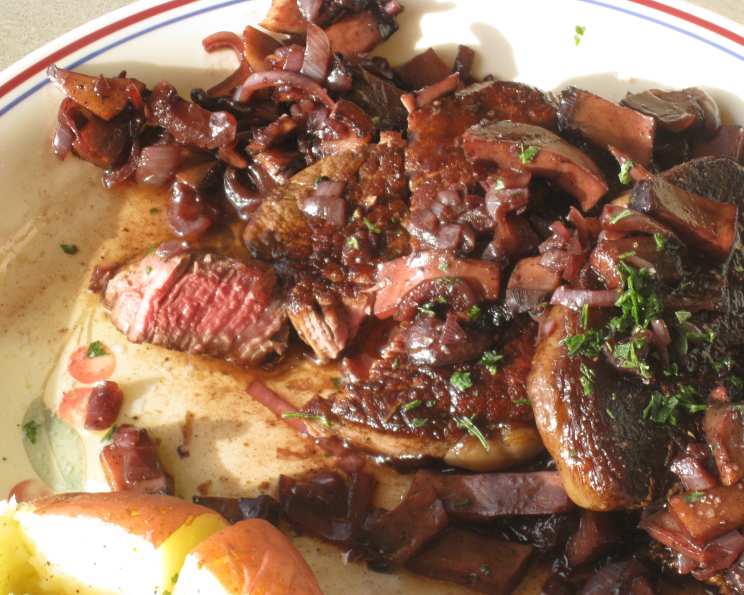
Filet Mignon Au Bordelaise: A Steakhouse Classic at Home
The scent of shallots sizzling in butter, mingling with the rich aroma of red wine, always transports me back to my early days in culinary school. Our chef instructor, a formidable but ultimately kind woman, insisted we master this classic French sauce. She declared, with a twinkle in her eye, that knowing how to create a perfect Bordelaise was essential for any aspiring chef—a gateway to understanding the art of transforming simple ingredients into something truly extraordinary. The first time I tasted the final product, a velvety sauce clinging to a perfectly seared filet, I understood exactly what she meant.
Recipe Overview
- Prep Time: 10 minutes
- Cook Time: 10 minutes
- Total Time: 20 minutes
- Servings: 4
- Dietary Type: Gluten-Free (naturally)
Ingredients
- 2 tablespoons butter
- 1 1/2 tablespoons vegetable oil
- 4 (6-8 ounce) high-quality filet of beef
- 10 ounces fresh mushrooms, in 1/4 to 1/2-inch thick slices (Use any variety that looks fresh and appealing—cremini, shiitake, or button mushrooms all work well)
- 4 shallots, finely chopped
- 1/2 cup dry red wine (A good quality Cabernet Sauvignon or Merlot is recommended)
- 3 tablespoons cognac (or brandy)
- 1/4 cup demi-glace (or 1/4 cup beef stock)
- 2 tablespoons softened butter
- Sea salt & freshly ground black pepper
- Crumbled Roquefort cheese (optional)
- 2 tablespoons snipped fresh parsley
- Fresh rosemary, for garnish
Equipment Needed
- Heavy skillet (cast iron or stainless steel preferred)
- Tongs
- Cutting board
- Sharp knife
- Small bowl
Instructions
- Begin by prepping your ingredients. Ensure the filet mignon steaks are patted dry with paper towels. This will help achieve a beautiful sear. Season them generously with sea salt and freshly ground black pepper on both sides.
- Place a heavy skillet over high heat. Add the butter and vegetable oil. Allow the butter to melt completely and begin to foam. The pan should be very hot – this is crucial for developing a nice crust on the steak. Wait until the butter foam begins to subside; this indicates that the pan is at the optimal temperature for searing.
- Carefully place the filet mignon steaks into the hot skillet. Be sure not to overcrowd the pan; work in batches if necessary to maintain the high heat.
- Fry the steak on one side for 4 to 5 minutes, without moving it. This allows a golden-brown crust to form.
- Turn the steak using tongs and brown on the other side for another 4 to 5 minutes for medium-rare, or longer depending on your desired degree of doneness. For medium, cook for an additional 2-3 minutes per side; for medium-well, another 3-4 minutes.
- Test for doneness by gently pressing the center of the steak. It should yield slightly to the touch for medium-rare. If you prefer a more precise method, you can use a meat thermometer. Medium-rare is around 130-135°F (54-57°C), medium is 135-145°F (57-63°C), and medium-well is 145-155°F (63-68°C). You can also cut a small incision in the steak, but try to keep it minimal, about the same size a meat thermometer would make.
- Remove the steak to a hot platter and sprinkle lightly with additional coarse sea salt and freshly-ground black pepper.
- Keep the steak warm by covering it loosely with foil and placing it in a preheated 250°F (120°C) oven while you prepare the sauce. This allows the steak to rest and the juices to redistribute, resulting in a more tender and flavorful final product.
- Return the skillet to the stovetop and reduce the heat slightly to medium-high. Add the sliced fresh mushrooms and cook, stirring occasionally, until they have softened and released their moisture, about 5-7 minutes.
- Add the finely chopped shallots to the skillet and cook for another 2-3 minutes, until they are translucent and fragrant.
- Pour in the dry red wine and cognac (or brandy). Be careful, as the cognac may flame up. If it does, simply allow the flames to subside on their own.
- Add the demi-glace (or beef stock) to the skillet.
- Scrape up any browned bits from the bottom of the pan using a wooden spoon or spatula. These bits, known as fond, are packed with flavor and will add depth to the sauce.
- Bring the sauce to a boil and cook over high heat, stirring occasionally, until the liquid is reduced almost to a syrup, about 5-7 minutes. The sauce should be thick enough to coat the back of a spoon.
- Remove the skillet from the heat and stir in the softened butter until it has melted and emulsified into the sauce, creating a glossy and rich finish.
- Remove the filet mignon from the oven and place it on serving plates.
- Pour the Bordelaise sauce generously over the steak.
- Top with a dab of crumbled Roquefort cheese, if desired, for a salty and pungent contrast to the rich sauce.
- Sprinkle with snipped fresh parsley and garnish with a sprig of fresh rosemary, if desired, for visual appeal.
Expert Tips & Tricks
- Achieving the Perfect Sear: The key to a great sear is a hot pan and dry steak. Pat the steaks dry with paper towels to remove excess moisture, which can inhibit browning.
- Don’t Overcrowd the Pan: Overcrowding the pan lowers the temperature, preventing the steak from searing properly. Cook in batches if necessary.
- Resting the Steak: Resting the steak is crucial for tender results. Allowing the steak to rest before slicing allows the juices to redistribute throughout the meat.
- Elevating the Sauce: For an even richer Bordelaise, consider adding a tablespoon of beef marrow to the sauce during the reduction process. This will impart a deep, savory flavor.
- Flame Broiling: To add a flame-broiled flavour try using a kitchen blowtorch on the steaks, after searing.
Serving & Storage Suggestions
Serve the Filet Mignon Au Bordelaise immediately while it’s hot and the sauce is at its best. This dish pairs wonderfully with creamy mashed potatoes, roasted asparagus, or a simple green salad.
Leftovers can be stored in an airtight container in the refrigerator for up to 3 days. To reheat, gently warm the steak and sauce in a skillet over low heat, or in a microwave. Be careful not to overcook the steak when reheating. Freezing is not recommended, as it can affect the texture of the steak and sauce.
Nutritional Information
| Nutrient | Amount per Serving | % Daily Value |
|---|---|---|
| Calories | 701 kcal | 35% |
| Total Fat | 58g | 89% |
| Saturated Fat | 24g | 120% |
| Cholesterol | 151mg | 50% |
| Sodium | 197mg | 8% |
| Total Carbohydrate | 7g | 3% |
| Dietary Fiber | 1g | 3% |
| Sugars | 1g | – |
| Protein | 34g | 68% |
Note: Nutritional information is an estimate and may vary based on specific ingredients and cooking methods.
Variations & Substitutions
- Gluten-Free: This recipe is naturally gluten-free, but be sure to use gluten-free beef stock or demi-glace if you are concerned about cross-contamination.
- Dairy-Free: Omit the butter and Roquefort cheese. Use olive oil instead of butter for cooking the steak and sauce.
- Vegetarian Bordelaise: While not a steak dish anymore, you can adapt the Bordelaise sauce to serve over grilled portobello mushrooms or roasted vegetables for a vegetarian option. Use vegetable broth instead of beef stock.
- Seasonal Variations: Incorporate seasonal ingredients into the sauce. For example, add roasted chestnuts in the fall or fresh herbs like thyme or sage during the winter months.
FAQs (Frequently Asked Questions)
Q: Can I make the Bordelaise sauce ahead of time?
A: Yes, you can make the sauce up to 2 days in advance. Store it in an airtight container in the refrigerator and reheat gently before serving.
Q: What if I don’t have demi-glace?
A: If you don’t have demi-glace, you can use beef stock as a substitute. However, the flavor will be less intense. You can also try reducing the beef stock for a longer period of time to concentrate the flavor.
Q: Can I use a different cut of steak?
A: While filet mignon is the classic choice, you can use other tender cuts of beef such as ribeye or New York strip. Adjust the cooking time accordingly.
Q: How do I know when the steak is cooked to the right temperature?
A: The best way to ensure your steak is cooked to your liking is to use a meat thermometer. Insert the thermometer into the thickest part of the steak, avoiding any bone.
Q: Can I add other vegetables to the sauce?
A: Yes, you can add other vegetables to the sauce. Diced carrots, celery, or leeks can be added along with the shallots for a more complex flavor.
Final Thoughts
Filet Mignon Au Bordelaise is more than just a meal; it’s an experience. The combination of tender steak and rich, savory sauce is a symphony of flavors that will impress your guests and elevate any occasion. Don’t be intimidated by the fancy name – this dish is surprisingly easy to make at home with just a few simple ingredients. I encourage you to give it a try and share your own culinary masterpiece. Perhaps pair it with a crisp Cabernet Sauvignon to truly elevate your dining experience. Bon appétit!