
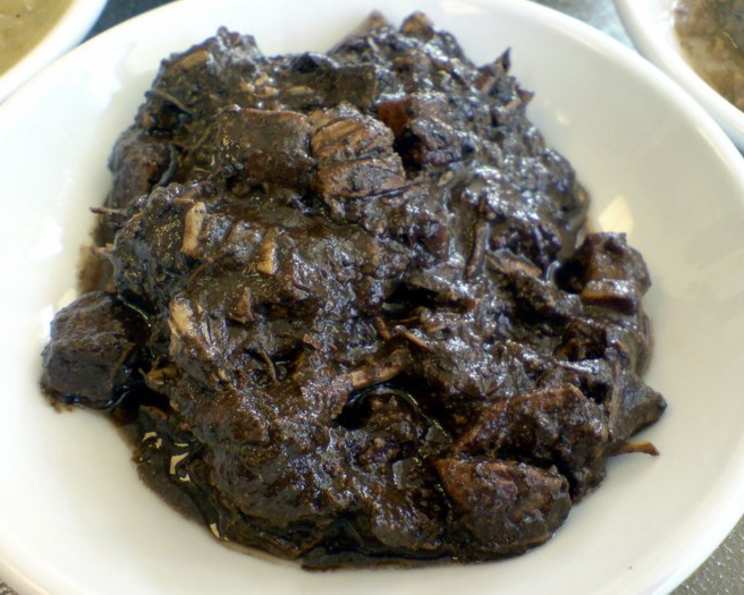
Dinuguan: A Taste of Filipino Comfort
My earliest memories of dinuguan are tied to the scent of my grandmother’s kitchen. The tangy, savory aroma would fill the house, a comforting signal that something truly special was simmering on the stove. As a child, I was hesitant to try this dish known as “chocolate meat,” but the rich, complex flavors quickly won me over. It became a family favorite, a symbol of warmth, tradition, and the undeniable magic of Filipino cuisine.
Recipe Overview
- Prep Time: 20 minutes
- Cook Time: 45 minutes
- Total Time: 1 hour 5 minutes
- Servings: 4-6
- Dietary Type: Not Gluten-Free
Ingredients
- 1 1⁄2 lbs pork belly (pork butt is fine)
- 10 ounces edible pork blood (found in most international grocery store’s freezer aisle)
- 2 cups chicken stock (water is fine)
- 1 cup cane vinegar (I use Datu-Puti brand)
- 3 tablespoons fish sauce
- 4 garlic cloves, peeled and smashed
- 1 medium onion, sliced thinly
- 1 bay leaf
- 4 jalapenos, sliced
- 1⁄2 tablespoon ground black pepper
- Accent seasoning, to taste (optional)
- 1⁄2 tablespoon kosher salt
- Oil, for sauteing
Equipment Needed
- Large pot or Dutch oven
- Strainer
- Cutting board
- Knife
Instructions
-
Begin by preparing the pork blood. Use a strainer to separate the liquid blood from the jelly-like clots. Place the jelly-like clots in a separate bowl.
-
Add ¼ cup of water to the bowl containing the jellied pork blood. Use your hands to break up the clots until they are fully dissolved in the water. Set aside.
-
Slice the pork belly into small, bite-sized pieces and set aside. The smaller the pieces, the faster they will cook and absorb the flavors of the sauce.
-
Heat 1 tablespoon of oil in a large pot or Dutch oven over medium heat. Add the pork, spreading it evenly on the bottom of the pot. This will help with browning. Cover the pot and let the pork cook undisturbed on medium-low heat for about 3 minutes. This allows the pork to render some of its fat and develop a rich flavor.
-
Remove the cover and stir the pork. Drain any liquid that has accumulated in the pot. This helps to prevent the pork from steaming instead of browning. Add the smashed garlic and sauté for about 1 minute, or until fragrant. Then, add the thinly sliced onions, stir, and cover the pot again.
-
Let the onions cook for another minute, or until they become translucent. This will soften them and release their sweetness into the dish. Next, add the fish sauce and bay leaf. Sauté for about 3 minutes, stirring occasionally, allowing the flavors to meld together. The fish sauce adds a savory umami depth to the dinuguan.
-
Pour in ½ cup of cane vinegar, cover the pot, and bring the mixture to a boil. Once boiling, immediately lower the heat to a simmer. This is crucial to prevent the vinegar from overpowering the dish. Let it simmer for 3 minutes. The vinegar helps to tenderize the meat and balances the richness of the blood.
-
Add the chicken stock (or water) and kosher salt. Stir well to combine. Let the mixture simmer for 5 minutes, allowing the flavors to further develop.
-
Now it’s time to add the pork blood. First, add the dissolved jelly-like pork blood to the pot, stirring continuously for about 1 minute. This helps to thicken the sauce and create a smooth, velvety texture. Then, add the remaining liquid pork blood and the sliced jalapenos.
-
Continue to stir the mixture for about 2 minutes to ensure the pork blood is well incorporated. Cover the pot and let it simmer for another 5 minutes. This allows the dinuguan to thicken and the flavors to meld.
-
Pour in the remaining ½ cup of vinegar. Cover the pot once more and let it simmer for an additional 5 minutes. Taste the sauce and adjust the seasoning as needed by adding more salt and pepper. If desired, you can add a pinch of Accent seasoning for extra flavor.
-
The dinuguan is ready when the pork is tender and the sauce has thickened to a rich, chocolate-like consistency. Serve hot with steamed white rice.
Expert Tips & Tricks
- Don’t Overcook: Overcooking the dinuguan can result in a grainy texture. Simmering gently and stirring occasionally is key.
- Vinegar is Key: Adding the vinegar in stages, as directed, helps to mellow its acidity and prevents it from overwhelming the other flavors.
- Spice It Up: Adjust the amount of jalapenos according to your preference for heat. You can also add other types of chili peppers for a more complex flavor.
- Pork Variations: While pork belly is traditional, pork shoulder or even lean pork can be used. Adjust cooking time based on the cut of pork you choose.
Serving & Storage Suggestions
Serve dinuguan hot with steamed white rice for a truly satisfying Filipino meal. It can also be served as a pulutan (appetizer) with a side of pandesal (Filipino bread rolls).
Leftover dinuguan should be stored in an airtight container in the refrigerator. It will keep for up to 3-4 days. You can also freeze it for longer storage (up to 2 months). To reheat, simply warm it in a pot over medium heat, stirring occasionally, or microwave until heated through.
Nutritional Information
| Nutrient | Amount per Serving | % Daily Value |
|---|---|---|
| Calories | 963 kcal | N/A |
| Calories from Fat | 827 g | 86% |
| Total Fat | 91.9 g | 141% |
| Saturated Fat | 33.4 g | 166% |
| Cholesterol | 126.3 mg | 42% |
| Sodium | 2161.5 mg | 90% |
| Total Carbohydrate | 9.8 g | 3% |
| Dietary Fiber | 1.1 g | 4% |
| Sugars | 4.2 g | 16% |
| Protein | 20.3 g | 40% |
Note: Nutritional information is an estimate and may vary based on specific ingredients and cooking methods.
Variations & Substitutions
- Chicken Dinuguan: Substitute the pork with chicken for a lighter version.
- Seafood Dinuguan: Some regions use squid or other seafood in their dinuguan.
- Vegetarian Dinuguan: While not traditional, some vegetarian adaptations use eggplant or mushrooms as the base, with a vegetarian blood substitute. However, the authentic flavor will be very different.
- Spicy Dinuguan: Add more jalapenos or other chili peppers for a spicier kick.
- Coconut Milk Dinuguan: For a richer, creamier version, add a can of coconut milk during the last 10 minutes of cooking.
FAQs (Frequently Asked Questions)
Q: Is dinuguan really made with blood?
A: Yes, authentic dinuguan is made with pork blood, which gives it its unique flavor and rich, dark color. The blood is cooked thoroughly, making it safe to eat.
**Q: Where can I find **pork blood?
A: Pork blood is typically found in the freezer section of international grocery stores, particularly those specializing in Asian or Latin American ingredients.
Q: Can I use regular vinegar instead of cane vinegar?
A: While you can use regular white vinegar, cane vinegar (like Datu Puti brand) is preferred for its milder, slightly sweet flavor that complements the other ingredients in dinuguan.
Q: How do I know when the dinuguan is cooked properly?
A: The pork should be tender and the sauce should be thick and have a rich, dark, chocolate-like color. The sauce should coat the back of a spoon.
Q: Can I make dinuguan ahead of time?
A: Yes, dinuguan can be made a day or two in advance. The flavors will actually meld together even more, making it even tastier. Store it in an airtight container in the refrigerator and reheat before serving.
Final Thoughts
Dinuguan is more than just a dish; it’s a cultural experience. It might sound intimidating at first, but I urge you to try this unique and flavorful Filipino delicacy. The rich, savory, and slightly tangy taste is truly unforgettable. Don’t be afraid to experiment with the variations and adjust the recipe to your liking. I hope this recipe brings you as much comfort and joy as it has brought my family for generations. Kain na! (Let’s eat!)