
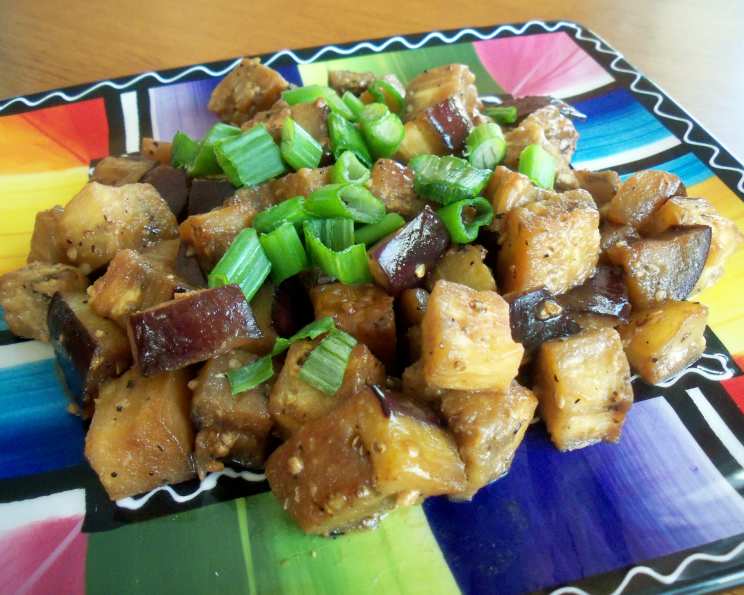
Filipino Eggplant Adobo: A Taste of Home
The scent of adobo always brings me back to my grandmother’s kitchen in Manila. I can almost see her now, her brow furrowed in concentration as she stirred a simmering pot, the aromas of soy sauce, vinegar, and garlic swirling around her like a fragrant cloud. While chicken or pork adobo was a common sight, her eggplant adobo held a special place in my heart. It was simpler, perhaps, but no less satisfying, a comforting reminder of her love and the flavors of my childhood.
Recipe Overview
- Prep Time: 40 minutes
- Cook Time: 12 minutes
- Total Time: 52 minutes
- Servings: 5
- Dietary Type: Vegetarian, potentially Vegan (depending on soy sauce)
Ingredients
- 5 cups diced eggplants, cut in 1 1/2-inch cubes
- 1 pinch salt (optional)
- 1/3 cup vegetable oil
- 1/3 cup soy sauce
- 1/4 cup red wine vinegar
- 6 garlic cloves, minced
- 1/2 teaspoon fresh ground black pepper
Equipment Needed
- Paper towels
- Non-stick skillet
- Small saucepan
- Measuring cups and spoons
Instructions
- Begin by preparing the eggplant. Spread the diced eggplant on several layers of paper towels and sprinkle with a pinch of salt. This step helps to draw out excess moisture, resulting in a better texture when cooked.
- Let the eggplant drain for approximately 30 minutes. This is a crucial step; don’t skip it!
- After 30 minutes, thoroughly rinse the eggplant under cold water to remove the excess salt and any bitter flavors. Pat the eggplant dry with fresh paper towels. Ensure the eggplant is as dry as possible for optimal frying.
- Heat 1/3 cup of vegetable oil in a non-stick skillet over medium-high heat. Ensure the skillet is hot before adding the eggplant.
- Fry the eggplant in the hot oil until it is nicely browned on all sides. Work in batches if necessary to avoid overcrowding the pan, which can lower the oil temperature and result in steamed rather than fried eggplant.
- Once the eggplant is browned, remove it from the skillet and set it aside.
- In a small saucepan, combine 1/3 cup soy sauce, 1/4 cup red wine vinegar, 6 minced garlic cloves, and 1/2 teaspoon fresh ground black pepper.
- Bring the mixture to a simmer over medium heat. Let it simmer for about 5 minutes, allowing the flavors to meld together beautifully.
- Add the browned eggplant to the saucepan with the simmering sauce.
- Cover the saucepan, reduce the heat to low, and cook for an additional 7 minutes, stirring occasionally to ensure the eggplant is evenly coated with the sauce and doesn’t stick to the bottom of the pan. The sauce should thicken slightly and the eggplant should become tender.
- After 7 minutes, remove the pan from the heat. Your Filipino Eggplant Adobo is ready to be served.
Expert Tips & Tricks
- Salting the Eggplant: Don’t underestimate the importance of salting the eggplant beforehand. This step helps remove excess moisture, preventing the eggplant from becoming soggy during cooking.
- Browning is Key: Achieve a good sear on the eggplant during frying. This not only adds flavor but also improves the overall texture.
- Soy Sauce Choice: Opt for a good-quality soy sauce. Different brands have varying levels of saltiness, so adjust accordingly to your taste.
- Vinegar Balance: Red wine vinegar offers a subtle tanginess, but you can experiment with other vinegars like apple cider vinegar or even cane vinegar for a more authentic Filipino flavor.
- Garlic Infusion: For a deeper garlic flavor, sauté the minced garlic in a little oil before adding the soy sauce and vinegar. Be careful not to burn the garlic.
- Spice It Up: If you like a bit of heat, add a pinch of red pepper flakes or a finely chopped chili pepper to the sauce.
- Make-Ahead Tip: The adobo sauce can be prepared a day in advance. Store it in the refrigerator and add the eggplant just before cooking.
Serving & Storage Suggestions
Serve your Filipino Eggplant Adobo hot, ideally with a generous serving of steamed rice to soak up the flavorful sauce. It’s also delicious served as a side dish alongside grilled meats or fish.
Leftovers can be stored in an airtight container in the refrigerator for up to 3 days. Reheat gently in a skillet over low heat or in the microwave until warmed through. While freezing is possible, the texture of the eggplant may change upon thawing, becoming slightly softer.
Nutritional Information
| Nutrient | Amount per Serving | % Daily Value |
|---|---|---|
| Calories | 167.8 kcal | N/A |
| Calories from Fat | 132 g | 79% |
| Total Fat | 14.7 g | 22% |
| Saturated Fat | 1.9 g | 9% |
| Cholesterol | 0 mg | 0% |
| Sodium | 1074.7 mg | 44% |
| Total Carbohydrate | 7.1 g | 2% |
| Dietary Fiber | 3.1 g | 12% |
| Sugars | 2.3 g | N/A |
| Protein | 3.1 g | 6% |
Note: Nutritional information is an estimate and may vary based on specific ingredients and preparation methods.
Variations & Substitutions
- Vegan Adobo: Ensure your soy sauce is vegan, as some brands may contain honey or other animal-derived ingredients.
- Sweet Adobo: Add a tablespoon of brown sugar or coconut sugar to the sauce for a sweeter flavor profile.
- Savory Adobo: Include a bay leaf during the simmering process for added depth of flavor.
- Other Vegetables: Combine eggplant with other vegetables like green beans, potatoes, or okra for a heartier dish.
- Gluten-Free: Use a gluten-free soy sauce or tamari.
FAQs (Frequently Asked Questions)
Q: Why do I need to salt the eggplant before cooking?
A: Salting the eggplant helps to draw out excess moisture, preventing it from becoming soggy during cooking and reducing any potential bitterness.
Q: Can I use a different type of vinegar?
A: Yes, while red wine vinegar is used in this recipe, you can substitute it with apple cider vinegar or even cane vinegar for a more authentic Filipino flavor.
Q: How can I make this dish spicier?
A: Add a pinch of red pepper flakes or a finely chopped chili pepper to the sauce during the simmering process.
Q: Is it necessary to use a non-stick skillet?
A: While a non-stick skillet is recommended to prevent the eggplant from sticking, you can use a regular skillet as long as you ensure it’s well-seasoned and oiled.
Q: Can I add other vegetables to this dish?
A: Absolutely! Feel free to add other vegetables like green beans, potatoes, or okra to make the dish heartier and more nutritious.
Final Thoughts
Filipino Eggplant Adobo is more than just a recipe; it’s a taste of culture, a memory of family, and a celebration of simple, delicious ingredients. I encourage you to try this recipe and experience the unique blend of flavors that make this dish so special. Don’t hesitate to experiment with variations and substitutions to create your own personalized version. I’d love to hear your feedback and see your creations! Perhaps serve it with a refreshing glass of calamansi juice for a truly authentic Filipino experience.