
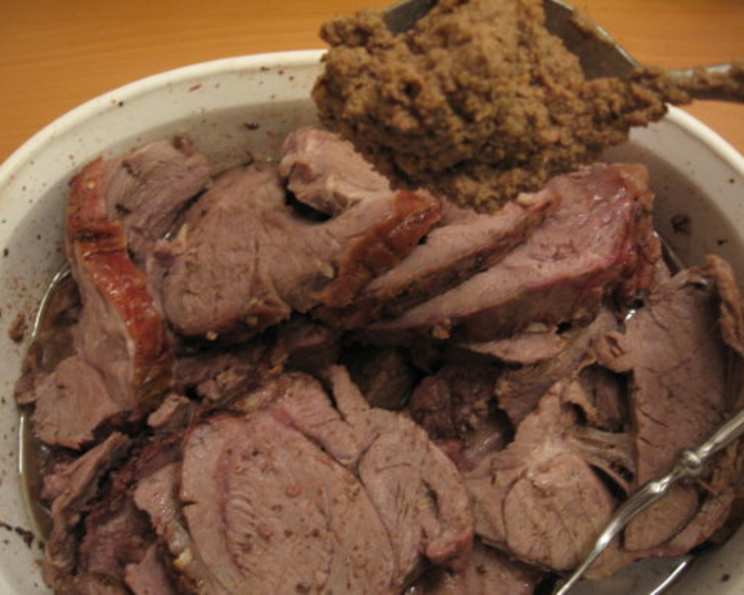
Filipino Roast Leg of Lamb With Sarsa: A Culinary Journey
The first time I tasted lamb prepared with Filipino flavors was during a family gathering at my Lola’s (grandmother’s) house. Although lamb wasn’t a common sight on our dining table, that Easter, she decided to experiment, drawing inspiration from her travels in the southern Philippines. I remember the rich, savory aroma of the roasting lamb, mingled with the sweet and spicy scent of the sarsa simmering on the stove. The tender lamb, infused with garlic, perfectly complemented the complex flavors of the sauce—a symphony of paprika, turmeric, and a hint of spice. It was an unexpected, but unforgettable, culinary revelation that cemented my love for fusion cuisine.
Recipe Overview
- Prep Time: 20 minutes
- Cook Time: 1 hour 45 minutes
- Total Time: 2 hours 5 minutes
- Servings: 6-8
- Yield: 1 roast leg of lamb with sauce
- Dietary Type: Gluten-Free (naturally), Dairy-Free (can be adapted), High-Protein
Ingredients
- 1 (4-6 lb) leg of lamb
- 4 garlic cloves, slivered
- 1 teaspoon salt
- ¾ teaspoon black pepper
- 8 bay leaves
- 3 tablespoons lime juice
- 2 tablespoons olive oil
Sarsa (Sauce)
- 3 tablespoons long-grain rice
- 1 ½ tablespoons canola oil
- ½ cup chopped shallot
- 3 garlic cloves, minced
- 90 g (about 3.2 oz) pork liver or beef liver
- 1 teaspoon sweet paprika
- ¼ teaspoon turmeric powder
- ¼ teaspoon black pepper
- ¼ teaspoon cayenne pepper
- ¼ teaspoon ground cloves
- 1 ½ cups chicken stock
- 2 tablespoons soy sauce
- 1 tablespoon light brown sugar
- 1 tablespoon rice vinegar
- 1 bay leaf
Equipment Needed
- Roasting pan
- Small skillet
- Spice grinder or blender
- Saucepan
- Blender or Immersion Blender
- Knife
- Cutting board
- Measuring spoons and cups
Instructions
-
Begin by preparing the leg of lamb. Trim any excess fat. Using a sharp knife, cut small slits all over the surface of the lamb. Insert the slivered garlic cloves into each slit. This will infuse the lamb with a delicious garlic flavor throughout.
-
Season the lamb generously with salt and black pepper, ensuring that the entire surface is coated.
-
Place the bay leaves in the center of a roasting pan. Place the seasoned leg of lamb on top of the bay leaves. Drizzle 1 tablespoon of the lime juice over the lamb.
-
Preheat your oven to 400°F (200°C). Roast the lamb for 30 minutes to sear the outside.
-
After 30 minutes, reduce the oven temperature to 325°F (160°C). In a small bowl, whisk together the remaining 2 tablespoons of lime juice and the olive oil. Spoon this mixture over the lamb.
-
Continue to roast the lamb, basting it with the pan juices every 15 minutes. This ensures that the lamb remains moist and flavorful. The total cooking time will depend on your desired level of doneness. For medium-rare, aim for an internal temperature of 150°F (66°C), which should take approximately 1 hour. Use a meat thermometer to accurately check the internal temperature. Remember that the lamb’s internal temperature will rise a few degrees after being removed from the oven.
-
While the lamb is roasting, prepare the sarsa. In a small skillet, toast the long-grain rice over medium heat for 5 to 7 minutes, or until it turns a nutty brown color. Stir constantly to prevent burning. This toasting process brings out the rice’s aromatic qualities and adds depth to the sauce.
-
Once the rice is toasted, transfer it to a spice grinder or blender. Process the rice into a fine powder. Transfer the rice powder to a bowl and set aside. This rice flour will act as a thickening agent for the sarsa.
-
Add the canola oil to the same skillet and increase the heat to medium-high. Add the chopped shallot and minced garlic and sauté until they are lightly browned, about 3-5 minutes. This step is essential for building the flavor base of the sarsa.
-
Add the pork liver or beef liver to the skillet and sauté until seared on all sides. Then reduce heat to low. The liver adds richness and depth to the sarsa.
-
Add the sweet paprika, turmeric powder, black pepper, cayenne pepper, and ground cloves to the skillet. Cook, stirring constantly, for about 30 seconds, until the spices become fragrant. This process, known as blooming the spices, releases their essential oils and intensifies their flavor.
-
Pour in the chicken stock and bring the mixture to a boil. Once boiling, remove the skillet from the heat and let it cool slightly for about 5 minutes.
-
Carefully scrape the mixture into a blender or use an immersion blender directly in the skillet. Puree the mixture until it is smooth.
-
Transfer the pureed mixture to a saucepan. Stir in the soy sauce, light brown sugar, rice vinegar, and ½ cup of water. Add the bay leaf.
-
Bring the mixture to a simmer over low heat. Slowly stir in the rice powder, whisking constantly to prevent lumps from forming.
-
Continue to simmer the sarsa over low heat, stirring often, for 15 to 20 minutes, or until it has thickened and become smooth. Adjust the consistency by adding more water if needed.
-
Once the sarsa has reached the desired consistency, remove it from the heat and discard the bay leaf. Transfer the sarsa to a serving bowl.
-
Once the lamb has reached the desired level of doneness, remove it from the oven and let it rest for 10-15 minutes before carving. This allows the juices to redistribute, resulting in a more tender and flavorful roast.
-
Carve the lamb and serve it immediately, accompanied by the sarsa.
Expert Tips & Tricks
- To ensure even cooking, bring the leg of lamb to room temperature for about an hour before roasting.
- If you don’t have a spice grinder, you can use a mortar and pestle to grind the toasted rice into a fine powder.
- For a richer sarsa, use chicken bone broth instead of regular chicken stock.
- If you prefer a smoother sarsa, strain it through a fine-mesh sieve after pureeing.
- To add a touch of sweetness to the sarsa, you can add a tablespoon of banana ketchup along with the sugar.
Serving & Storage Suggestions
Serve the Filipino Roast Leg of Lamb hot, carved into slices, with a generous serving of the sarsa drizzled over the top. Garnish with fresh cilantro or green onions for added visual appeal. It pairs wonderfully with steamed rice, roasted vegetables, or a simple green salad.
Leftover lamb and sarsa can be stored separately in airtight containers in the refrigerator for up to 3 days. To reheat the lamb, wrap it in foil and warm it in a preheated oven at 300°F (150°C) until heated through. Reheat the sarsa gently in a saucepan over low heat, stirring occasionally. Both can also be microwaved, but the texture may be slightly altered.
Nutritional Information
| Nutrient | Amount per Serving | % Daily Value |
|---|---|---|
| Calories | 774 kcal | N/A |
| Total Fat | 51g | 77% |
| Saturated Fat | 19g | 94% |
| Cholesterol | 260mg | 86% |
| Sodium | 996mg | 41% |
| Total Carbohydrate | 14g | 4% |
| Dietary Fiber | 1g | 2% |
| Sugars | 4g | N/A |
| Protein | 63g | 125% |
Note: Nutritional information is an estimate and may vary based on specific ingredients and portion sizes.
Variations & Substitutions
- For a spicier sarsa, add more cayenne pepper or a finely chopped bird’s eye chili.
- If you don’t have liver, you can substitute it with ground pork or beef, though the flavor will be slightly different.
- To make a dairy-free version, ensure your chicken stock is dairy-free.
- For a richer flavor, use coconut aminos instead of soy sauce. Note that this may slightly alter the sweetness levels, so taste and adjust accordingly.
- Add some chopped tomatoes into the sarsa for a more rustic, fresh sauce.
FAQs (Frequently Asked Questions)
Q: Can I prepare the sarsa ahead of time?
A: Yes, the sarsa can be made a day or two in advance and stored in the refrigerator. Reheat gently before serving. The flavors often meld even better when allowed to sit.
Q: What if I don’t have long-grain rice? Can I use another type of rice for the sarsa?
A: While long-grain rice is preferred for its texture and ability to toast well, you can substitute it with other types of rice like medium-grain rice in a pinch. Be sure to toast it until it turns lightly golden.
Q: How do I know when the lamb is cooked to my desired level of doneness?
A: The best way to check is with a meat thermometer. Insert the thermometer into the thickest part of the lamb, avoiding the bone. For medium-rare, aim for 150°F (66°C); for medium, 160°F (71°C); and for well-done, 170°F (77°C).
Q: Can I use a different cut of lamb for this recipe?
A: While a leg of lamb is ideal, you could also use a lamb shoulder, though the cooking time may need to be adjusted.
Q: What can I serve with this Filipino Roast Leg of Lamb?
A: This dish pairs well with steamed white rice, roasted vegetables like potatoes and carrots, or a fresh green salad. A side of atchara (pickled papaya) would also be a delicious complement.
Final Thoughts
This Filipino Roast Leg of Lamb with Sarsa is more than just a recipe; it’s an invitation to explore the delicious possibilities of cross-cultural cuisine. The combination of the familiar roast lamb with the vibrant flavors of the Filipino sarsa creates a unique and memorable dish that is sure to impress your family and friends. Don’t be afraid to experiment and adjust the flavors to your liking. I hope this recipe inspires you to get creative in the kitchen and share the joy of cooking with those you love. Enjoy, and please let me know what you think!