
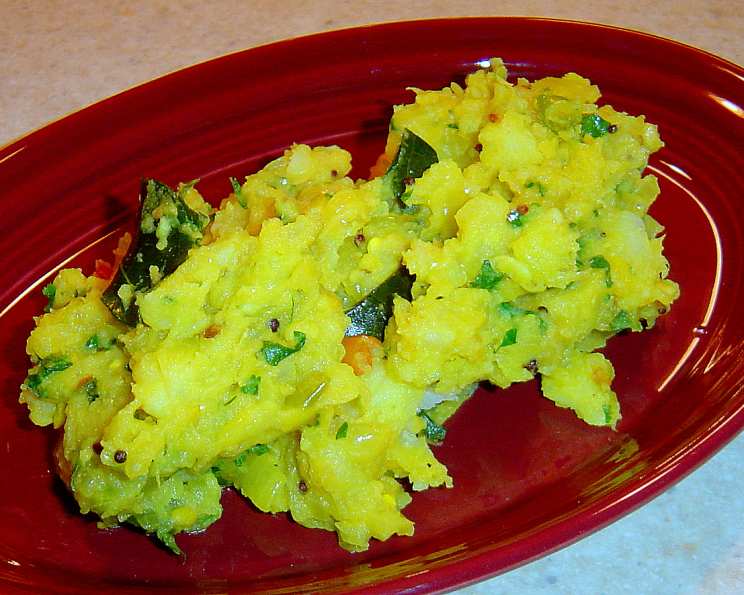
The Quintessential Dosa Filling: A Chef’s Homage to South Indian Comfort
The scent of mustard seeds popping in hot oil always transports me back to my culinary school days. We had a guest chef, a petite woman from Bangalore, who taught us the secrets of South Indian cuisine. Her dosas were legendary, but it was the simple, spiced potato filling that truly captivated me. She shared how this very filling was her mother’s go-to recipe, a comforting staple after a long day. It’s a dish that speaks of heritage, love, and the vibrant flavors of India, and I’m thrilled to share my version with you.
Recipe Overview
- Prep Time: 20 minutes
- Cook Time: 25 minutes
- Total Time: 45 minutes
- Servings: 4-6
- Yield: About 4 cups
- Dietary Type: Vegan, Gluten-Free
Ingredients
- ½ kg potatoes
- 200 g onions, peeled and sliced thinly
- 2-3 green chilies, chopped (adjust to taste)
- 1 inch gingerroot, peeled and grated
- ½ – 1 cup frozen peas or ½ – 1 cup fresh shelled peas
- ½ teaspoon turmeric powder
- Salt, to taste
- 1 bunch coriander leaves, chopped
- ½ – 1 cup water
For tarka or tempering:
- 1 tablespoon oil
- 1 teaspoon mustard seeds
- 1 pinch asafoetida powder
- 1 teaspoon black gram dal (urad or urd or urid)
- 1 teaspoon bengal gram dal or 1 teaspoon channa dal
- 1-2 dried red chilies, broken up
- 10-12 curry leaves (not bay leaves)
Equipment Needed
- Pressure cooker or large pot
- Wok or large skillet
- Vegetable peeler
- Cutting board
- Knife
- Grater
- Measuring cups and spoons
Instructions
- Begin by preparing the potatoes. You can boil them in their skin in a pressure cooker for 3-4 whistles. Alternatively, boil them in a pan of boiling water until tender, which typically takes about 20-25 minutes. Another quick method is to microwave them in a sandwich bag with 2-3 tablespoons of water for 6-8 minutes. Be sure to leave a small opening in the bag for steam to escape to prevent it from bursting.
- Once the potatoes are cooked, allow them to cool slightly before peeling. Then, roughly break them into small pieces. Don’t mash them completely; some texture is ideal. Set aside.
- Now, prepare the tarka or tempering. Heat the oil in a wok or large skillet over medium heat.
- Add the mustard seeds, asafoetida powder, chana dal, and urad dal to the hot oil. Let the seeds splutter, which indicates they’re releasing their aroma. It’s wise to keep a lid nearby, as the mustard seeds can pop quite vigorously.
- When the dals begin to turn golden brown, add the curry leaves and broken red chilies. Stir for a few seconds until the curry leaves become fragrant.
- Add the sliced onions, chopped green chilies, and grated ginger to the pan. Fry for a couple of minutes, until the onions start to soften and become translucent.
- Incorporate the turmeric powder and salt, followed by ½ cup of water. Stir well to combine. Cover the wok with a lid and simmer until the onions are well cooked and softened, about 5-7 minutes. If the mixture seems dry, add more water gradually, up to 1 cup total.
- Add the prepared potatoes (and peas, if using) to the pan. Cook until everything is well mixed and the water is absorbed. Gently mash some of the potatoes to create a slightly mashed, cohesive texture. This typically takes about 5-8 minutes.
- Finally, add the chopped coriander leaves and mix thoroughly.
- Your filling is ready to be served. It’s perfect alongside a crispy dosa or can be enjoyed as a vegetable accompaniment to any Indian meal.
Expert Tips & Tricks
- Potato Perfection: For the best texture, use slightly aged potatoes (a few days old). Freshly harvested potatoes can be too starchy.
- Tarka Timing: The tempering (tarka) is crucial for flavor. Don’t rush it! Allow the dals to brown properly for a nutty taste.
- Spice Level: Adjust the amount of green chilies to your preference. For a milder flavor, remove the seeds from the chilies.
- Ginger Boost: Freshly grated ginger is key. Avoid using powdered ginger, as it lacks the same pungent aroma.
- Pea Power: If using frozen peas, add them towards the end to prevent them from becoming mushy.
- Make Ahead: This filling can be made 1-2 days in advance. Store it in an airtight container in the refrigerator and reheat before serving.
Serving & Storage Suggestions
Serve this delicious dosa filling hot, stuffed inside a crispy dosa. A side of coconut chutney or sambar enhances the experience.
Leftovers can be stored in an airtight container in the refrigerator for up to 3 days. Reheat in a skillet over medium heat, stirring occasionally, until heated through. You may need to add a splash of water to prevent sticking. This filling does not freeze well, as the potatoes can become watery upon thawing.
Nutritional Information
| Nutrient | Amount per Serving | % Daily Value |
|---|---|---|
| Calories | 250 kcal | 13% |
| Total Fat | 8g | 10% |
| Saturated Fat | 1g | 5% |
| Cholesterol | 0mg | 0% |
| Sodium | 150mg | 7% |
| Total Carbohydrate | 40g | 15% |
| Dietary Fiber | 7g | 28% |
| Sugars | 5g | – |
| Protein | 5g | 10% |
Nutritional information is an estimate and may vary based on specific ingredients and portion sizes.
Variations & Substitutions
- Sweet Potato Twist: Substitute half of the potatoes with sweet potatoes for a subtle sweetness.
- Cauliflower Addition: Add finely chopped cauliflower along with the potatoes for added texture and nutrients.
- Vegan Butter: Use vegan butter instead of oil for a richer flavor.
- Spice It Up: Add a pinch of garam masala at the end for a more complex flavor profile.
- Tempering Alternatives: If you don’t have both dals, using just one (urad dal or chana dal) will still provide a nutty flavor.
- Seasonal Vegetables: Incorporate other seasonal vegetables like finely chopped carrots or bell peppers.
FAQs (Frequently Asked Questions)
Q: Can I make this filling without a pressure cooker?
A: Absolutely! Simply boil the potatoes in a regular pot until they are tender enough to pierce easily with a fork.
Q: What can I use if I don’t have asafoetida powder?
A: Asafoetida (hing) has a unique flavor, but if you don’t have it, you can omit it. Some people suggest using a small amount of garlic powder as a substitute.
Q: How can I prevent the dosa from sticking to the pan?
A: Make sure the pan is well-seasoned and hot before pouring the batter. Also, use a non-stick pan or a well-oiled cast-iron skillet. As the original recipe says, the first dosa usually sticks to the pan but don’t be discouraged.
Q: Can I use this filling for anything other than dosas?
A: Yes! This filling is incredibly versatile. You can use it in sandwiches, wraps, as a side dish with rice, or even as a topping for baked potatoes.
Q: Is it necessary to use curry leaves in the tempering?
A: While curry leaves add a distinct aroma and flavor, you can omit them if you don’t have any on hand. However, they are a key ingredient in South Indian cuisine, so it’s worth trying to find them if possible.
Final Thoughts
This dosa filling is more than just a recipe; it’s a taste of tradition and a celebration of simple ingredients transformed into something extraordinary. I encourage you to try it, experiment with your own variations, and share the joy of South Indian cuisine with your loved ones. Whether you are a seasoned chef or a home cook, I hope this recipe inspires you to create delicious memories in your kitchen. Don’t hesitate to leave feedback or share your own tips!