
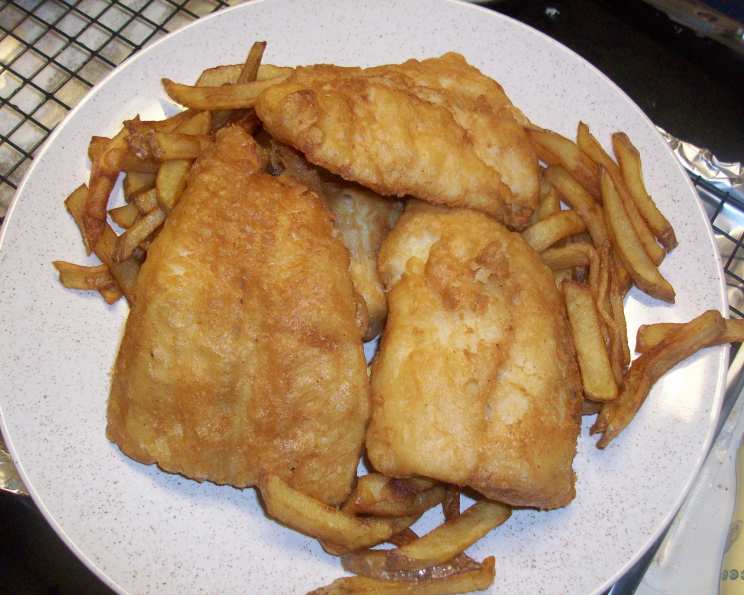
Alton Brown’s Fish and Chips: A Culinary Deep Dive
The aroma of perfectly fried fish and crispy potatoes instantly transports me back to my childhood. Every Friday night, my family would gather around a newspaper-lined table, eagerly awaiting the arrival of our local fish and chips order. The salty tang of the vinegar, the satisfying crunch of the batter, and the tender flakiness of the fish – it was more than just a meal; it was a cherished ritual, a taste of pure comfort and joy. It’s a memory etched so vividly in my mind, I can almost taste it now. So, let’s rediscover that classic, done right.
Recipe Overview
- Prep Time: 25 minutes
- Cook Time: 25 minutes
- Total Time: 50 minutes
- Servings: 4
- Dietary Type: Not Gluten-Free
Ingredients
- 2 cups flour
- 1 tablespoon baking powder
- 1 teaspoon kosher salt
- 1/4 teaspoon cayenne pepper
- Old Bay Seasoning
- 12 ounces beer, cold
- 1 1/2 lbs tilapia fillets, cut into 1-ounce strips
- Cornstarch, for dredging
- Safflower oil, for frying
- Potatoes, suitable for frying
- Kosher salt, for seasoning
- Malt vinegar, for serving (optional)
Equipment Needed
- 5-quart Dutch oven
- V-slicer (with a wide blade)
- Large bowl
- Whisk
- Roasting rack
- Thermometer
Instructions
-
Begin by preheating your oven to 200 degrees F. This low temperature will keep your cooked fries warm and crisp while you finish frying the fish.
-
Next, prepare your frying setup. Pour safflower oil into a 5-quart Dutch oven. Heat the oil over high heat, carefully monitoring the temperature with a thermometer until it reaches 320 degrees F. Maintaining the correct oil temperature is critical for achieving perfectly cooked fish and chips.
-
Prepare the potatoes. Using a V-slicer with a wide blade, slice the potatoes (with the skin on) into thick-cut fries. Place the sliced potatoes in a large bowl filled with cold water. This will help remove excess starch and prevent them from sticking together during frying.
-
Make the batter. In a separate bowl, whisk together the flour, baking powder, kosher salt, cayenne pepper, and a generous pinch of Old Bay seasoning. Gradually whisk in the cold beer until the batter is completely smooth and free of any lumps. Refrigerate the batter for at least 15 minutes, or up to an hour, to allow the gluten to relax and the batter to thicken slightly.
-
Drain the potatoes thoroughly, removing any excess water. When the oil temperature reaches 320 degrees F, carefully submerge the potatoes in the oil. Working in small batches to avoid overcrowding the Dutch oven, fry the potatoes for 2 to 3 minutes, until they are pale and floppy. This first frying is all about cooking the potatoes through without browning them too much. Remove the par-cooked fries from the oil, drain them on paper towels, and allow them to cool to room temperature.
-
Increase the temperature of the oil to 375 degrees F. This higher temperature will give the fries their golden-brown, crispy exterior. Re-immerse the fries in the hot oil and cook until they are crisp and golden brown, about 2 to 3 minutes. Remove the fries from the oil and drain them on a roasting rack. Season generously with kosher salt while they are still hot and transfer them to the preheated oven to keep warm.
-
Now it’s time to fry the fish. Allow the oil to return to 350 degrees F. Lightly dredge the tilapia strips in cornstarch. This will help the batter adhere to the fish and create a crispy coating.
-
Working in small batches, dip the cornstarch-dredged fish into the chilled beer batter, ensuring each piece is fully coated. Carefully immerse the battered fish into the hot oil. When the batter is set, gently turn the pieces of fish over and continue cooking until they are golden brown and crispy, about 2 minutes. Be careful not to overcrowd the Dutch oven, as this will lower the oil temperature and result in soggy fish.
-
Remove the fried fish from the oil and drain it on the roasting rack alongside the fries.
-
Serve immediately with a generous drizzle of malt vinegar, if desired.
Expert Tips & Tricks
- Maintaining Oil Temperature: Consistent oil temperature is the key to perfectly fried fish and chips. Use a deep-fry thermometer and adjust the heat as needed to maintain the target temperatures (320°F for the first fry of the chips, 375°F for the second fry, and 350°F for the fish).
- Crispy Batter Secret: The cold beer in the batter helps to create a light and crispy coating. Make sure your beer is ice-cold for the best results. Don’t overmix the batter. Lumps are okay; overmixing develops gluten, which can make the batter tough.
- Preventing Soggy Fries: Make sure to drain the potatoes thoroughly after slicing to remove excess starch. Don’t overcrowd the Dutch oven when frying. Overcrowding lowers the oil temperature and results in soggy fries.
- Type of Fish: While this recipe calls for tilapia, other white fish such as cod, haddock, or pollock can also be used. Adjust cooking times as needed depending on the thickness of the fillets.
Serving & Storage Suggestions
Serve the fish and chips immediately for the best flavor and texture. Arrange the crispy fries on a platter and top with the golden-brown fish. Offer malt vinegar, tartar sauce, or your favorite dipping sauces on the side.
Leftovers can be stored in an airtight container in the refrigerator for up to 2 days. To reheat, bake in a preheated oven at 350 degrees F until heated through and crispy, or use an air fryer for best results. Reheating fried foods can be tricky. Microwaving will make them soggy. It’s best to reheat them in a dry heat environment to maintain crispness. While day-old fish and chips are still delicious, they are best enjoyed freshly cooked.
Nutritional Information
| Nutrient | Amount per Serving | % Daily Value |
|---|---|---|
| Calories | 431 kcal | N/A |
| Total Fat | 3.5 g | 5% |
| Saturated Fat | 1.1 g | 5% |
| Cholesterol | 85.1 mg | 28% |
| Sodium | 801.7 mg | 33% |
| Total Carbohydrate | 51.8 g | 17% |
| Dietary Fiber | 1.7 g | 6% |
| Sugars | 0.2 g | 0% |
| Protein | 41.1 g | 82% |
Variations & Substitutions
- Gluten-Free Fish and Chips: Substitute the all-purpose flour with a gluten-free blend for the batter. Ensure the beer is also gluten-free.
- Spicy Fish and Chips: Increase the amount of cayenne pepper in the batter or add a dash of hot sauce for an extra kick.
- Different Dipping Sauces: Experiment with different dipping sauces such as aioli, sriracha mayo, or homemade tartar sauce.
- Sweet Potato Fries: Replace the regular potatoes with sweet potatoes for a sweeter and more colorful variation.
FAQs (Frequently Asked Questions)
Q: Can I use a different type of fish?
A: Yes, cod, haddock, or pollock are excellent substitutes for tilapia. Adjust cooking times accordingly based on the thickness of the fillets.
Q: Why is my batter not sticking to the fish?
A: Dredging the fish in cornstarch before dipping it in the batter helps the batter adhere better. Make sure the fish is dry before dredging.
Q: How do I keep the fish and chips warm while frying multiple batches?
A: Place the cooked fish and chips on a roasting rack in a preheated oven at 200 degrees F to keep them warm and crispy while you finish frying the remaining batches.
Q: Can I make the batter ahead of time?
A: Yes, the batter can be made up to an hour ahead of time. Store it in the refrigerator until ready to use.
Q: What is the best oil for frying fish and chips?
A: Safflower oil, peanut oil, or canola oil are all good choices for frying due to their high smoke points. Avoid using olive oil, as it has a lower smoke point and can impart a strong flavor.
Final Thoughts
Now that you’re armed with the knowledge to create perfect fish and chips, it’s time to gather your ingredients and get frying! This classic dish is sure to impress your family and friends. Don’t be afraid to experiment with different variations and dipping sauces to create your own signature version. And most importantly, enjoy the process and savor every crispy, flavorful bite. Fish and chips isn’t just a meal; it’s an experience. Feel free to share your feedback and photos! What’s your favorite dipping sauce?