
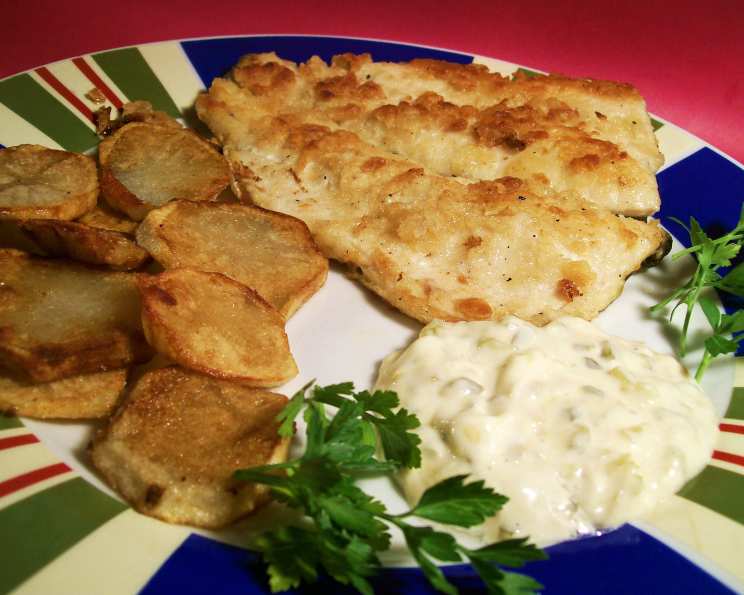
Perfectly Golden Fish and Chips (Without the Beer Batter!)
The smell of frying fish and potatoes always takes me back to summers spent by the coast. My grandfather, a seasoned fisherman, would bring home his daily catch, and my grandmother would transform it into the most comforting, satisfying meal imaginable. The crispy, golden batter, the flaky white fish, the perfectly fried chips… it was pure joy on a plate, and a tradition I cherish to this day. While the classic recipe often includes beer in the batter, this version captures all the same deliciousness without it, making it a perfect family-friendly treat.
Recipe Overview
- Prep Time: 20 minutes
- Cook Time: 35 minutes
- Total Time: 55 minutes
- Servings: 4
- Yield: 4 servings
- Dietary Type: Dairy-Free (if served without Tartar Sauce)
Ingredients
- 4 potatoes
- Corn oil, for frying
- 1 lb haddock or other lean fish fillet
- Sea salt & freshly ground black pepper, to taste
- 2/3 cup all-purpose flour, plus 1/4 cup separated
- 1/2 teaspoon salt
- 1/2 teaspoon baking soda
- 1 tablespoon vinegar (white or apple cider)
- 2/3 cup water
- Malt vinegar (optional, to serve)
- Lemon wedge (optional, to serve)
- Tartar sauce (optional, to serve)
Equipment Needed
- Deep fryer or Dutch oven
- Slotted spoon or frying basket
- Paper towels
- Cookie sheet
- Long-handled fork
Instructions
-
Start by preparing the potatoes. Cut them lengthwise into ½-inch strips to create classic chip shapes.
-
Next, prepare the fish. Cut the haddock (or other chosen fillet) into 2 x 1 ½-inch pieces. This size ensures even cooking. Pat the fish dry thoroughly with paper towels. Excess moisture will prevent proper browning. Season the fish generously with sea salt and freshly ground black pepper to taste.
-
Heat the corn oil in a deep fryer or Dutch oven. You’ll need about 2 to 3 inches of oil, or enough to fully submerge the potatoes and fish. Heat the oil to 375°F (190°C). Use a thermometer to ensure accurate temperature control.
-
Once the oil is heated, carefully fill the frying basket (or use a slotted spoon) with potatoes, ensuring it’s only one-fourth full. Overcrowding the basket will lower the oil temperature and result in soggy chips.
-
Slowly lower the basket of potatoes into the hot oil. If the oil bubbles excessively, raise and lower the basket several times at the beginning of the frying process. This helps prevent the potatoes from sticking together. Use a long-handled fork to keep the potatoes separated while frying.
-
Fry the potatoes for 5 to 7 minutes, or until they are golden brown and cooked through. Keep a close eye on them to prevent burning. Once cooked, remove the chips from the oil and drain them on paper towels to remove excess oil.
-
Place the fried potatoes in a single layer on a cookie sheet and keep them warm in a preheated oven at the lowest setting (around 200°F/95°C) while you prepare the rest of the batch and the fish.
-
Repeat the frying process with the remaining potatoes, ensuring the oil temperature remains consistent.
-
While the potatoes are frying, prepare the batter for the fish. In a mixing bowl, combine 2/3 cup of all-purpose flour and 1/2 teaspoon of salt.
-
In a separate small bowl, mix together the 1/2 teaspoon of baking soda and 1 tablespoon of vinegar. This creates a reaction that will give the batter a light and airy texture.
-
Pour the vinegar mixture and 2/3 cup of water into the flour mixture. Beat until the batter is smooth. Avoid overmixing, as this can develop the gluten in the flour, resulting in a tough batter.
-
Place the remaining 1/4 cup of flour in a shallow dish. This will be used to dredge the fish before dipping it into the batter.
-
Dredge each piece of fish in the flour, ensuring it’s evenly coated. Shake off any excess flour.
-
Dip the floured fish into the batter, allowing any excess batter to drip back into the bowl.
-
Carefully lower 4 or 5 pieces of battered fish at a time into the hot oil. Avoid overcrowding the fryer.
-
Fry the fish for about 3 minutes, turning once, until it’s golden brown and cooked through. The internal temperature of the fish should reach 145°F (63°C).
-
Remove the fried fish from the oil and drain it on paper towels to remove any excess oil.
-
To crisp up the potatoes further, set your oven control to broil. Broil the potatoes on the cookie sheet, positioned about 6 inches from the heat, for 2 to 3 minutes, or until they are crisp and golden brown. Watch them carefully to prevent burning.
-
Serve the fish and chips immediately with malt vinegar, lemon wedges, and tartar sauce, if desired.
Expert Tips & Tricks
- For extra crispy chips, double-fry them. Fry them for the first time at a lower temperature (325°F/160°C) for a longer period, then fry them again at a higher temperature (375°F/190°C) just before serving.
- Use a neutral-flavored oil with a high smoke point, such as corn oil, peanut oil, or canola oil, for best results.
- Don’t overcrowd the fryer. Fry in batches to maintain the oil temperature and ensure even cooking.
- To keep the fish warm while you fry the remaining pieces, place the cooked fish on a wire rack in a warm oven. This will prevent it from becoming soggy.
- If you don’t have a deep fryer, you can use a large pot or Dutch oven. Just be sure to use a thermometer to monitor the oil temperature.
Serving & Storage Suggestions
Serve your freshly fried fish and chips immediately for the best taste and texture. The crispy chips and flaky fish are best enjoyed hot. Traditional accompaniments include malt vinegar, lemon wedges, and tartar sauce.
Leftover fish and chips are best stored in the refrigerator. Place them in an airtight container. They will last for up to 2 days. Reheating can be tricky, as the chips can become soggy and the fish can dry out. To reheat, preheat your oven to 350°F (175°C). Place the fish and chips on a baking sheet and bake for 10-15 minutes, or until heated through. For crisper chips, you can broil them for a minute or two at the end of the reheating process, but watch them carefully to prevent burning.
Nutritional Information
| Nutrient | Amount per Serving | % Daily Value |
|---|---|---|
| Calories | 450 kcal | 23% |
| Total Fat | 20g | 31% |
| Saturated Fat | 3g | 15% |
| Cholesterol | 75mg | 25% |
| Sodium | 600mg | 26% |
| Total Carbohydrate | 55g | 20% |
| Dietary Fiber | 6g | 24% |
| Sugars | 2g | N/A |
| Protein | 30g | 60% |
Variations & Substitutions
- Gluten-Free Fish and Chips: Substitute the all-purpose flour with a gluten-free flour blend in both the dredging and the batter.
- Sweet Potato Chips: Replace the white potatoes with sweet potatoes for a slightly sweeter and more nutritious twist.
- Different Fish: While haddock is traditional, you can use other lean white fish such as cod, pollock, or whiting.
- Spiced Chips: Add a pinch of paprika, garlic powder, or cayenne pepper to the potatoes before frying for extra flavor.
- Herb-Infused Batter: Stir in fresh herbs like parsley, dill, or thyme into the batter for a more aromatic flavor.
FAQs (Frequently Asked Questions)
Q: Can I make the batter ahead of time?
A: It’s best to make the batter fresh right before frying. If made ahead, the baking soda will lose its effectiveness, resulting in a flatter batter.
Q: How do I prevent the fish from sticking to the bottom of the fryer?
A: Make sure the oil is hot enough before adding the fish, and don’t overcrowd the fryer. A wire basket also helps to prevent sticking.
Q: What is the best way to keep the chips crispy?
A: Double frying and broiling at the end helps to achieve maximum crispiness. Keeping them warm in a low oven on a wire rack also helps.
Q: Can I use an air fryer instead of deep frying?
A: Yes, you can air fry both the fish and the chips. Preheat your air fryer to 400°F (200°C) and cook the chips for about 15-20 minutes, flipping halfway through. Air fry the fish for about 12-15 minutes, flipping halfway through, or until golden brown and cooked through.
Q: What can I serve with fish and chips besides malt vinegar and tartar sauce?
A: Other popular condiments include ketchup, mushy peas, curry sauce, and brown sauce.
Final Thoughts
Now that you have all the secrets to creating perfect, non-beer battered fish and chips at home, it’s time to gather your ingredients and get cooking! This recipe is a guaranteed crowd-pleaser, whether you’re enjoying a cozy night in or hosting a summer barbecue. Don’t be afraid to experiment with variations and find your perfect combination of flavors. And be sure to share your culinary creations (and any helpful hints you discover) with friends and family. Happy frying!