
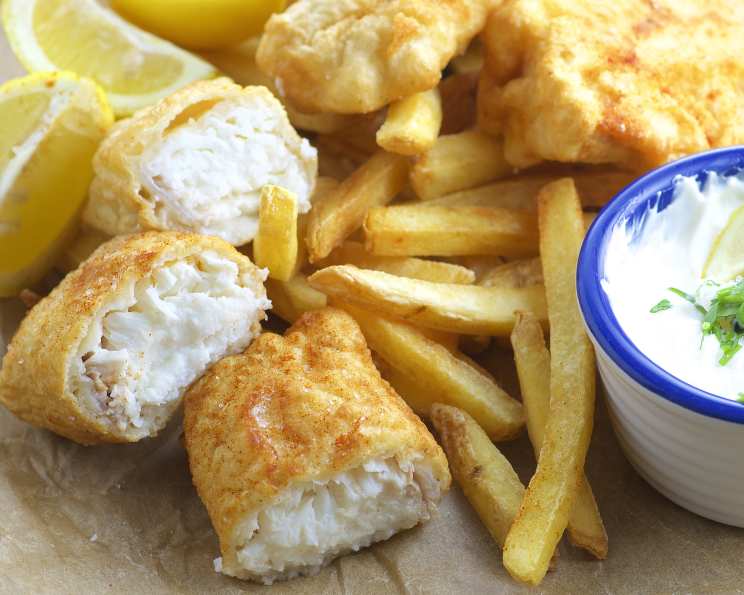
The Quintessential Fish and Chips: A Culinary Classic
The scent of saltwater, the cries of gulls overhead, and the anticipation of that first, glorious bite – these are the memories that flood back every time I make fish and chips. Growing up, our family vacations always included a pilgrimage to the coast, and no trip was complete without a newspaper-wrapped portion of perfectly fried fish and crispy chips, devoured on the beach with sticky fingers and satisfied sighs. It wasn’t just a meal; it was an experience, a taste of pure, unadulterated joy. That simple pleasure is what I strive to recreate with every batch of this recipe.
Recipe Overview
- Prep Time: 15 minutes
- Cook Time: 10 minutes
- Total Time: 25 minutes
- Servings: 2
- Dietary Type: Not Gluten-Free
Ingredients
- ½ lb white fish fillet (cod or halibut)
For the batter:
- 1 cup beer (not dark)
- 1 cup flour, and a little more for dusting
- ½ teaspoon baking powder
- 1 pinch salt
- 1 pinch fresh ground black pepper
Equipment Needed
- Deep fryer
- Mixing bowl
- Paper towels
Instructions
-
In a mixing bowl, combine all the batter ingredients: 1 cup of beer, 1 cup of flour, ½ teaspoon of baking powder, 1 pinch of salt, and 1 pinch of fresh ground black pepper. Whisk until smooth. The batter should be thick enough to coat the fish but still easily drippable.
-
Cut the white fish fillets (cod or halibut) into desired size pieces. Typically, this would be into portions around 4-6 ounces each.
-
Lightly dust the fish fillets with a little flour. This helps the batter adhere better to the fish, resulting in a crispier coating.
-
Dip each floured fillet into the prepared batter, ensuring it is fully coated. Let any excess batter drip off before transferring to the fryer.
-
Fry the battered fish in a deep fryer at 375 degrees Fahrenheit with at least 2 inches of vegetable oil. Carefully lower the fish into the hot oil to avoid splashing.
-
Fry until golden brown, which should take approximately 5-7 minutes depending on the thickness of the fish. Be careful not to overcrowd the fryer; fry in batches to maintain the oil temperature and ensure even cooking.
-
Remove the fried fish from the oil and drain on paper towels or brown paper bags from the grocery store to remove excess oil. This is crucial for achieving that perfect, non-greasy crispiness.
-
Serve immediately with french fries, tartar sauce, cocktail sauce, malt vinegar and coleslaw or cucumber salad.
Expert Tips & Tricks
- Beer Choice: Lighter beers like lagers or pilsners work best for the batter, as darker beers can add an unwanted bitterness.
- Batter Consistency: If the batter is too thick, add a little more beer to thin it out. If it’s too thin, add a little more flour.
- Oil Temperature: Maintaining a consistent oil temperature is key to crispy fish. Use a thermometer to monitor the temperature and adjust as needed.
- Don’t Overcrowd: Frying too many pieces of fish at once will lower the oil temperature, resulting in soggy fish. Fry in batches, leaving enough space around each piece.
- Double Fry: For extra crispy chips (fries), consider double frying them. Fry them once at a lower temperature (around 325°F) to cook them through, then again at a higher temperature (375°F) to crisp them up.
- Air Circulation: Instead of stacking fried fish on top of each other to drain, use a wire rack set over a baking sheet. This will allow air to circulate and prevent the fish from becoming soggy.
- Crispy Batter Secret: Adding a tablespoon of cornstarch to the flour in the batter can help create an even crispier coating.
Serving & Storage Suggestions
Serve your fish and chips immediately for the best flavor and texture. Traditionally, they’re served with a generous sprinkle of salt and malt vinegar, alongside tartar sauce or ketchup. Coleslaw or a simple green salad also make a great accompaniment.
Leftovers can be stored in an airtight container in the refrigerator for up to 2 days. Reheat in a preheated oven at 350°F (175°C) for about 10-15 minutes, or until heated through and crispy. Reheating in a microwave is not recommended, as it will make the fish and chips soggy. Freezing is not recommended as it will affect the texture and flavor of the fish and batter.
Nutritional Information
| Nutrient | Amount per Serving | % Daily Value |
|---|---|---|
| Calories | 381.6 kcal | N/A |
| Calories from Fat | 162 kcal | N/A |
| Total Fat | 18 g | 5% |
| Saturated Fat | 0.4 g | 1% |
| Cholesterol | 76.2 mg | 25% |
| Sodium | 256.1 mg | 10% |
| Total Carbohydrate | 52.2 g | 17% |
| Dietary Fiber | 1.7 g | 6% |
| Sugars | 0.2 g | 0% |
| Protein | 27.8 g | 55% |
Variations & Substitutions
- Gluten-Free: Use a gluten-free flour blend in place of the regular flour. You can also use gluten-free beer or substitute it with sparkling water or club soda.
- Dairy-Free: Ensure your tartar sauce is dairy-free, or make your own using a dairy-free mayonnaise.
- Fish Variety: While cod and halibut are traditional choices, you can also use other white fish like haddock, pollock, or tilapia.
- Vegetarian Option: For a vegetarian alternative, try using thick slices of halloumi cheese, dipped in the same batter and fried until golden brown.
- Spice it Up: Add a pinch of cayenne pepper or paprika to the batter for a touch of heat.
FAQs (Frequently Asked Questions)
Q: Can I make the batter ahead of time?
A: It’s best to make the batter fresh, as the baking powder will lose its potency over time. However, you can prepare the dry ingredients ahead of time and then add the beer just before frying.
Q: How do I know when the fish is cooked through?
A: The fish is cooked through when it is opaque and flakes easily with a fork. The internal temperature should reach 145°F (63°C).
Q: Why is my batter not sticking to the fish?
A: Make sure you are dusting the fish with flour before dipping it in the batter. This helps the batter adhere better. Also, ensure the batter is not too thin.
Q: Can I use a skillet instead of a deep fryer?
A: While a deep fryer is recommended for safety reasons and consistent results, you can use a deep, heavy-bottomed skillet. Just be very careful when working with hot oil, and ensure the oil is deep enough to fully submerge the fish.
Q: What is the best type of oil to use for frying?
A: Vegetable oil, canola oil, or peanut oil are all good choices for frying fish and chips, as they have a high smoke point and neutral flavor.
Final Thoughts
There’s a reason fish and chips has endured as a beloved dish for generations. It’s simple, satisfying, and undeniably delicious. Don’t be intimidated by the frying – with a few key tips and techniques, you can easily recreate this classic at home. So, gather your ingredients, preheat your oil, and get ready to experience the joy of perfectly golden, crispy fish and chips! I encourage you to try this recipe and share your feedback. Perhaps pair it with a crisp, cold lager for the ultimate experience!